
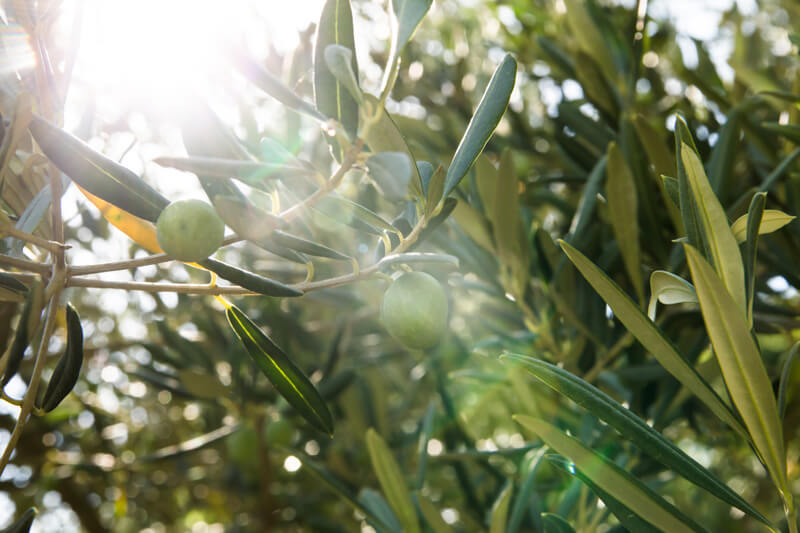
Hojiblanca Olive Oil
📅 Updated May 2026 · Reviewed by Mi Oliva Gourmet
Hojiblanca olive oil is one of the most representative EVOOs from southern Andalusia. Its name comes from the whitish underside of the leaves of the olive tree it is pressed from. But behind that detail lies a variety with a very specific botanical origin in the province of Córdoba, a balanced sensory profile that sets it apart from Picual and Arbequina, and a centuries-old oil-making tradition in Puente Genil that dates back to the 17th century.
In this guide we go through what is real, what is legend, and what science actually says about Hojiblanca extra virgin olive oil — correcting a few myths that keep circulating online along the way.
In this article
- What is Hojiblanca olive oil?
- Where does the Hojiblanca olive really come from?
- What role does Puente Genil play in the history of Hojiblanca?
- What does a Hojiblanca EVOO taste like?
- What are its actual nutritional properties?
- Is it good for your health?
- How to use it in the kitchen?
- Hojiblanca, Picual or Arbequina: which one to choose?
- Why is Hojiblanca the main variety in our Arraigo?
- Frequently asked questions
What is Hojiblanca olive oil?
Hojiblanca olive oil is an extra virgin olive oil made from olives of the Hojiblanca variety, the third most widely cultivated olive variety in Spain with more than 265,000 hectares, according to the World Catalogue of Olive Varieties of the International Olive Council. Its name comes from the whitish colour of the underside of its leaves. It is a well-balanced EVOO with medium fruitiness and notes of almond, fresh grass and green apple.
The variety accounts for around 16% of Andalusian olive groves and is found primarily across four provinces: Córdoba (43%), Málaga (30%), Sevilla (17%) and Granada (10%). It is one of the great "dual-purpose" olive varieties — suitable for both oil and table — though when destined for the mill and harvested at the turning stage, between November and December, it yields a highly regarded extra virgin olive oil prized for its versatility.
If you have never tried a single-variety Hojiblanca EVOO, or a blend where it is the dominant variety, this article will give you a clear picture of what to expect — and why.
Where does the Hojiblanca olive really come from?
The Hojiblanca cultivar has its documented botanical origin in the area of Lucena and Cabra (southern Córdoba), in the Andalusian Subbética hills. That is where its traditional names come from: "Lucentino", "Casta de Lucena" and "Casta de Cabra". From that heartland it spread to Antequera (Málaga), Estepa (Sevilla) and Loja (Granada) — areas that today are home to the main protected designations of origin that cover it.
The Regulatory Council of the PDO Lucena states this explicitly: "the area in which the Hojiblanca variety is cultivated has its centre, and origin, in the municipality of Lucena, and it is from here that it extends to neighbouring areas such as Antequera (Málaga), Estepa (Sevilla) and Loja (Granada)".
This is why in many older catalogues — and still in some areas today — this variety is known as Lucentino, a direct reference to Lucena. It is not a minor detail: many articles online repeat that the birthplace of Hojiblanca is Puente Genil, but the botanical documentation and official Regulatory Councils place it firmly in Lucena–Cabra. It is worth being honest about this.
What role does Puente Genil play in the history of Hojiblanca?
Although the cultivar originated in Lucena–Cabra, Puente Genil has been for centuries the historic centre of production and trade for this oil. The Molino del Marqués, referenced by the PDO Lucena itself, dates back to 1648. In 1935, the Spanish Olive Growers' Association awarded the oil of Puente Genil the title "Optimum Olei Emporium", a story covered by the newspaper ABC on 14 January 1936. In 1967, according to a report in ABC de Sevilla, the oil of Puente Genil accounted for approximately 13% of national production.
So when people speak of "Hojiblanca olive oil from Puente Genil", they are not referring to the genetic origin of the cultivar, but to something quite different and verifiable: a documented oil-making tradition stretching back to the 17th century and a limestone terroir — that of the olive groves in the area, including the Olivar de San Miguel where Mi Oliva Gourmet's Arraigo is produced — that gives the oil its own distinct character.
If you would like to explore why Puente Genil oil has been historically recognised, we have a dedicated article on why olive oil from Puente Genil is considered one of the best in the world.
What does a Hojiblanca EVOO taste like?
A good Hojiblanca has medium fruitiness, a gently sweet entry, moderate bitterness and an elegant peppery finish, with a characteristic almond aftertaste. It is neither as bold as Picual nor as mild as Arbequina: it is the variety of balance.
The official tasting panel of the PDO Antequera, where Hojiblanca is the principal variety, describes the sensory profile using these recognised descriptors: aromas of ripe fruit, almond, banana and fresh grass, with light to medium bitterness and pepperiness "in harmony with slightly sweet flavours". In professional tastings — panels at the University of Jaén and Andalusian tasting schools — notes of green apple, artichoke and freshly cut grass consistently appear.
Freshly harvested, the colour is golden green, with deeper green hues the earlier the harvest — particularly in unfiltered oils. As the olives ripen, the tones shift to paler yellows. These colour changes are entirely normal and are no indicator of lower quality.
Discover the flavour of Hojiblanca in our Arraigo
What are the actual nutritional properties of Hojiblanca olive oil?
Hojiblanca oil, like all extra virgin olive oils, is made up of around 99% fat, predominantly monounsaturated fatty acids. This holds true for any EVOO — Hojiblanca, Picual, Arbequina or Cornicabra — as confirmed by the scientific review EFSA Health Claims-Based Virgin Olive Oil Shelf-Life published in Foods (2023).
What sets Hojiblanca apart is not a lower fat content — no EVOO has less fat than another — but its specific composition:
- Oleic acid (monounsaturated): 73–77% of total fatty acids in single-variety Hojiblanca, according to studies on oils from Antequera and varietal reviews.
- Vitamin E (α-tocopherol): 174–252 mg/kg in Hojiblanca, according to García et al. (cited by Bouarroudj et al. in the International Journal of Food Properties, 2016). One tablespoon (≈14 g) provides around 13% of the recommended daily intake.
- Vitamin K: present in a meaningful amount; one tablespoon provides around 10% of the recommended daily intake.
- Total polyphenols: variable depending on ripeness and season. A good Early Harvest Hojiblanca exceeds 250 mg/kg of polyphenols, a threshold with regulatory relevance (more on this in the next section).
- Key phenolic compounds: hydroxytyrosol, tyrosol, oleuropein, oleocanthal, oleacein. Their concentration depends on the ripeness at harvest and the speed of milling.
One important clarification: olive oil is not a nutritionally significant source of vitamin D. This is a myth that circulates persistently. Vitamin D comes primarily from sun exposure and from oily fish, eggs and fortified foods. If you come across a claim that a particular EVOO has a "high vitamin D content", treat it with scepticism: the vitamins characteristic of extra virgin olive oil are E and K.
Is Hojiblanca olive oil good for your health?
The health benefits associated with consuming extra virgin olive oil are well documented, and Hojiblanca shares them fully thanks to its oleic acid and polyphenol profile. To be clear: most of the clinical evidence relates to EVOO in general, not to any specific variety.
The PREDIMED study (Estruch et al., published in The New England Journal of Medicine, republished version 2018, DOI 10.1056/NEJMoa1800389) is the most robust reference: in people aged 55–80 with high cardiovascular risk, a Mediterranean diet supplemented with EVOO reduced the risk of major cardiovascular events (heart attack, stroke or cardiovascular death) by approximately 31% compared with the control group.
The European Food Safety Authority (EFSA) authorised, under Regulation (EU) 432/2012, a health claim relating to olive oil polyphenols. The exact wording from the regulation:
"Olive oil polyphenols contribute to the protection of blood lipids from oxidative stress."
Conditions of use: the claim may only be used for olive oils containing at least 5 mg of hydroxytyrosol and its derivatives (e.g. oleuropein complex or tyrosol) per 20 g of olive oil. The beneficial effect is obtained with a daily intake of 20 g of olive oil.
One phenolic compound deserves special mention: oleocanthal. In 2005, a team from the Monell Chemical Senses Center published in Nature the study "Phytochemistry: ibuprofen-like activity in extra-virgin olive oil" (Beauchamp GK et al., Nature 437:45–46), identifying oleocanthal in EVOO as a compound with anti-inflammatory activity similar to ibuprofen on the same prostaglandin enzyme pathway. The characteristic throat sting you feel when tasting a quality EVOO comes precisely from this compound.
Get your Arraigo: over 250 mg/kg of polyphenols
How to use Hojiblanca in the kitchen
Hojiblanca is the everyday EVOO par excellence: its versatility makes it ideal for raw use and for gentle to moderate cooking. Its moderate profile makes it a natural companion to almost any dish, without overpowering the other ingredients.
Used raw, it shines in salad dressings, on toast, in gazpacho, salmorejo, ajoblanco, homemade mayonnaise and alioli. With fish — especially oily varieties such as salmon or tuna — the almond note of Hojiblanca is a particularly good match. In beef or fish carpaccios it works as a binding thread, bringing flavours together without masking them.
For cooking, its high oleic acid content (≈73–77%) gives it medium-to-high oxidative stability, more than sufficient for home frying at the right temperature. In our article on how many times you can reuse EVOO for frying we explain the safe temperature ranges.
A less well-known use: some artisan ice cream makers use Hojiblanca in olive oil ice cream, precisely because that almond aftertaste adds complexity without making the result bitter.
If you want to explore specific recipes using quality EVOO, we have a tested selection in our article on 4 gourmet recipes with unfiltered EVOO.
Hojiblanca, Picual or Arbequina: which one to choose?
All three are noble varieties of the Spanish olive grove, each with its own character that makes it more or less suited to different uses and palates. Here are the key differences:
- Picual: the most intense. Pronounced fruitiness, marked bitterness and pepperiness, maximum oxidative stability — the go-to for frying and robust stews. Dominant in Jaén. If you want to go deeper, see our article PICUAL: the character of a variety that leaves no one indifferent.
- Arbequina: the smoothest and sweetest. Delicate fruitiness, almost no bitterness or pepperiness, ideal for baking and for palates new to the world of EVOO. More on Arbequina olive oil here.
- Hojiblanca: the balanced one. Medium fruitiness, moderate bitterness and pepperiness, almond aftertaste. The versatile EVOO by definition.
This is why many premium blends — including our Arraigo — use Hojiblanca as the balancing base and add a touch of Picual and Picuda to bring in strength and aroma. You will find a more detailed comparison in the article differences between Arbequina, Hojiblanca and Picual EVOO.
Why is Hojiblanca the main variety in our Arraigo?
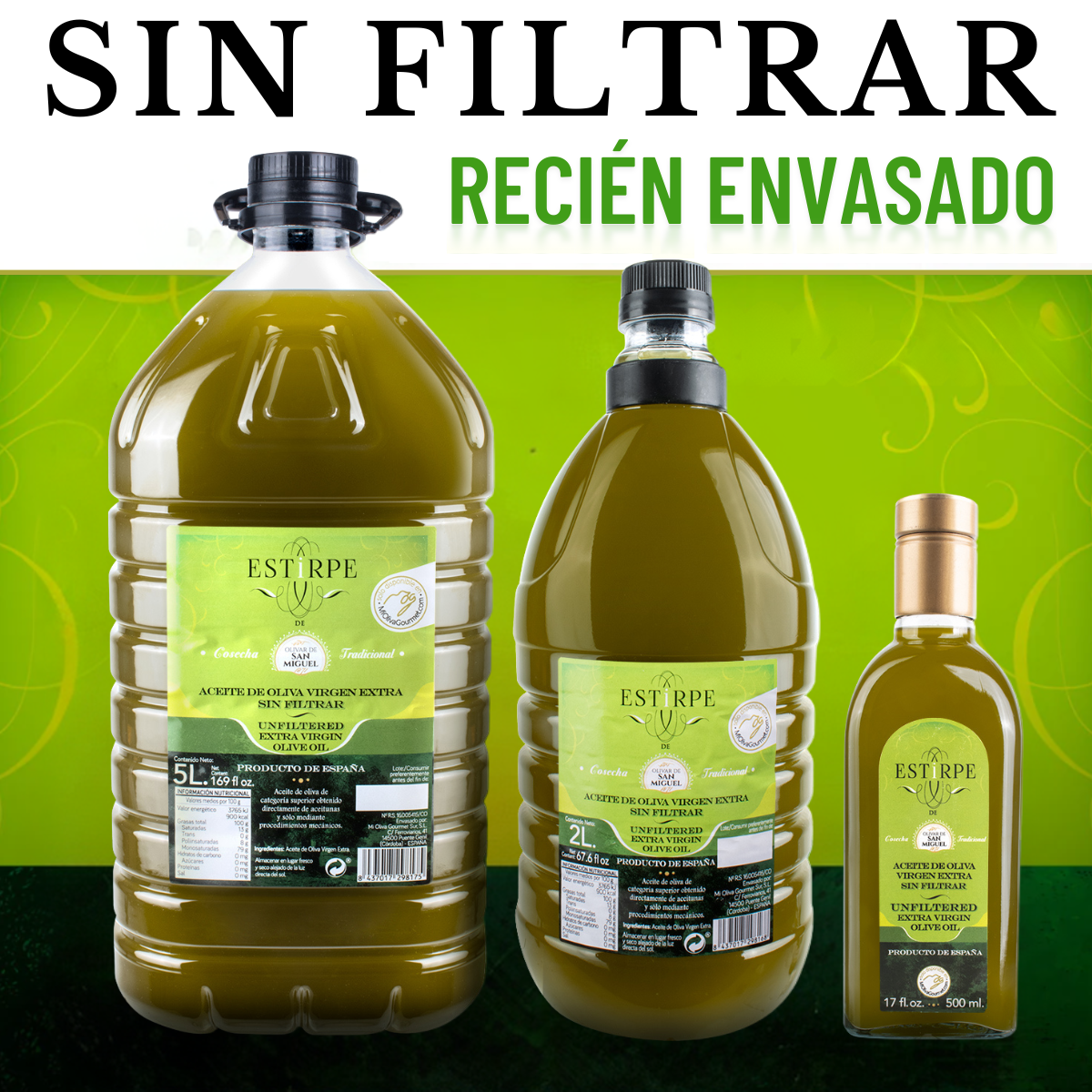
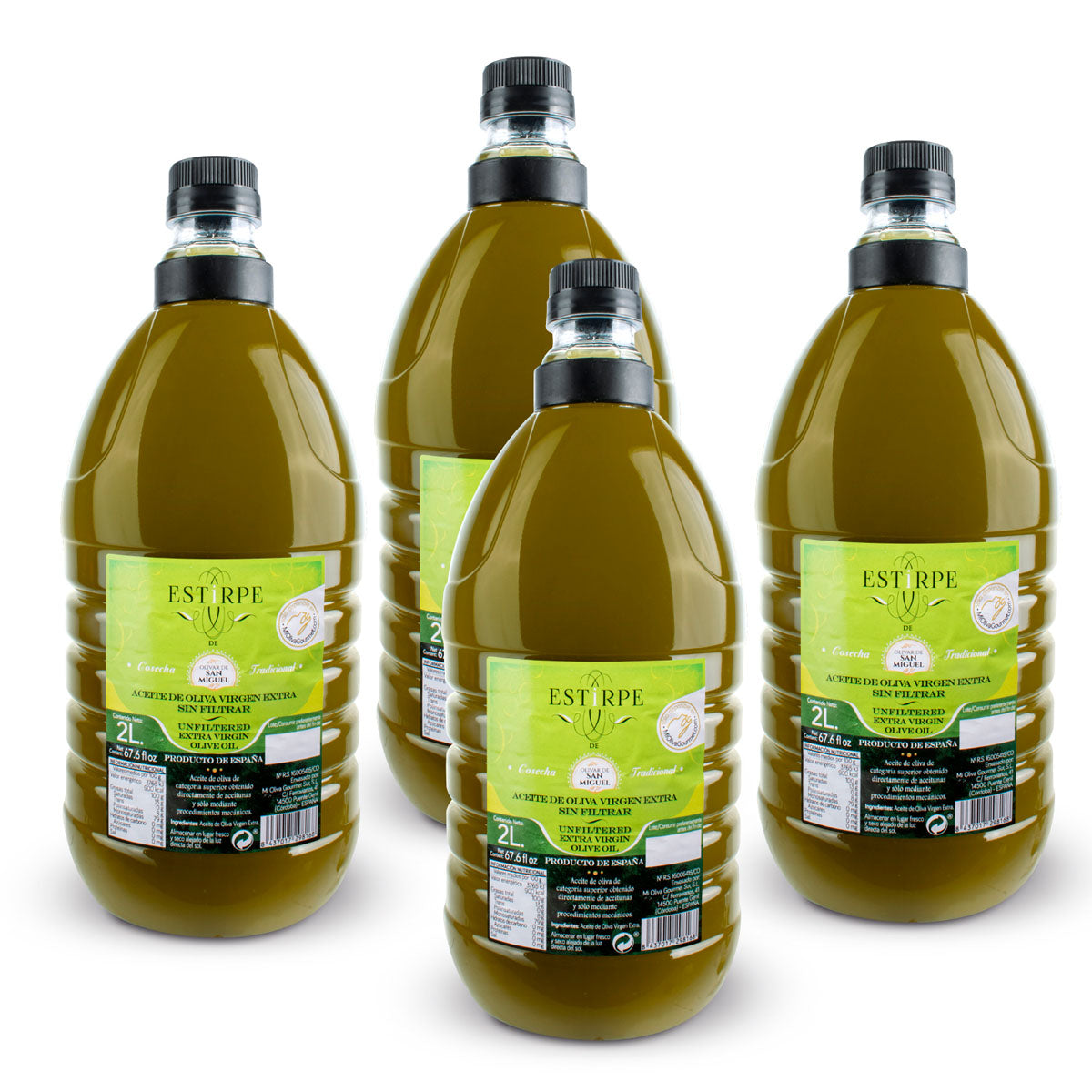
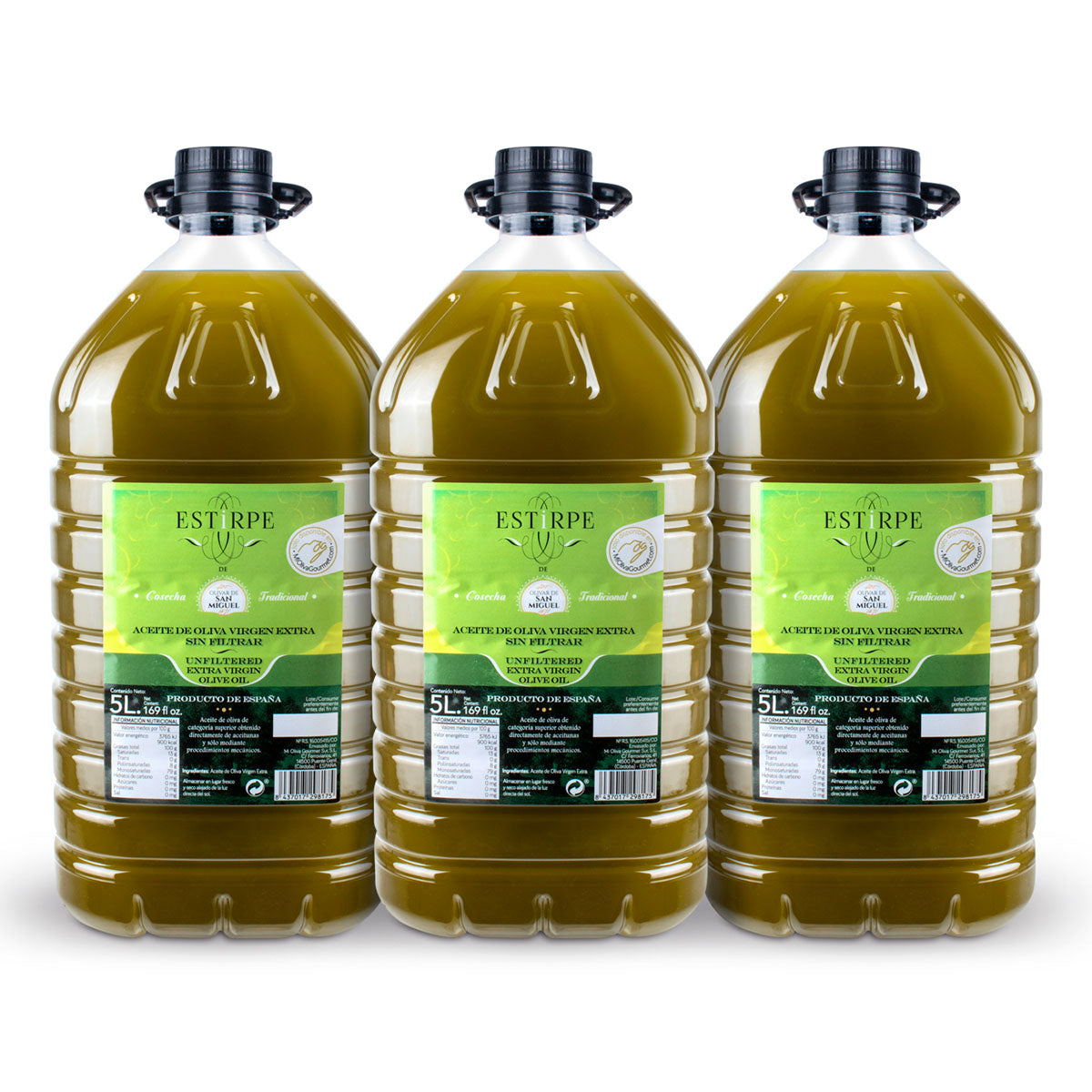
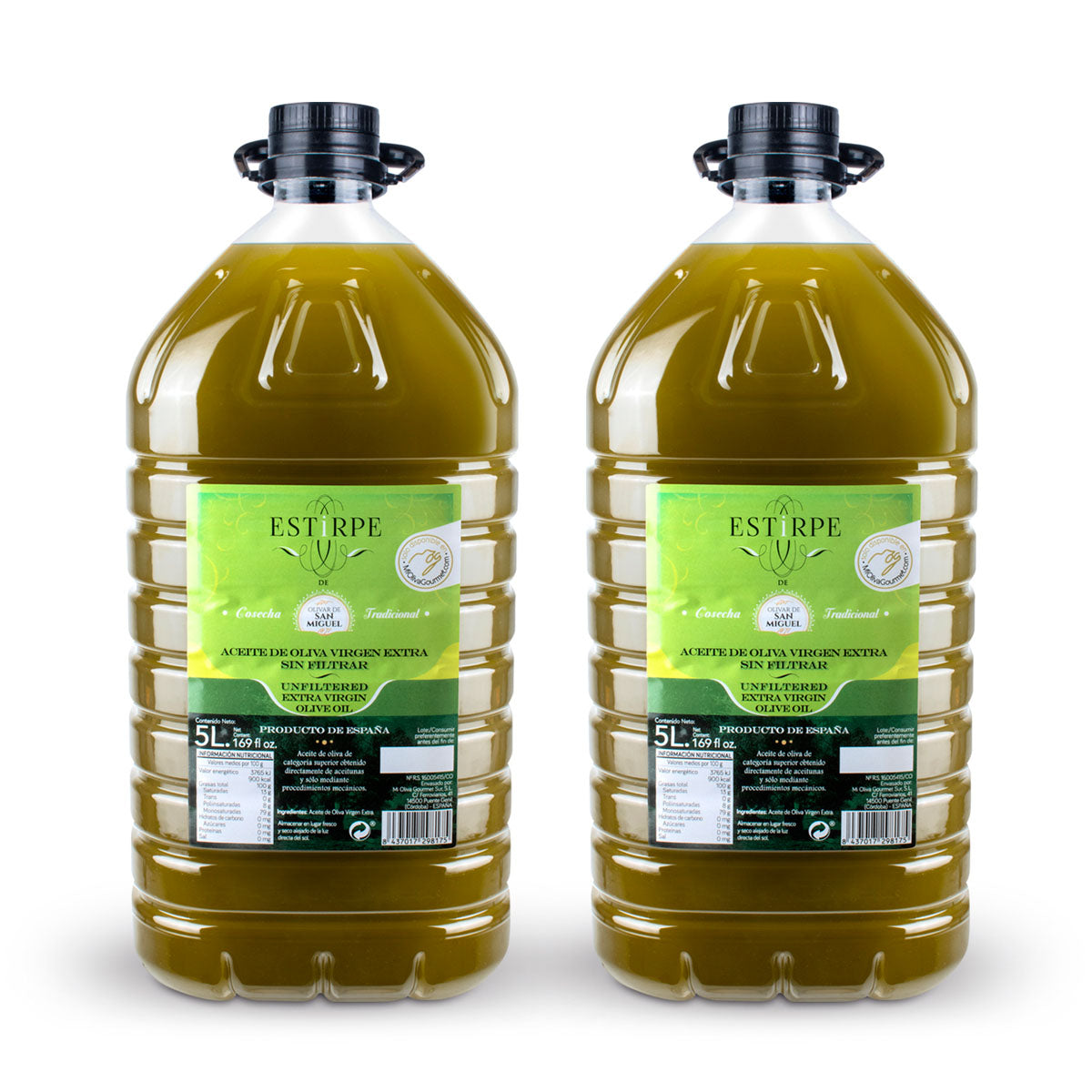
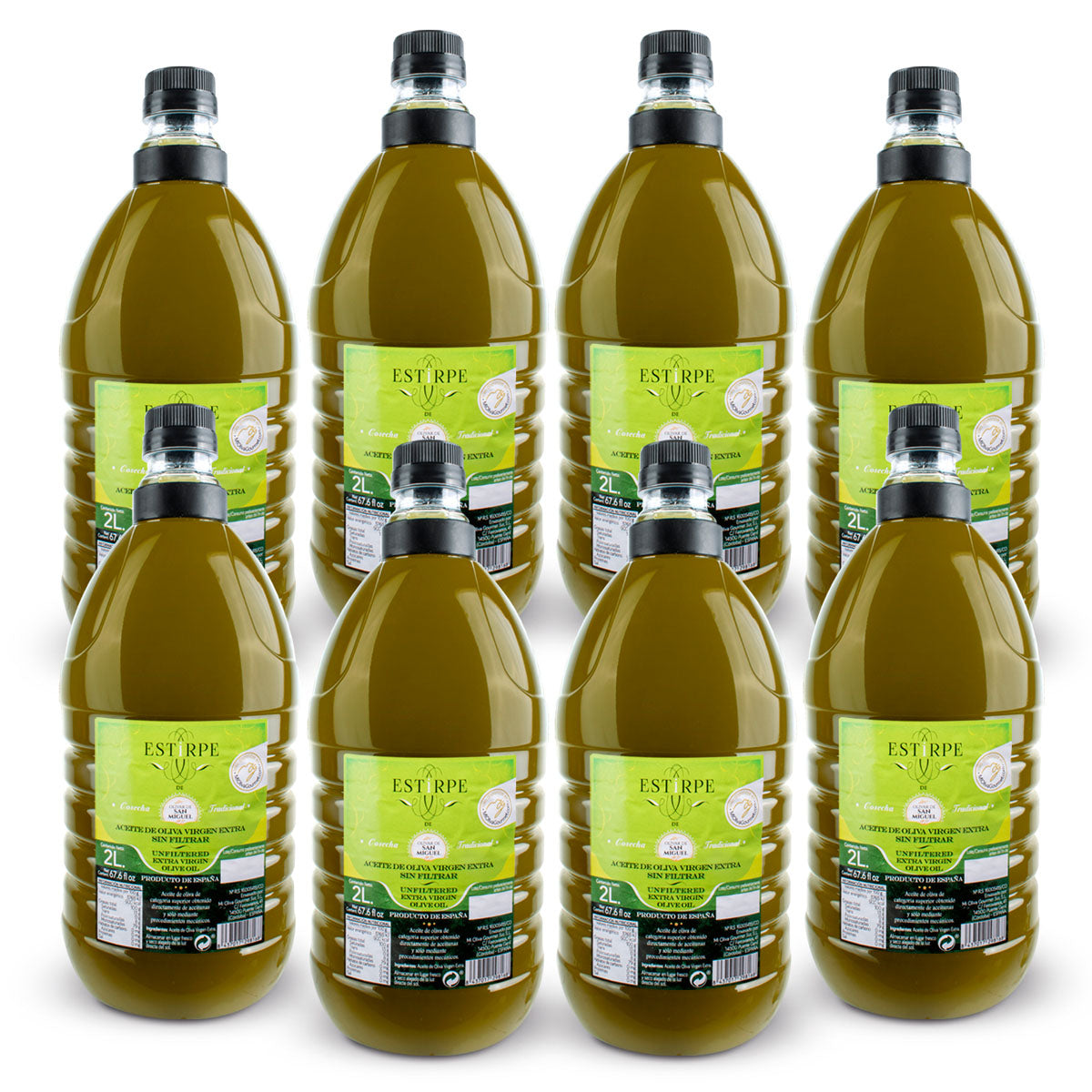
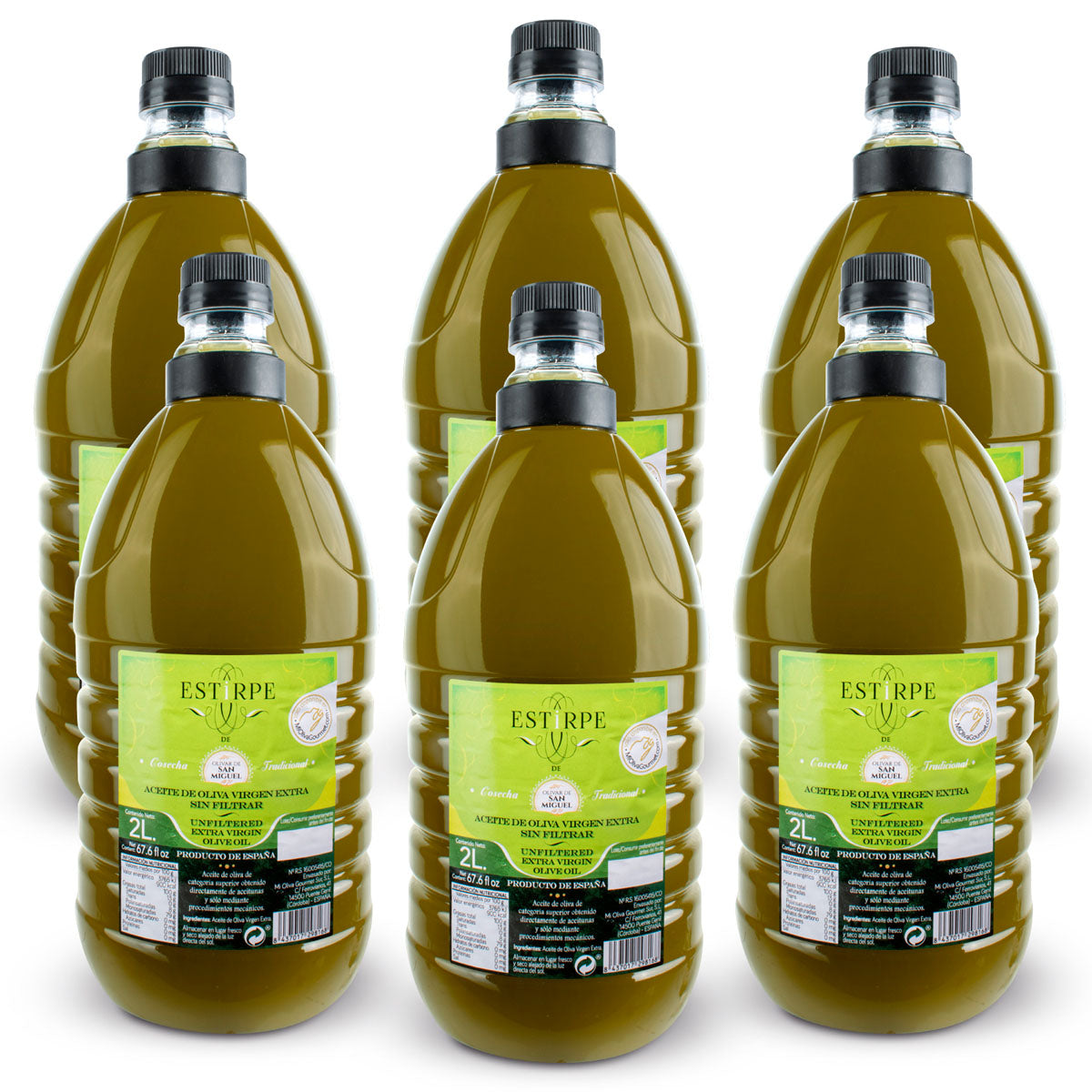
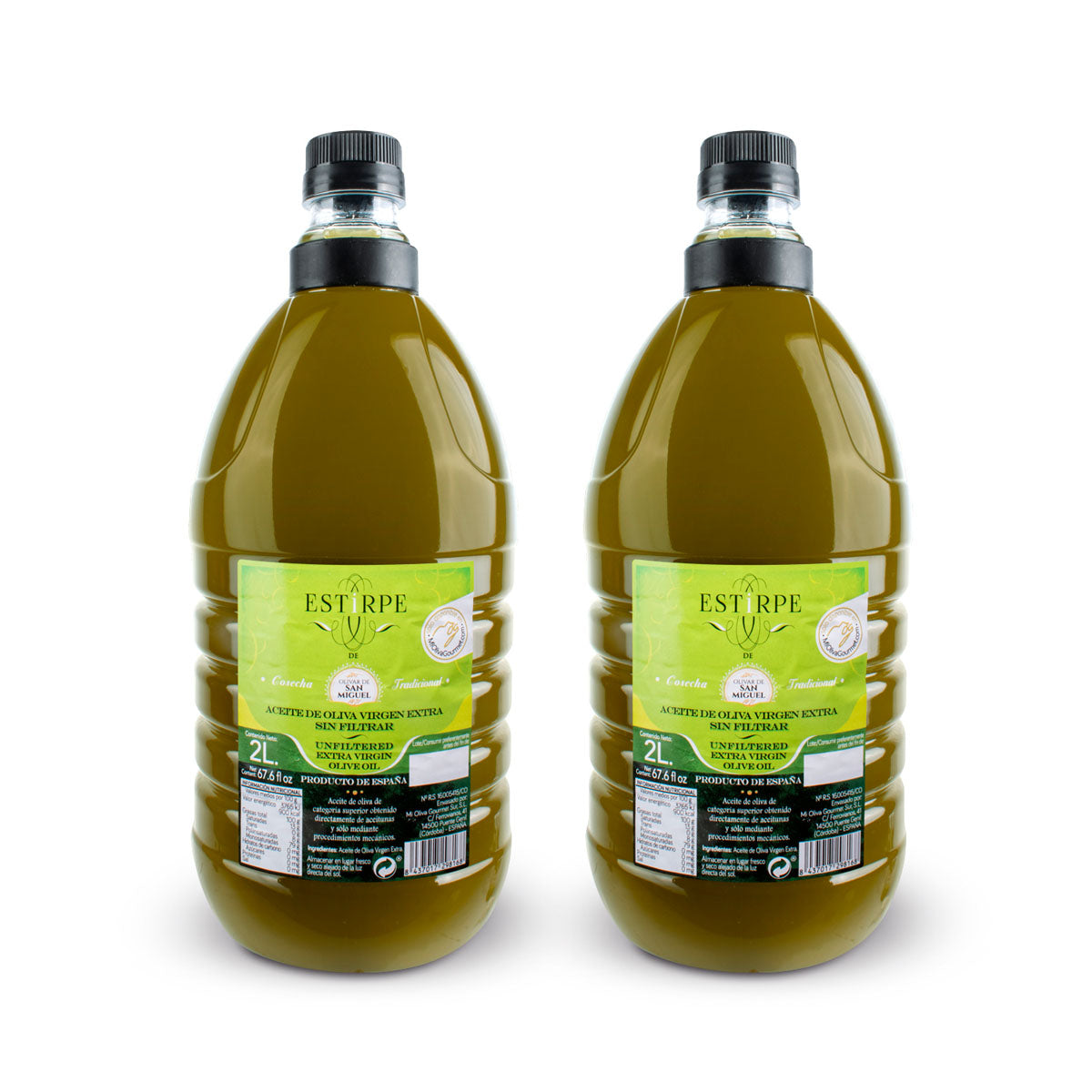
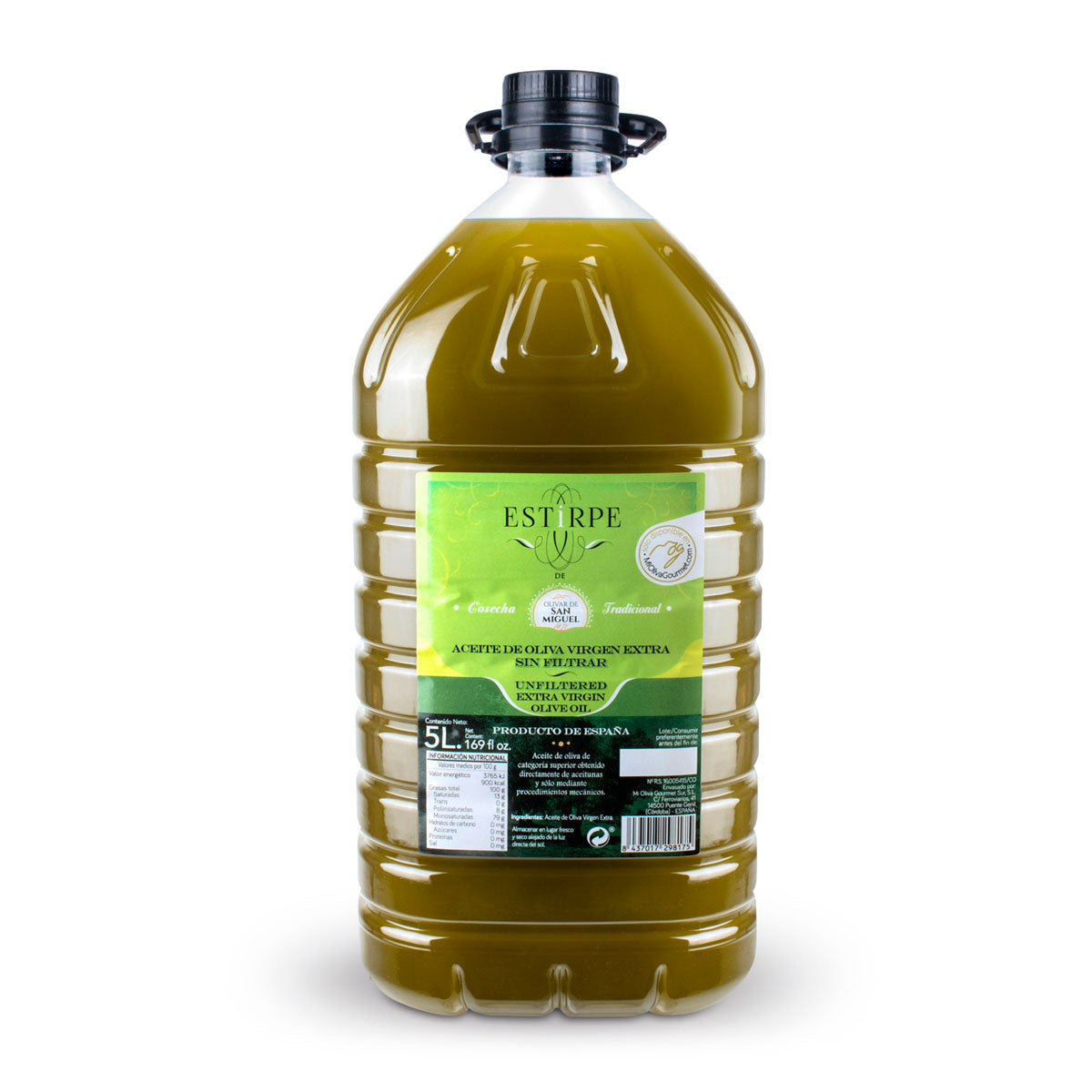
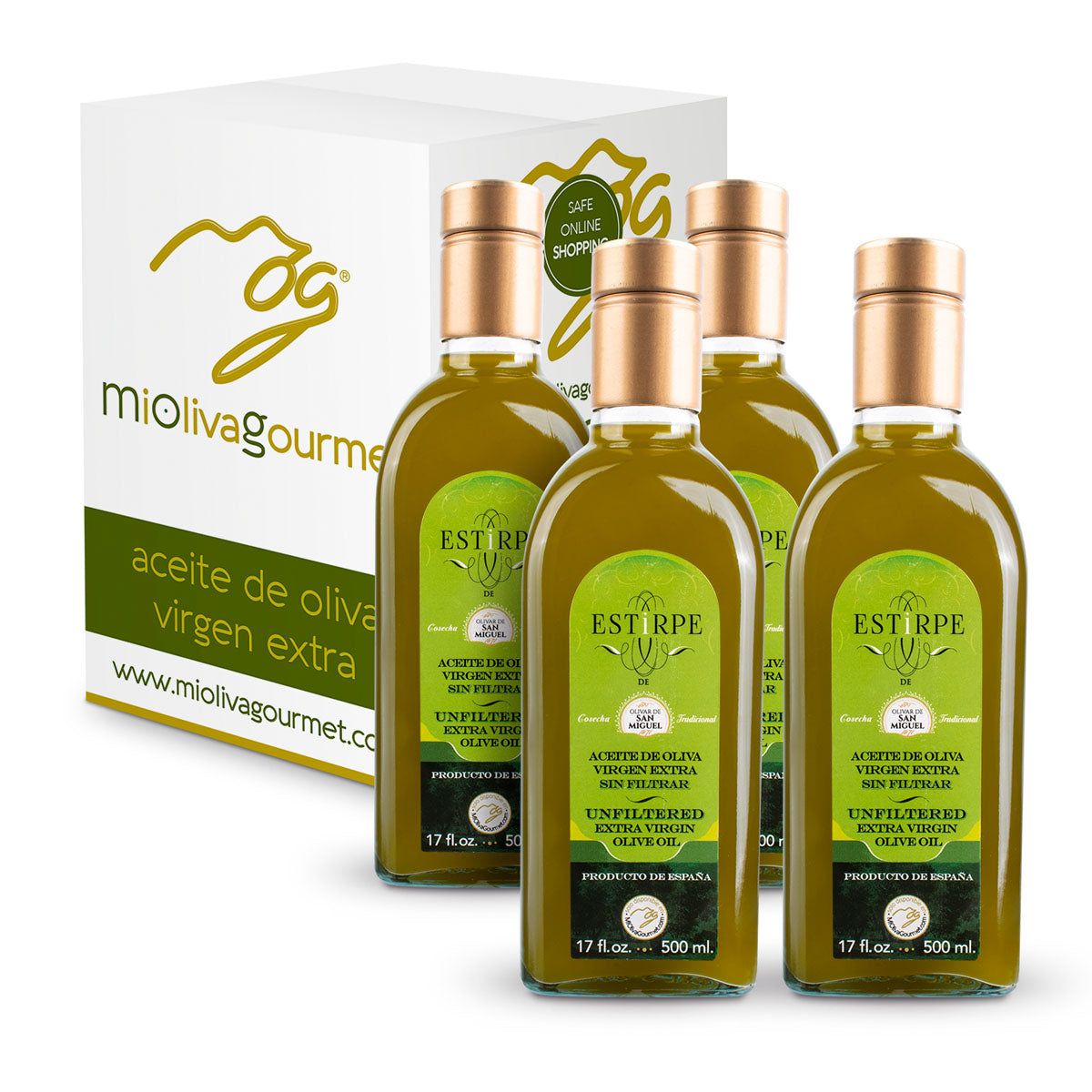
Our Arraigo Unfiltered is born in the Olivar de San Miguel, in Puente Genil (Córdoba), with Hojiblanca as the dominant variety and a touch of Picual and Picuda. The choice is not accidental: Hojiblanca brings balance and almond notes; Picual adds body and polyphenols; Picuda contributes the aromatic nuance that gives the final oil its complexity.
The blend is not made by mixing already-pressed oils, but by selecting the olives directly in the grove before milling. This preserves the full sensory structure of each variety, and the result is an EVOO with a defined, consistent character from one season to the next.
Verified figures for Arraigo from the 2025/26 season: acidity 0.20°, polyphenols above 250 mg/kg, unfiltered, first cold extraction, bottled to order. Over 1,000 five-star reviews on the product page. Such low acidity is an objective indicator of olive quality and careful milling.
What our customers say
★★★★★
"I live in Vitoria. I am passionate about olive oil — trying different varieties and oils from different regions. I think Arraigo unfiltered is one of the best olive oils I have ever tasted. Keep up the outstanding work."
Mario Santano Gil · Verified buyer · Vitoria
★★★★★
"I have tried oils from other mills but none of them comes close to this one. Exquisite oil, easy to order and super-fast delivery. I will definitely keep coming back."
Estela García · Verified buyer
★★★★★
"Exquisite. I love the flavour and that gentle peppery finish it leaves in the mouth. I have tried quite a few extra virgin olive oils, and this one genuinely impressed me — you can taste the craftsmanship. Worthy of the highest award."
María Novoa · Verified buyer
Order your Arraigo from the Olivar de San Miguel
Frequently asked questions about Hojiblanca olive oil
Where does the Hojiblanca olive originally come from?
From the area of Lucena and Cabra, in the province of Córdoba (Andalusia). That is where its traditional names "Lucentino", "Casta de Lucena" and "Casta de Cabra" originate. From Lucena–Cabra it spread to Antequera, Estepa, Priego and Loja — areas where it is today the principal variety in the corresponding PDOs.
Is Hojiblanca olive oil good for frying?
Yes. Its high oleic acid content (73–77%) gives it medium-to-high oxidative stability, more than sufficient for home frying at the right temperature (do not exceed 180 °C). For extended industrial frying, Picual holds up slightly better due to its higher polyphenol content.
When is Hojiblanca harvested?
It is a late-ripening variety. For oil, the optimal harvest window runs from November to December (Early Harvest, at the turning stage) or through to January (traditional harvest). For table olives, it is picked later, between March and April.
Hojiblanca or Picual: which is better?
It depends on the use and the palate. Picual is more intense, with more polyphenols and better suited to powerful frying and stews. Hojiblanca is more balanced and versatile, ideal for raw use and gentle cooking. There is no absolute "better": they are two excellent EVOOs with different characters. Many informed consumers keep both at home.
Does olive oil contain vitamin D?
Not in any nutritionally significant amount. EVOO is a recognised source of vitamin E (α-tocopherol) and, to a lesser extent, vitamin K. Vitamin D comes primarily from sun exposure and from oily fish, eggs and fortified foods. Any claim of "high vitamin D content" in an olive oil should be treated with scepticism.
How many polyphenols does a good Hojiblanca oil contain?
A quality Early Harvest Hojiblanca typically exceeds 250 mg/kg of total polyphenols — the threshold relevant for the health claim authorised by EFSA (EU Regulation 432/2012). Our Arraigo Unfiltered certifies polyphenols above 250 mg/kg.
Why is Puente Genil oil considered one of the best in the world?
Because of its documented oil-making tradition stretching back to the 17th century (the Molino del Marqués, 1648) and specific historical recognition: in 1935, the Spanish Olive Growers' Association awarded the oil of Puente Genil the title "Optimum Olei Emporium", covered by the newspaper ABC. In 1967, according to ABC de Sevilla, it accounted for approximately 13% of national production.
Is Arraigo pure Hojiblanca?
No, Arraigo is a blend in which Hojiblanca is the dominant variety, complemented by a touch of Picual and Picuda. This combination brings balance (Hojiblanca), body and polyphenols (Picual) and aroma (Picuda). The blend is made by selecting the olives directly in the grove before milling, not by mixing already-pressed oils.
This article was written by the Mi Oliva Gourmet team in May 2026, drawing on official sources (PDO Lucena, PDO Antequera, IOC World Catalogue, EFSA EU Regulation 432/2012, PREDIMED–NEJM 2018, Beauchamp et al. Nature 2005). If you spot any detail that needs updating or clarification, write to us at info@miolivagourmet.com and we will review it.




Leave a comment
This site is protected by hCaptcha and the hCaptcha Privacy Policy and Terms of Service apply.