
Extra virgin olive oil is olive juice: the olives are picked from the tree, washed, crushed whole, slowly mixed at a cool temperature, separated in a centrifuge, left to settle and then bottled. Every step matters, and the people who really know their oil take care of every last detail at each stage.
Every year, when Migue starts picking the olives, people ask me the same question: “Julio, so how is olive oil actually made?” It sounds simple: you take the olive, squeeze it and out comes the oil. But between the tree and your table there are seven steps. At each one, the gap between real olive oil and “industrial” oil grows wider, and it completely changes the flavor and the health benefits of what reaches your home (even if the label still says extra virgin, mind you).
I'll walk you through them in the order the olive goes through them.
In this article
- How is olive oil made?
- When are the olives picked, and why does it matter so much?
- How long can olives wait before they're milled?
- What happens when the olives reach the mill?
- Are olives crushed with the pit?
- What is malaxation and what does “cold extraction” mean?
- How is the oil separated from the water and the paste?
- Why is unfiltered oil cloudy?
- How does the oil get to your table?
- In short: industrial oil vs. the real thing
- Frequently asked questions
How is olive oil made?
Extra virgin olive oil is, quite literally, olive juice: it is extracted by mechanical means alone, with no chemicals. The process has seven steps: harvesting, washing, crushing, malaxation, separation, settling (with or without filtering) and bottling.
Nothing is added and nothing is taken away, apart from the water and the pulp. That's why the quality of an oil can't be “fixed” at the mill: what comes out is what the olive brought in. And what the olive brings in depends, above all, on the day it was picked. What can happen at the mill is that the oil gets ruined (usually deliberately, by the big producers), and here I'll explain why.
Before we go on, one important thing: if until now you've been buying “extra virgin” oil thinking they were all the same, that's not your fault. One bottle's label says exactly the same as the next. The difference lies in what happens beforehand, and nobody tells you about that.
When are the olives picked, and why does it matter so much?
The moment of harvest determines how the oil tastes and how much oil you get. Olives picked early, still green or just turning color, give a green, fruity oil with bitterness and pepperiness, but the yield is very low. Ripe olives, picked in December or January, give almost twice as much oil, smoother and less aromatic.
Same olive, same tree. What changes is the veraison, the stage of ripeness the olive has reached when it's picked. We explain it in what veraison is and why it determines the flavor of the oil.
And here's the first catch. With early olives it takes almost 9 kilos to make one liter of oil; with ripe ones, around 5. We crunched the numbers in how many kilos of olives it takes to make a liter of oil. If all you're after is volume, waiting pays off. And that's exactly what large-scale producers do: the label says “extra virgin” all the same, but it doesn't taste the same.
Then there's how the olives are picked. For a quality extra virgin, the olives come from the tree, never from the ground. Nets are spread out under the olive tree, the branches are beaten with poles and the trunk is shaken so the olives drop, and then the nets are gathered up. Olives that had already fallen on their own have spent days being bruised, sitting in the dirt and the damp, and you can taste it in the oil. When what counts is the kilos, those olives get used too.


And you can't pick on just any day. After a few dozen liters of rain per square meter, you have to wait at least one dry day before you can get into the olive grove.
How long can olives wait before they're milled?
A few hours, never days. As soon as it leaves the tree, the olive starts to change. If it's piled up and left waiting for days, it ferments, the acidity rises and the oil develops a defect that official tasting panels call fusty. If the panel detects it, that alone is enough for the oil to lose its extra virgin status.
At the height of the season, a large mill can take in more olives than it can process, and whatever doesn't fit waits its turn in a heap. Ours waits only a few hours before going into the mill, and it's always milled within the day.
If you want to know what acidity actually is and why it has nothing to do with pepperiness, here's the acidity of extra virgin olive oil.
What happens when the olives reach the mill?
They're weighed, stripped of leaves and washed. The trailer unloads into the hopper, a sort of giant funnel, and from there the olives pass through a leaf remover, which blows away leaves and twigs, and a washer, which removes dust and dirt.
Each load is weighed on the scale and a sample is taken to measure its yield, in other words, how much oil it holds. It's the first figure the grower checks at the end of the day. And notice that this is exactly what gets paid for: how much oil comes out. Not how good it is.
Are olives crushed with the pit?
Yes, whole: flesh, skin and pit. A mill grinds them into a dark, thick paste, a bit like pâté. The oil is hidden in tiny droplets inside the cells of the pulp, and crushing the olive is how you release them.
In the past this was done with large granite stones turning over the olives. Today, metal crushers are used: faster and easier to keep clean. If you'd like to see how it used to be done, we have how olive oil was made in 1968, a beautiful documentary.
What is malaxation and what does “cold extraction” mean?
Malaxation is the step where the oil droplets come together, and “cold extraction” means the paste never goes above 27 °C. The paste moves into malaxers, tanks fitted with paddles that stir it slowly. With that movement, the tiny droplets of oil gradually merge into larger drops that can then be separated.
This is where the biggest difference of all lies, and the one you hear least about. Heat the paste, mix it for longer or add water, and you get more oil. It's a well-established practice in many mills, and it comes at a cost. Ítala Marx, a researcher at the University of Córdoba who has studied malaxation in working mills, sums it up: “Yes, it worked for yield, but it destroyed the phenols and the flavor.” Water also washes those phenols away, because they dissolve in it. (Source: Olive Oil Times, 2025.)
The law sets a limit, but only for the label: an oil may only say “cold extraction” if it was obtained below 27 °C. (Source: Delegated Regulation (EU) 2022/2104, Article 10.)
Mind you, that 27 °C doesn't decide whether an oil is extra virgin. For that, the law sets no temperature at all: it requires the oil to be obtained solely by mechanical means, “under conditions that do not lead to alterations in the oil,” and to pass the lab analysis (maximum acidity of 0.8 g per 100 g, among other parameters) and the tasting panel. (Source: Regulation (EU) 1308/2013, Annex VII, Part VIII.) In other words, an oil malaxed hot to squeeze out more liters can still say “extra virgin” on the label. The only thing it can't say is “cold extraction.”
And 27 °C is the ceiling for calling it “cold,” not what the best producers do. Mills aiming for top-quality extra virgin malax cooler, at around 22 °C. The research backs this up: at the University of Perugia, the temperature that gave the best aroma, the best flavor and the most phenolic compounds was, for one of the two varieties studied, the lowest they tested: 22 °C. For the other it was 26 °C. (Source: Servili et al., Journal of Agricultural and Food Chemistry, 2003.) And in another study carried out in a working mill, malaxing at 28 °C or 34 °C reduced most of the phenolic compounds that were preserved at 22 °C. (Source: Marx et al., Food Chemistry, 2021.)
So why is heat worse? For two reasons:
The aromas escape. The scent of freshly cut grass, tomato leaf or artichoke comes from volatile compounds, which evaporate easily. The hotter the paste, the more of them are lost along the way, just as freshly brewed coffee loses its aroma if you leave it on the stove.
-
The bitterness and pepperiness fade. Both come from polyphenols, natural compounds in the olive that pass into the oil when it's crushed. They're also antioxidants: they protect the oil itself from oxidation and help it last longer without turning rancid. The more polyphenols an oil has, the longer it takes to oxidize. (Source: Martínez Nieto et al., University of Granada, Journal of the Science of Food and Agriculture, 2010.) We go into more detail in polyphenols: the hidden treasure of olive oil.
Not all polyphenols do the same thing. When they're isolated one by one and tasted, almost all of them are bitter, but the peppery catch in the throat comes mainly from one: oleocanthal. (Source: Andrewes et al., Journal of Agricultural and Food Chemistry, 2003.) The bitterness comes mainly from derivatives of oleuropein and ligstroside, two compounds found in the olive. (Source: Gutiérrez-Rosales et al., Instituto de la Grasa (CSIC), 2003.)
And heat reduces them: in the Food Chemistry study, raising the malaxation temperature from 22 °C to 28 °C and 34 °C lowered most of these compounds. It's not a hard-and-fast rule, because each variety reacts differently, but that's the general trend.
So why heat the paste at all? Because warmth makes the oil more fluid, it separates more easily from the paste and you get more liters. It's a choice between quantity and quality, and most choose quantity.
Our EVOOs are malaxed at around 22 °C, cold and without added water. We get a little less oil, but all the aroma stays in.
If you want to know which other label claims actually mean something, we cover it in how to read an olive oil label.
How is the oil separated from the water and the paste?
With a centrifuge: it spins so fast that the oil, being lighter, separates on its own. The malaxed paste goes into a decanter, a horizontal cylinder that turns thousands of times per minute. Oil comes out one side; out the other comes the pomace, which is the skin, pulp and pit along with the olive's own water.
In the past this was done with presses: the paste was spread onto woven esparto mats, which were stacked and pressed. That's where “first cold pressed” comes from, a claim that today only oils made with a traditional press are allowed to use. (Source: Delegated Regulation (EU) 2022/2104, Article 10.)
Why is unfiltered oil cloudy?
Because it keeps tiny particles of olive pulp that would be removed if the oil were filtered. Freshly pressed oil rests in tanks so the heaviest particles sink to the bottom. This resting is called settling, or decanting.
This is where the master miller comes in. The first time I was with Juan, ours, he had me taste the oil straight from the settling tank, with a long-handled ladle. It was incredibly peppery. When I asked whether it would stay that peppery, he laughed: “Not a chance! It's still settling and the olives aren't all in proportion yet, you have to keep tasting.”
In our case, the oil settles for two days. On the third, it's moved from the settling tank to the bottling tank and bottled right there, with no filtering of any kind.
A filtered oil also goes through filters that remove that cloudiness: it looks brighter and stays the same for longer, but it loses some of the body and aroma of the first day. We explain the differences in unfiltered or filtered olive oil: which one to choose.
How does the oil get to your table?
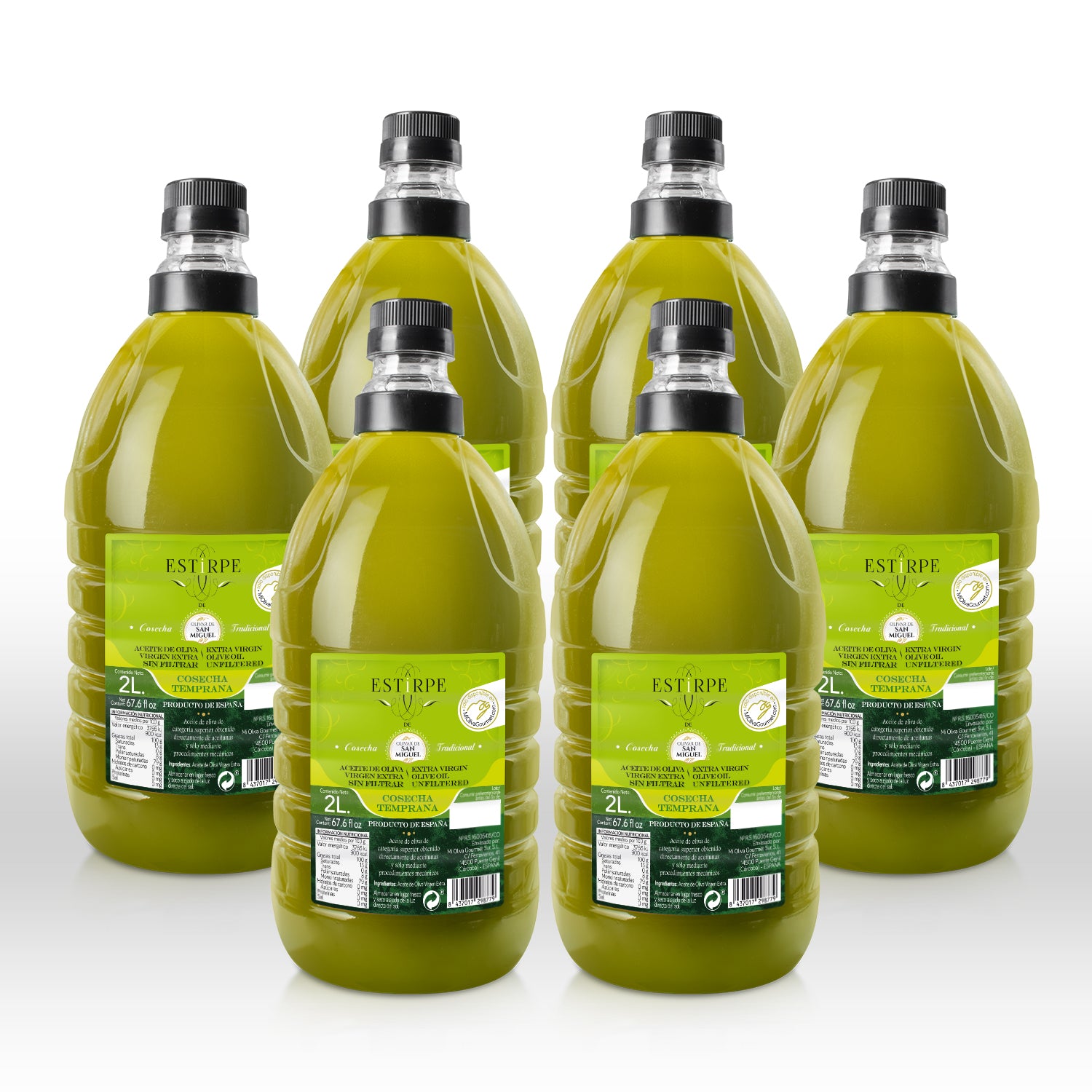
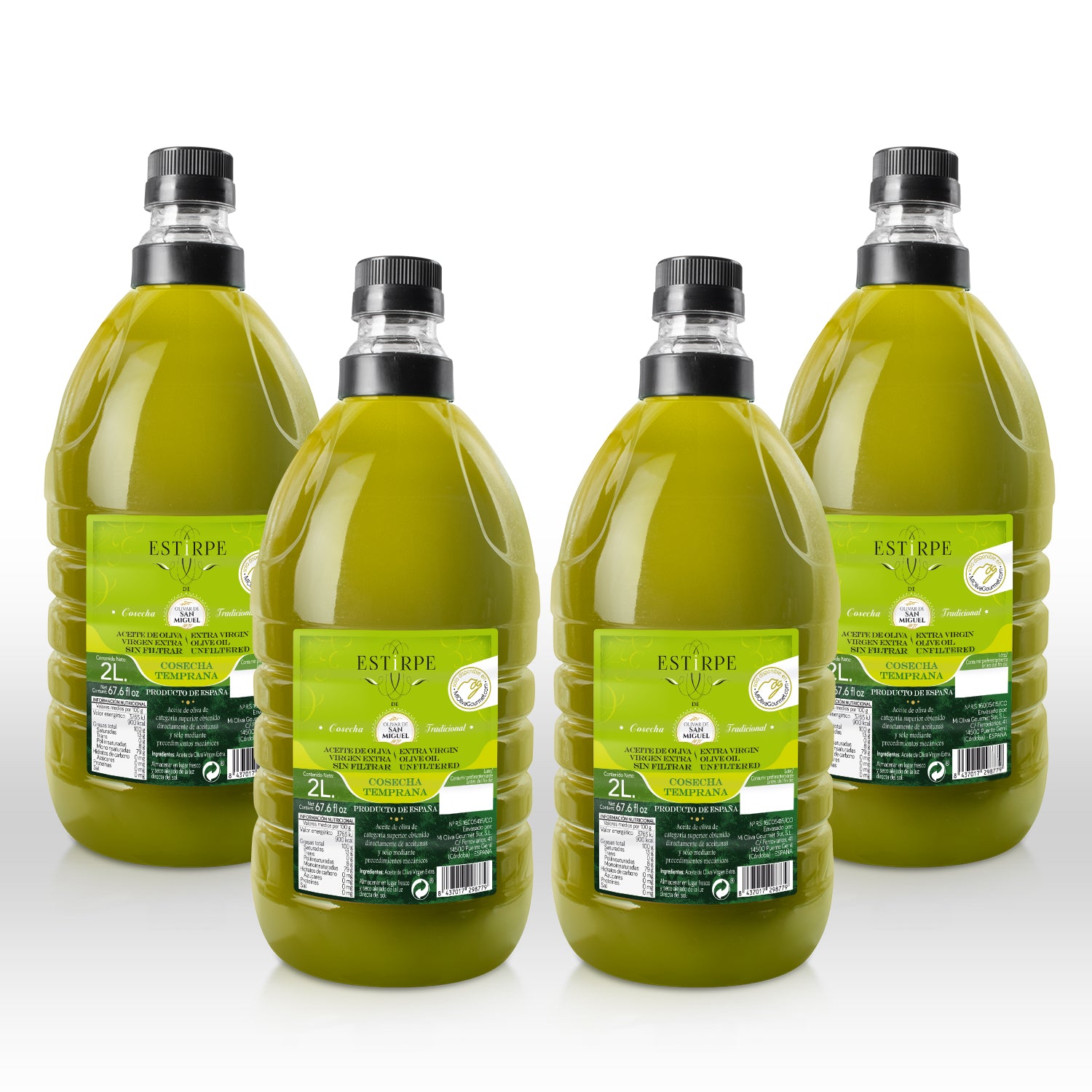
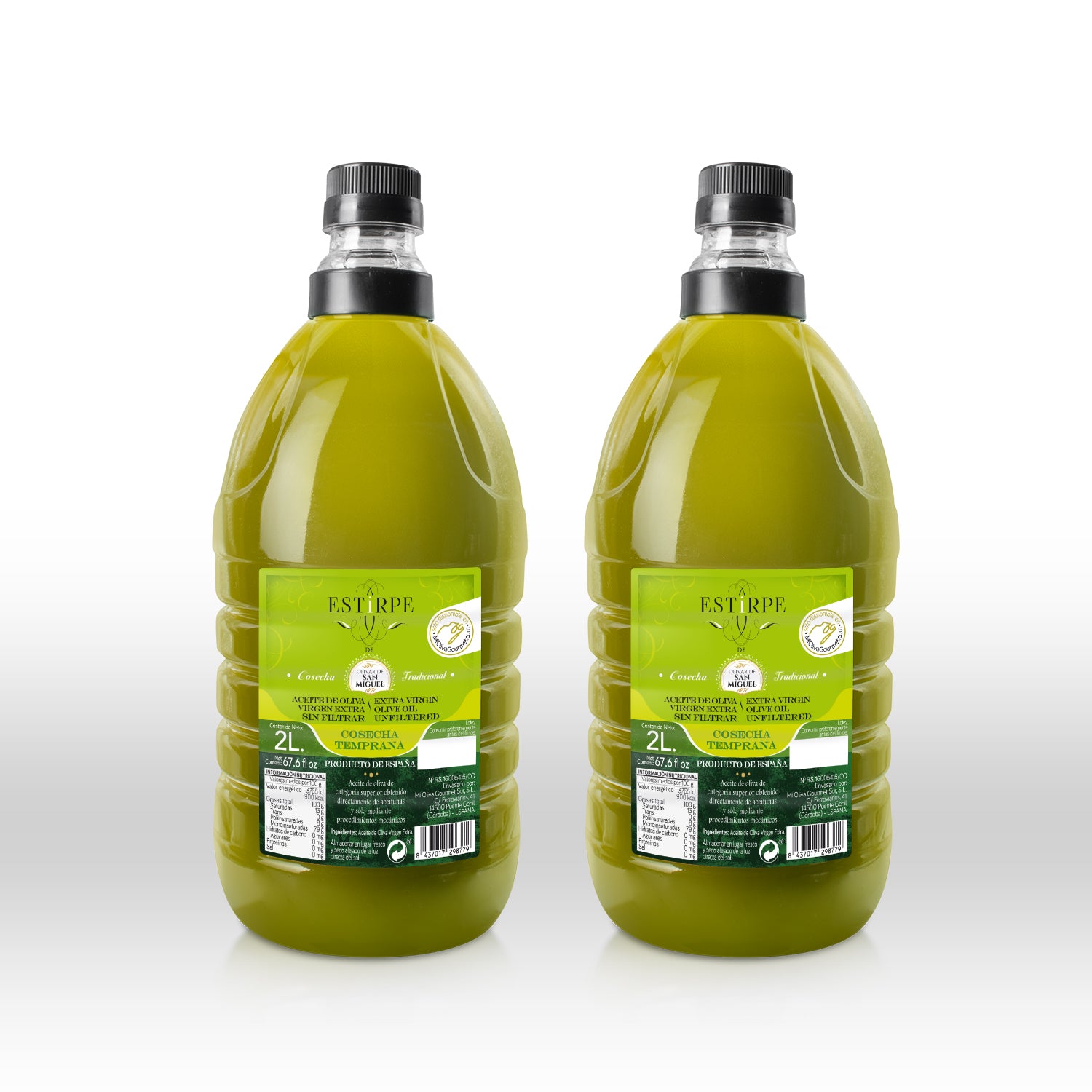
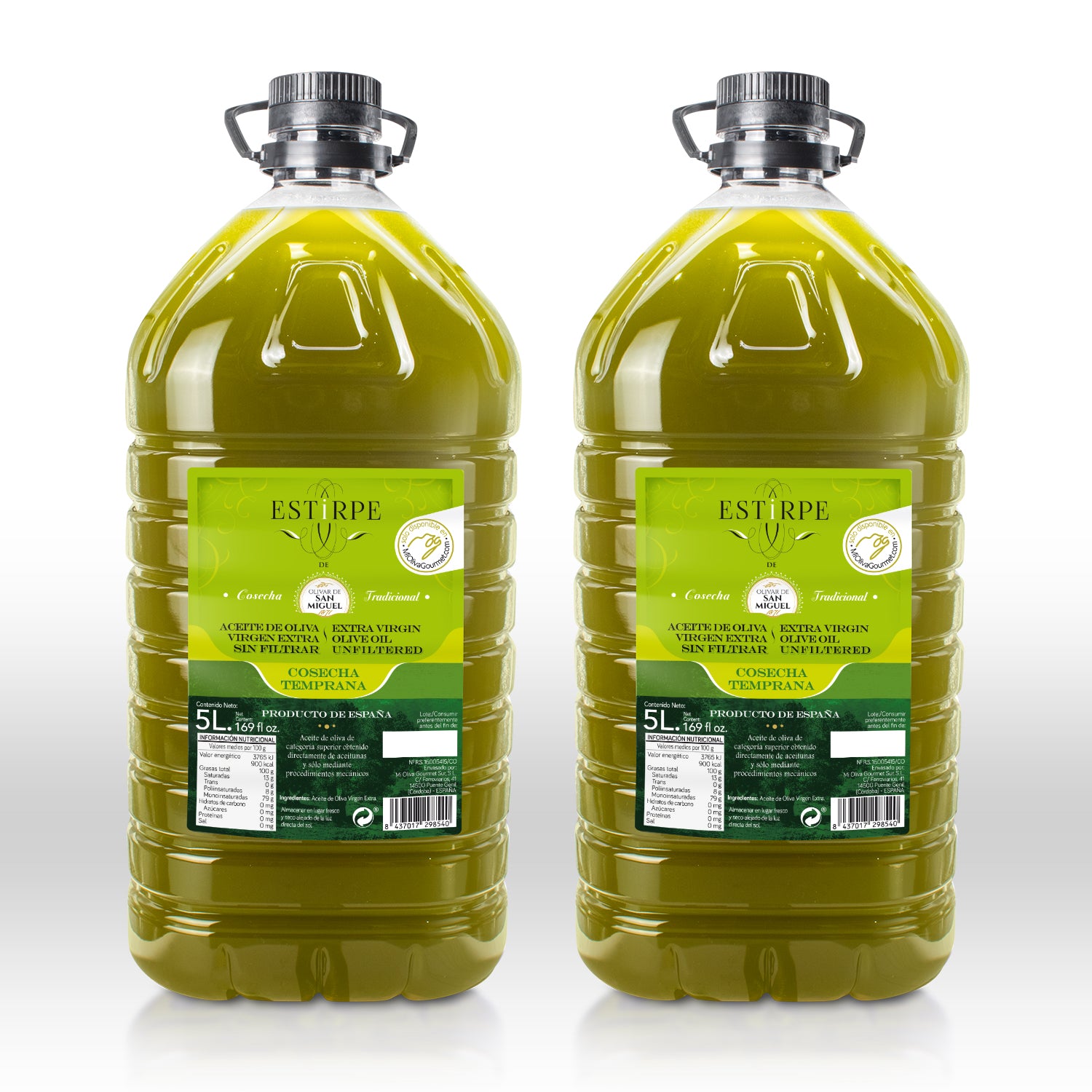
Usually, weeks or months go by between the mill and your kitchen: the oil is stored, bottled early in the season and passes through distributors and shops. With Estirpe Early Harvest, we do the opposite.
On the very day it's bottled, it ships to the homes of everyone who pre-ordered it, and we send it by express delivery even if standard shipping was paid, so it arrives the next day. That way you taste it just as we do at the mill: freshly pressed.
From then on, the oil keeps evolving. Over the months, the green slowly turns golden and the pepperiness mellows, without the oil going bad. That said, it depends on how it's stored. Supermarket and big-box oils spend months exposed to fluctuating temperatures, light and poor storage conditions.
All our EVOOs are stored in oxygen-free tanks in the mill's cellar, at optimal temperatures. We explain why in why extra virgin olive oil changes color, and how to store it so it stays at its best in summer and your olive oil.
In short: industrial oil vs. the real thing
| Step | When the goal is volume | Our oil |
|---|---|---|
| Harvest | Ripe olives, which yield almost twice as much, plus olives from the ground | Early olives, from the tree only, onto nets |
| Waiting | Whatever the mill can't handle waits in a heap | A few hours, never a full day |
| Malaxation | More heat, more time or added water to get more oil | Cold, at around 22 °C, with no added water |
| To your door | Weeks or months in warehouses and shops, exposed to light and temperature swings | Ships the same day it's bottled, by express delivery |
What customers who've tried it tell us
|
★★★★★ “Excellent oil. It reminds me of when I was a boy and went with my father to the village mill, and they'd make us toast with oil fresh from the press.” José Martínez Rodríguez · Verified buyer · Estirpe Early Harvest |
|
★★★★★ “Its color, texture and flavor took me straight back to my childhood, to the press in my little village where, during the milling, they'd give us kids toasted bread with ‘creamy, green’ oil.” María Jesús Sánchez Marcos · Verified buyer · Estirpe Early Harvest |
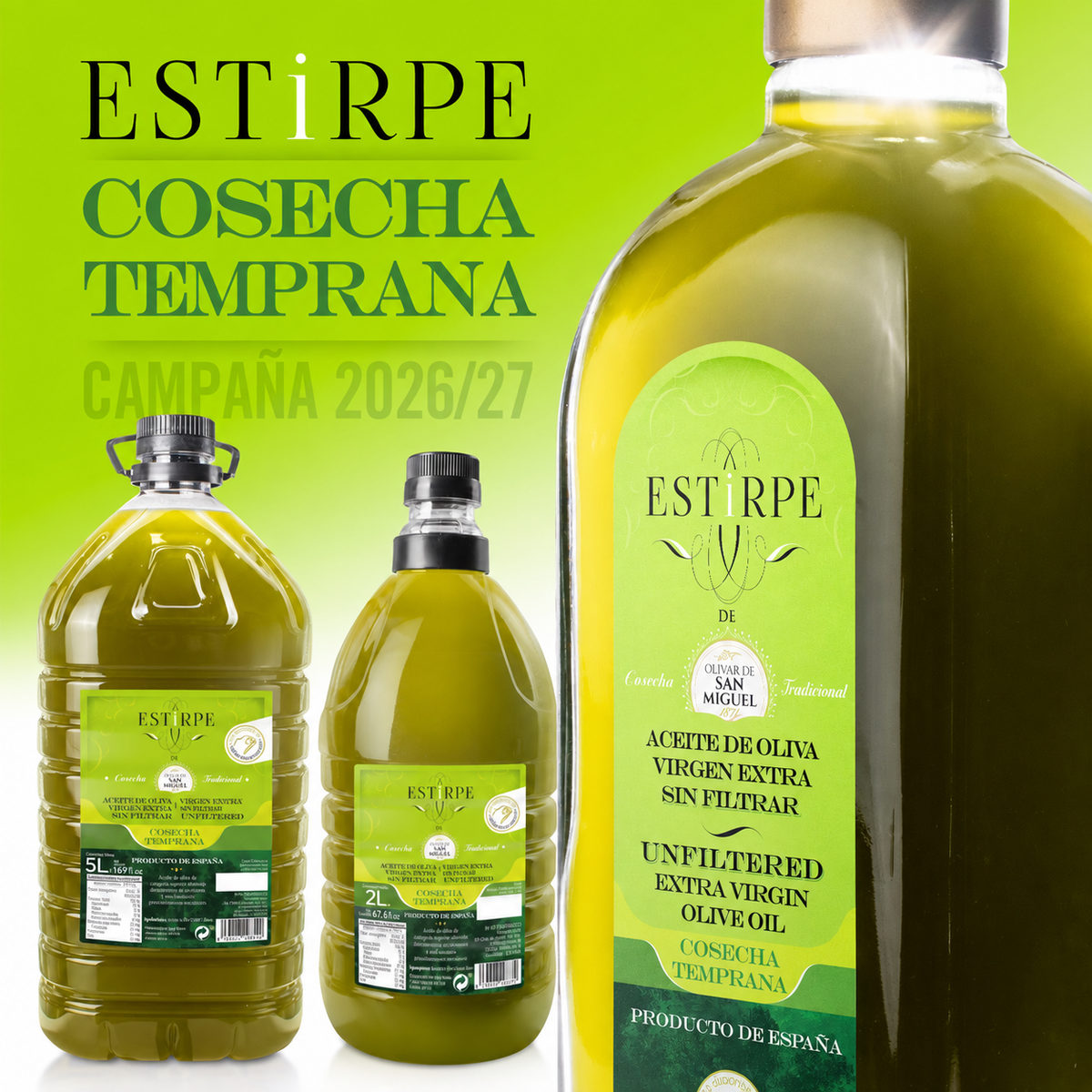
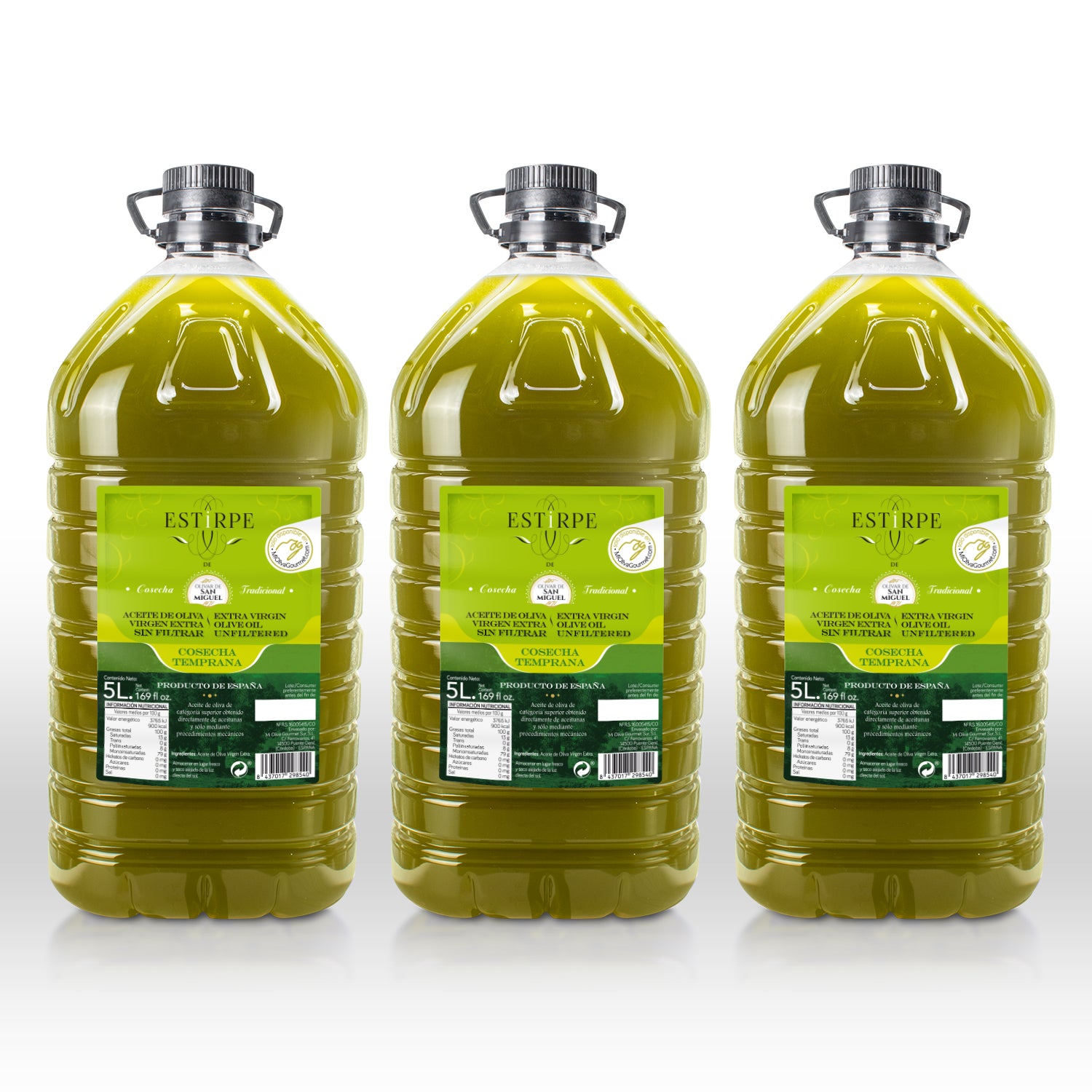
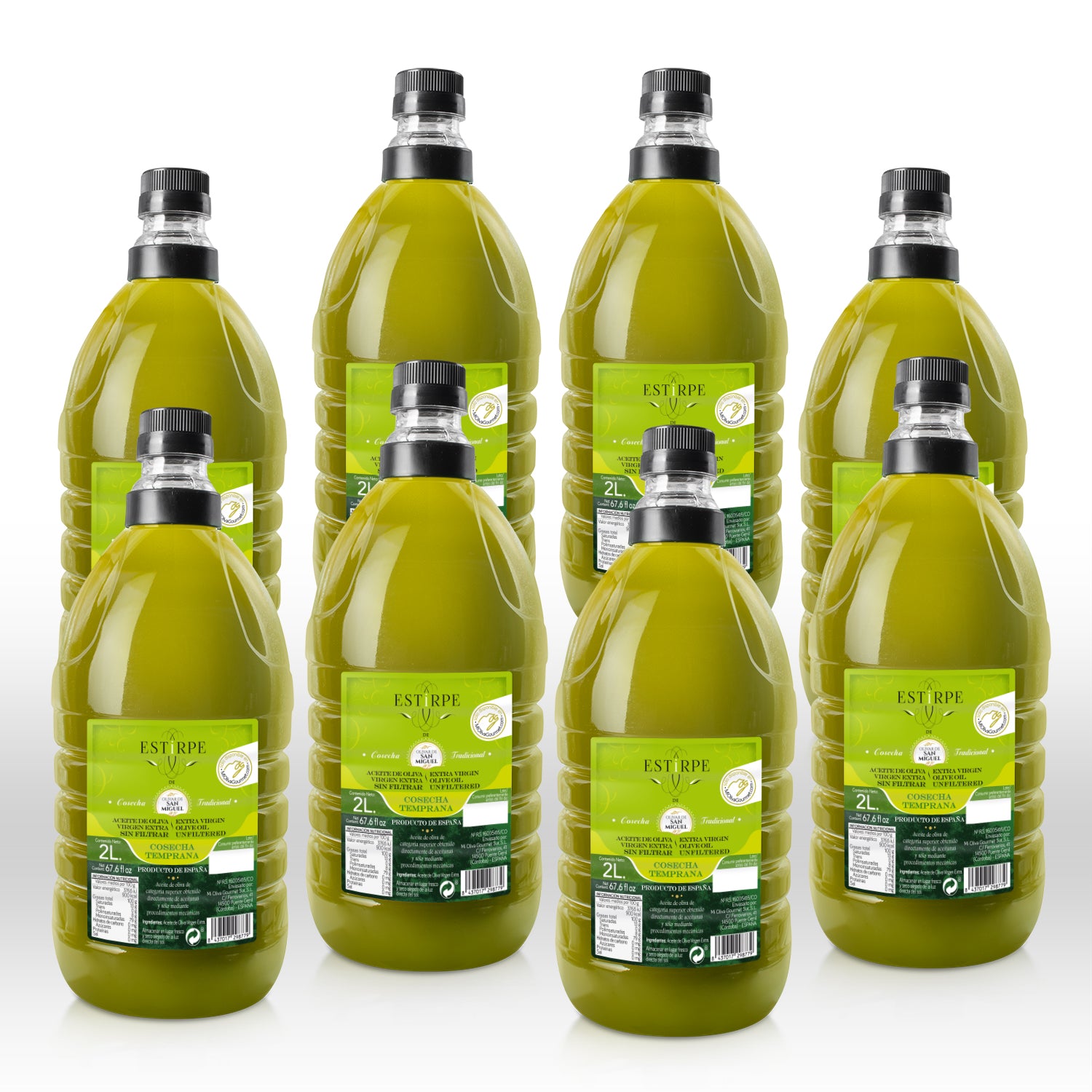
This year, the first oil to come out of our mill is made from early olives: green, fruity and with that peppery finish that only freshly pressed oil has.
👉 Reserve the first oil of the year
Frequently asked questions
How long does it take to make olive oil?
From the moment the olives enter the mill to the moment the oil comes out takes just a few hours. After that, the oil rests in tanks to settle; in our case, for two days before bottling.
Are olives crushed with the pit?
Yes. They're crushed whole, with skin, pulp and pit, and the pit comes out afterwards with the pomace.
What does “cold extraction” mean?
It means the oil was obtained without the olive paste going above 27 °C, and separated by centrifugation. It's a claim regulated by the European Union, and only extra virgin and virgin olive oil may use it. It's a maximum: the highest-quality oils are malaxed much cooler, at around 22 °C. But don't confuse it with what makes an oil extra virgin: that's decided by lab analysis and tasting, not by temperature.
What is pomace?
What's left of the olive once the oil has been extracted: skin, pulp, pit and water. It goes to other industries, which extract pomace oil from it and use it as fuel.
Are all extra virgin olive oils the same?
No. “Extra virgin” is a minimum category: the oil must have an acidity of 0.8 g per 100 g or less and show no defects at tasting. That category covers both an early-olive oil malaxed cold and a ripe-olive oil malaxed hot to get more liters, and the label says the same thing.
Why is freshly pressed oil peppery and bitter?
Because it comes from fresh, green olives. Bitterness and pepperiness are two of the positive attributes that official tasting panels value in an extra virgin olive oil, along with fruitiness.




Leave a comment
This site is protected by hCaptcha and the hCaptcha Privacy Policy and Terms of Service apply.