
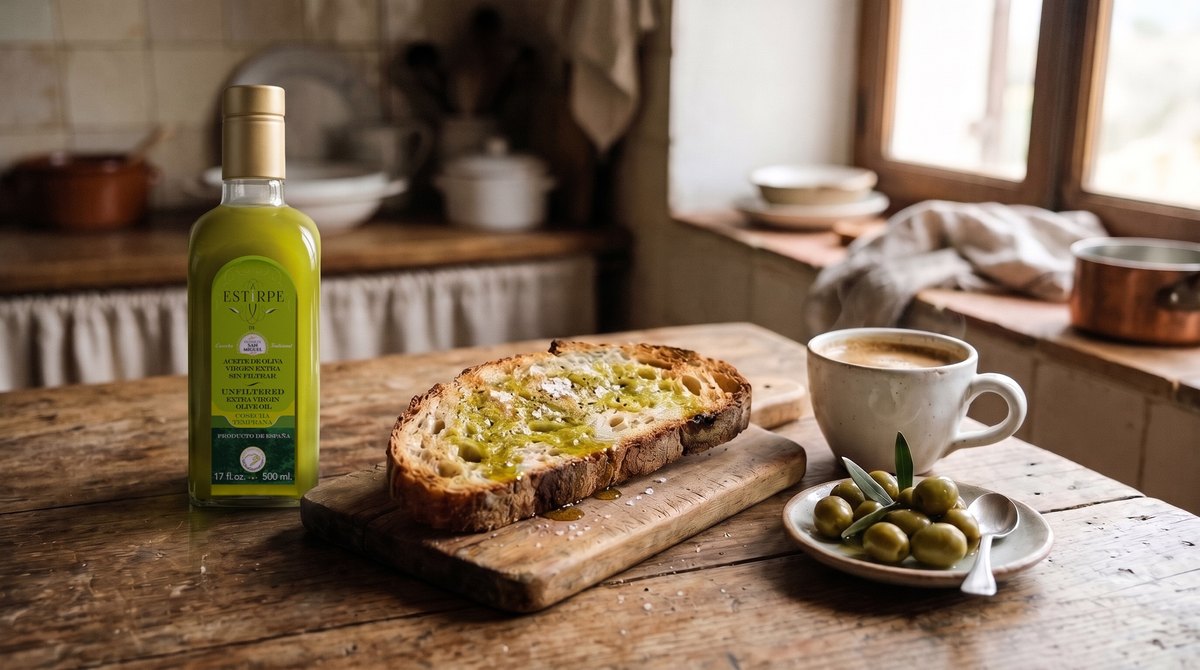
The perfect olive oil toast starts with bread with a good crumb and crust (a rustic loaf, mollete or sourdough), toasted until golden, with a tablespoon of oil (10-15 ml) drizzled on while the bread is still warm and, if you like, salt at the very end. But before anything else, there's one step almost all of us skip: tasting the oil on its own.
Some people start the day with something quick: the rush, the “everything I have to get done,” the “come on, let's go.” And some people start it with pleasure from the very first bite, with a delicious slice of toast and proper Extra Virgin Olive Oil, the kind you won't find at the supermarket or in regular shops. That way, the day can only get better 🥰.
If you're in the second group, you already know that moment isn't up for negotiation. And you also know not every oil makes it the same: with one, you're just having breakfast; with another, you stop, breathe it in and let its aromas wash over you, reminding you of the countryside, of your childhood, of where we come from.
These days, with the milling of our Early Harvest about to begin, I sat down to write about how to get the most out of that toast. No need to play chef: just enjoy the essence of the Mediterranean, bread, oil, salt and a couple of details that make all the difference.
In this article
- Why is toast the best way to taste a freshly pressed oil?
- Which bread should you choose for olive oil toast?
- What should you do before pouring the oil?
- How much oil should you put on toast?
- How can you tell on toast that an oil is good?
- With tomato, salt or something sweet? The combinations that work best
- How should you store the oil so it tastes the same every morning?
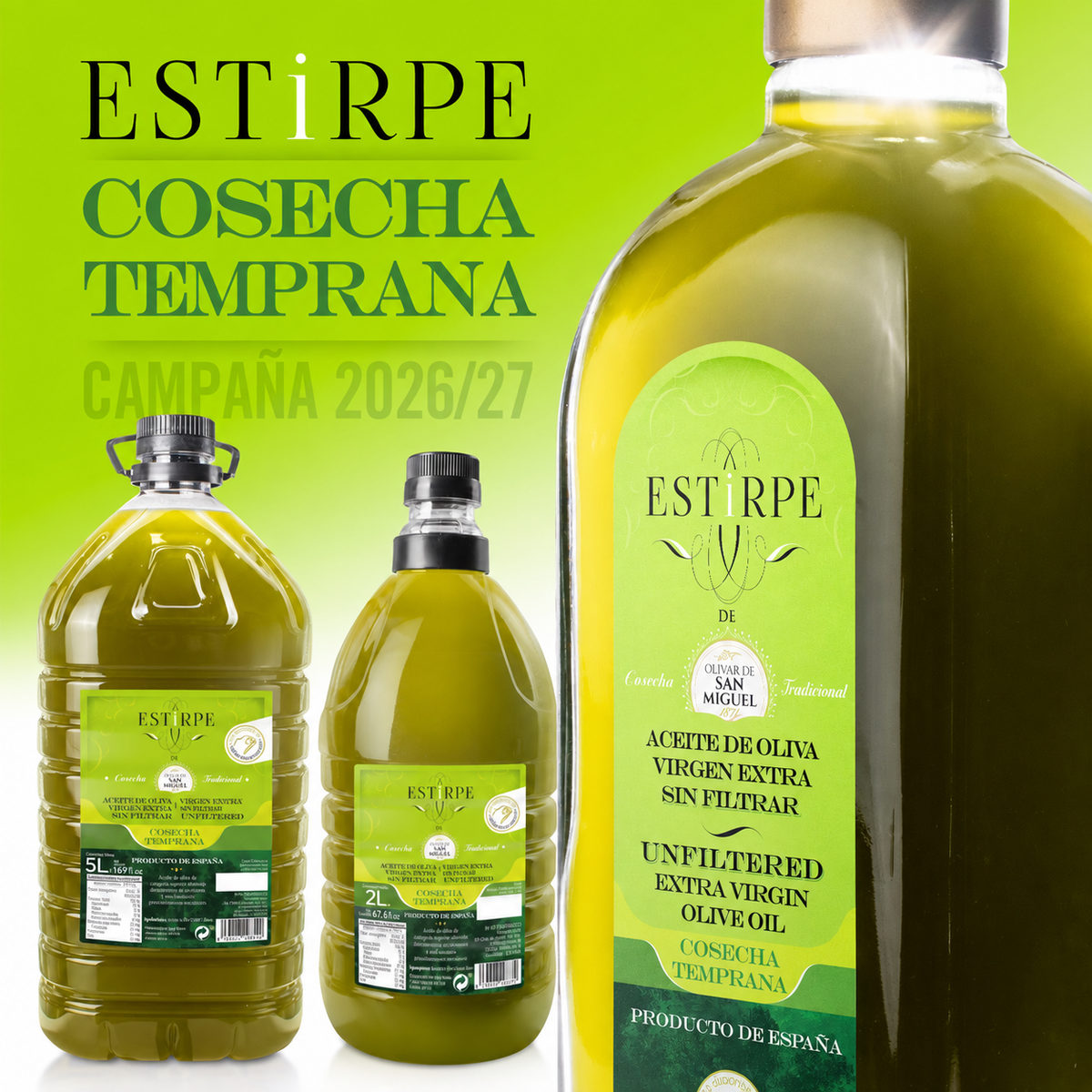
- When does the Early Harvest 2026/27 arrive?
- Frequently asked questions
Why is toast the best way to taste a freshly pressed oil?
Because the bread doesn't steal the spotlight: it holds it up. In a salad or a stew, the oil shares the plate with lots of other things. On toast, what you taste is almost entirely the oil: its aroma, its texture and that finish at the back of the throat.
And first thing in the morning your palate is clean, free of the flavors of the rest of the day. So if you want to know what an oil is really like, a slice of toast in the morning is the best tasting you can do at home.
Which bread should you choose for olive oil toast?
Bread with a crumb that soaks it up and a crust that crunches. It doesn't need to be expensive, but it does need to be real bread:
- Country-style bread or a rustic loaf: a dense crumb that holds the oil well without falling apart.
- Mollete: the classic soft roll of Andalusian breakfasts. A tender crumb and little crust, lighter, leaving more room for a good EVOO to shine.
- Sourdough bread: a slight tang that contrasts beautifully with the bitterness of an early harvest oil.

Sliced sandwich bread or very soft bread gets soggy and turns chewy. Day-old frozen supermarket bread is practically chewing gum. The oil deserves something better underneath.
What should you do before pouring the oil?
Taste the oil on its own, before mixing it with anything. It's the step almost all of us skip, and it's the one that teaches you the most.
Pour a few drops onto a teaspoon or dip a small piece of untoasted bread. Smell it first: a freshly pressed oil smells of fresh olives, cut grass, tomato leaf. Then taste it and wait a couple of seconds: first comes the fruitiness, then a smooth touch of bitterness and, finally, the peppery kick in the throat.

Once you know it on its own, you'll recognize it on the toast. And you'll notice what each thing you add brings to it. You're educating your senses, training them to enjoy pure olive juice a little more every day.
The second detail: toast the bread until golden, not until dark. Burnt bread tastes burnt, and that flavor masks exactly the nuances you're looking for. Pour the oil while the bread is still warm: that way the aroma rises more, and a real EVOO is enjoyed with all your senses.
How much oil should you put on toast?
Roughly a tablespoon per slice, about 10-15 ml. Just enough for the crumb to soak it up and the surface to glisten, without dripping.
With an intense oil, like an early harvest, a little goes a long way. Better to start with less and add more than to drown the bread.
A trick from home: pour it in a spiral from the center out toward the edges, holding the cruet close to the bread, about 3-5 cm away. That way it spreads by itself and doesn't all pool in the middle.
How can you tell on toast that an oil is good?
By the aroma the moment you pour it, and by that little peppery tingle at the end of each bite. That pepperiness isn't a flaw: it's the sign of an oil made from olives picked at the right time and milled straight after harvesting. It comes from oleocanthal, a compound with an anti-inflammatory action similar to ibuprofen: a team from the Monell Chemical Senses Center reported in the journal Nature that it acts on the same pathway and causes the same sting in the throat (Beauchamp et al., Nature, 2005 · see the study).
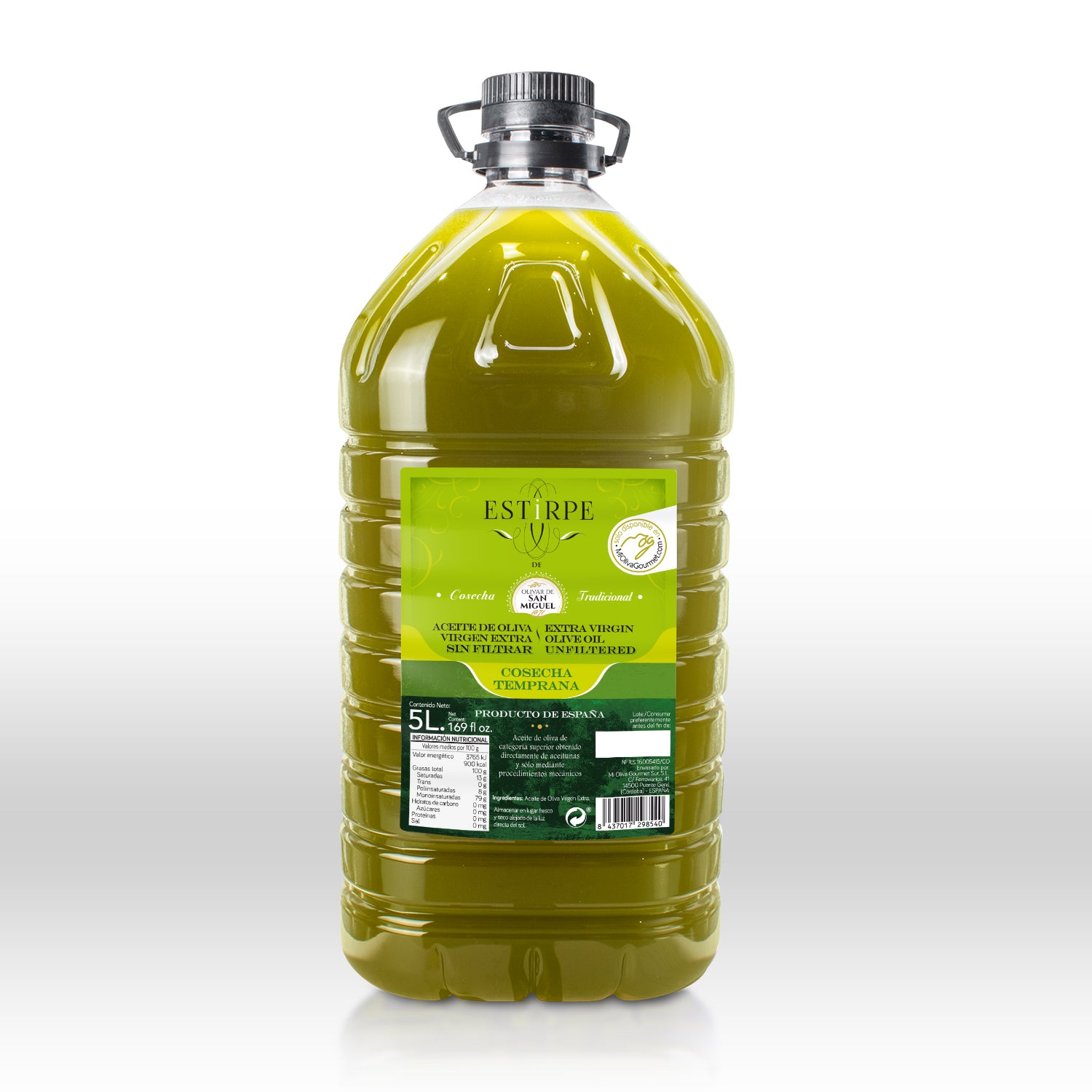
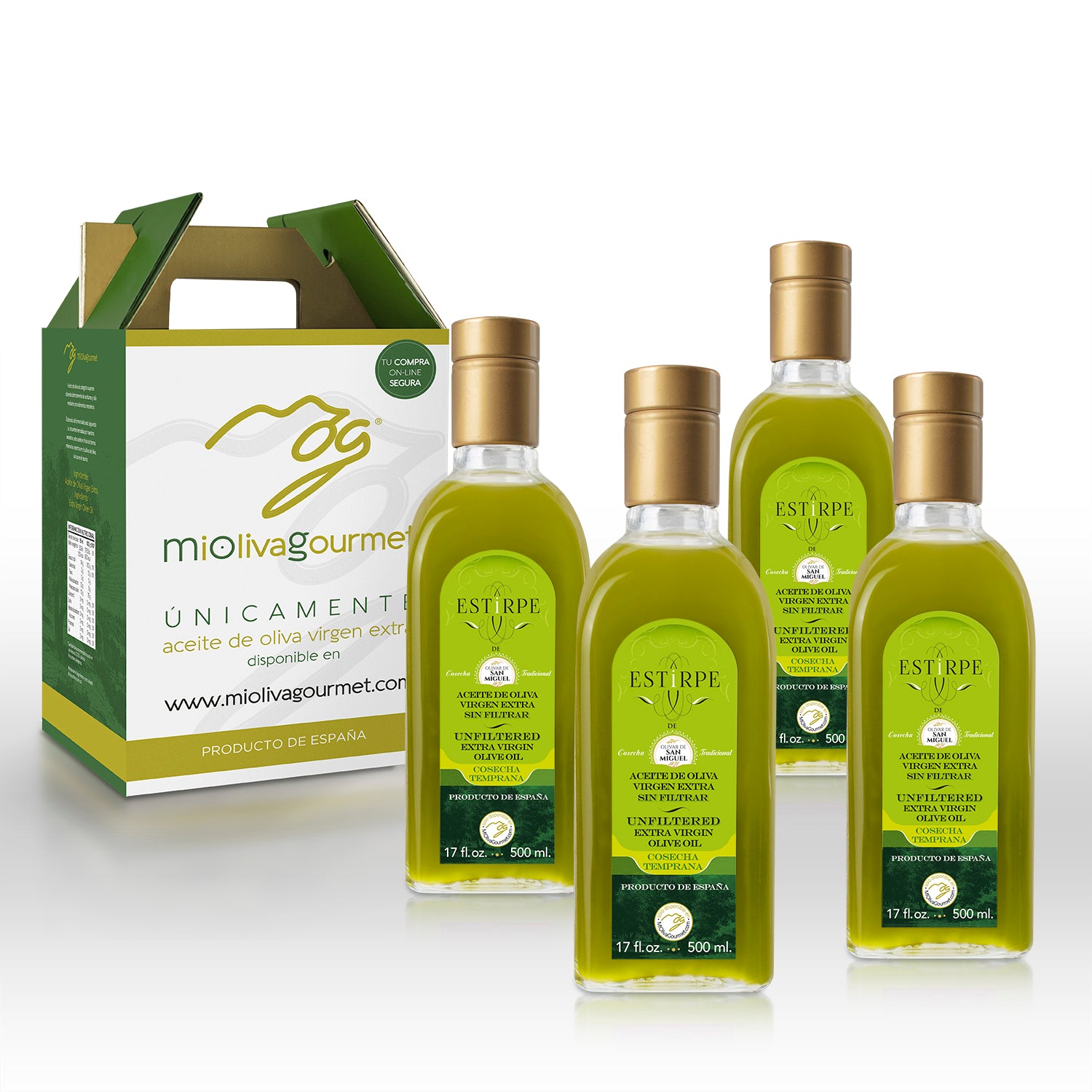
What's more, a truly good oil, the real thing, is high in polyphenols, which are more abundant the greener the olive. Our Early Harvest from last season came in at 380 mg/kg in the lab analysis.
If you'd like to know where that pepperiness comes from and why it's more intense in an early harvest oil, we explain it in why a good extra virgin catches the back of your throat and in why early harvest oil tastes peppery.
Tap here and reserve the first oil of the year
With tomato, salt or something sweet? The combinations that work best

- Just oil: the best way to get to know the oil. If it's your first day, start here.
- With flaky salt: the salt goes on after the oil, not before. On dry bread it bounces off and gets lost; on the oil it sticks and crunches.
- With tomato: tomato first (grated or rubbed on), then the oil and finally the salt. If you pour the oil first, the tomato masks it.
- With ham: oil, ham on top and nothing else. No need for anything else competing.
- The sweet one: bread with oil and a little cane sugar or honey. The classic afternoon snack in so many homes, one we all enjoyed as kids, and with a fruity oil it's absolutely delicious.
How should you store the oil so it tastes the same every morning?
Away from light, away from heat and tightly closed. Those are the oil's three enemies.
- Don't leave it next to the stove, the oven or the window. It's where almost everyone keeps it, for convenience, and it's the worst spot.
- A cupboard or an opaque oil cruet that blocks out light is much better.
- Close it after each use: air also slowly dulls it.
- If it's unfiltered, over time it will leave a little sediment at the bottom. That's normal and nothing to worry about. Here's the difference between unfiltered and filtered oil.
Over the months, the color and pepperiness of an early harvest oil mellow. We explain why in why Extra Virgin Olive Oil changes color and in how to store olive oil in hot weather.
When does the Early Harvest 2026/27 arrive?
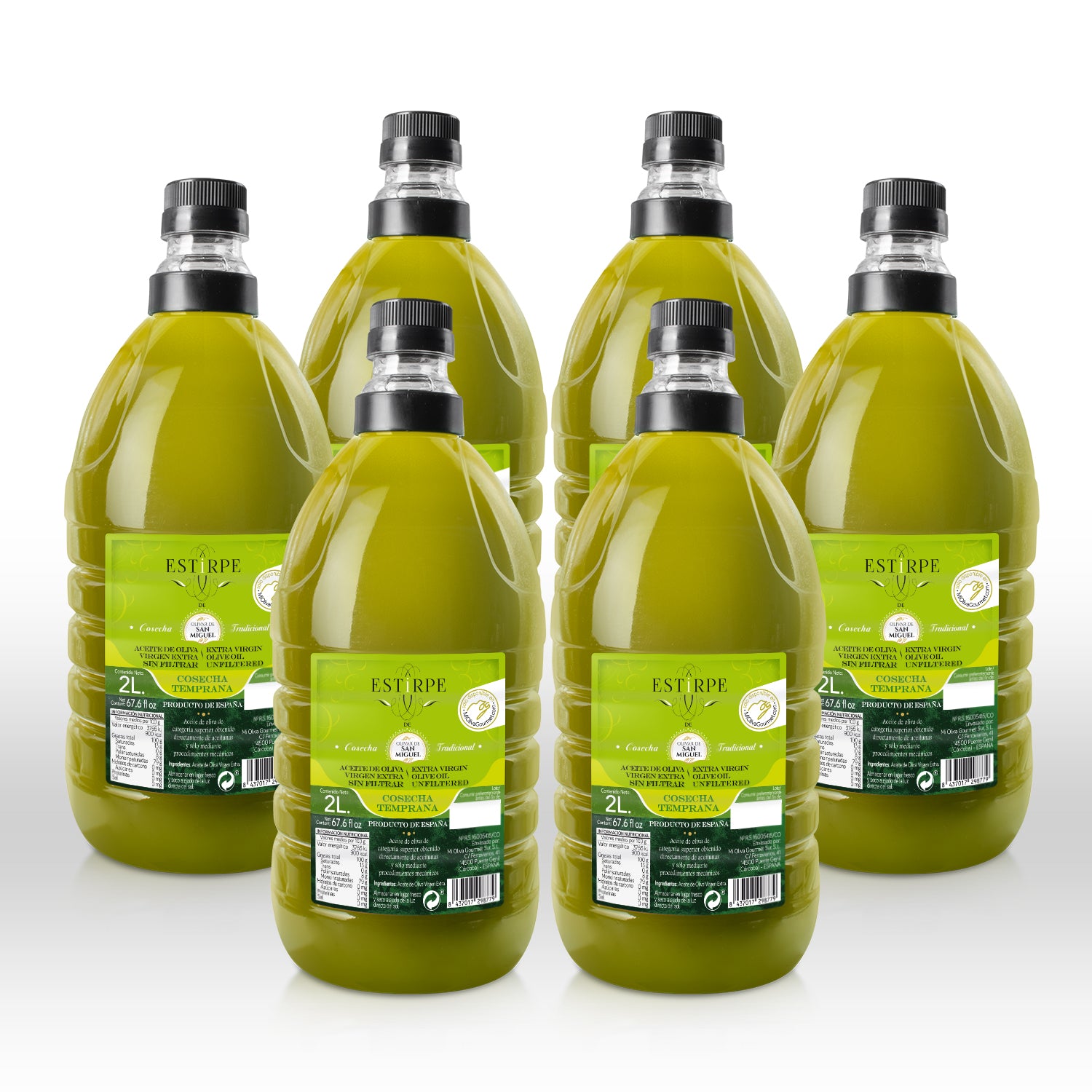
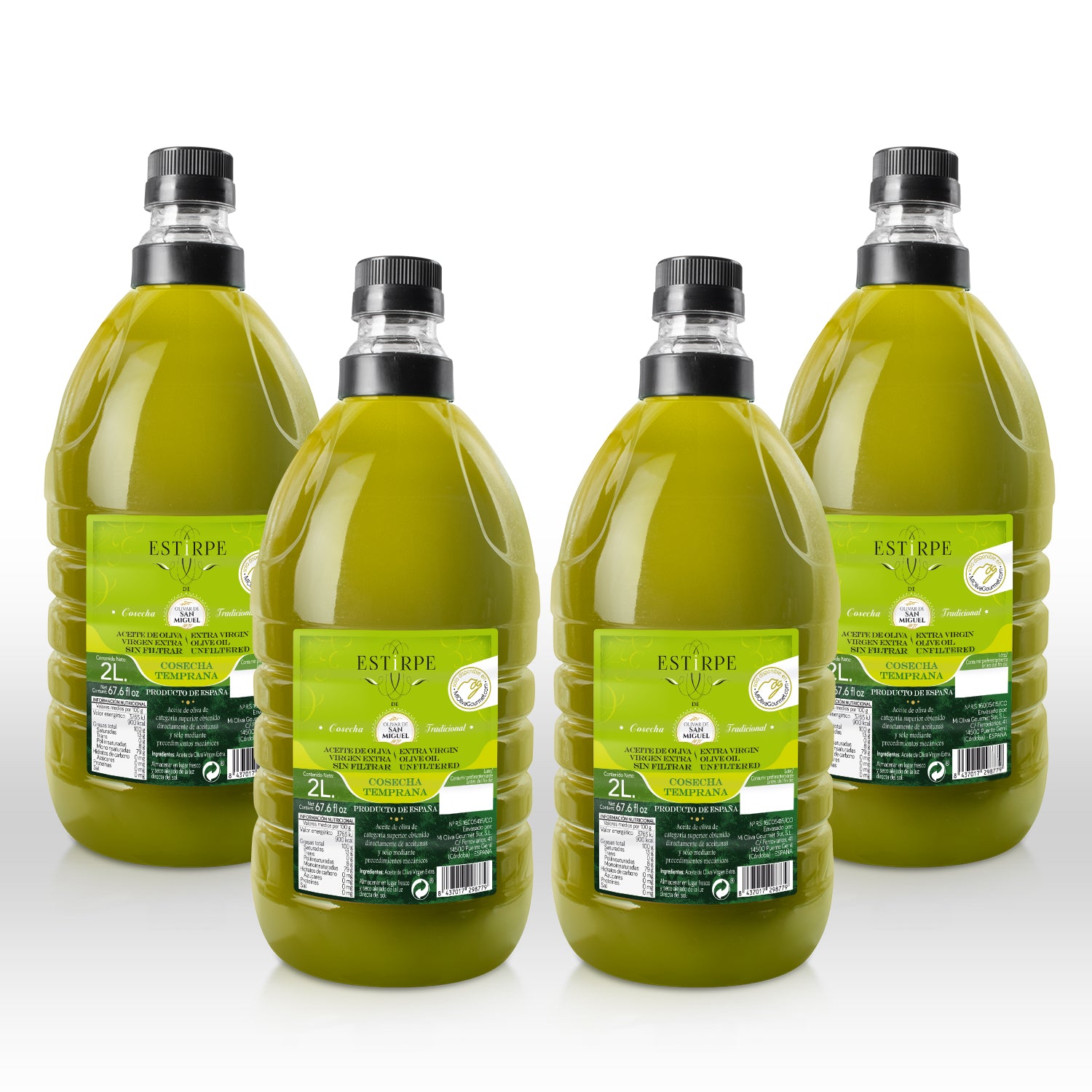
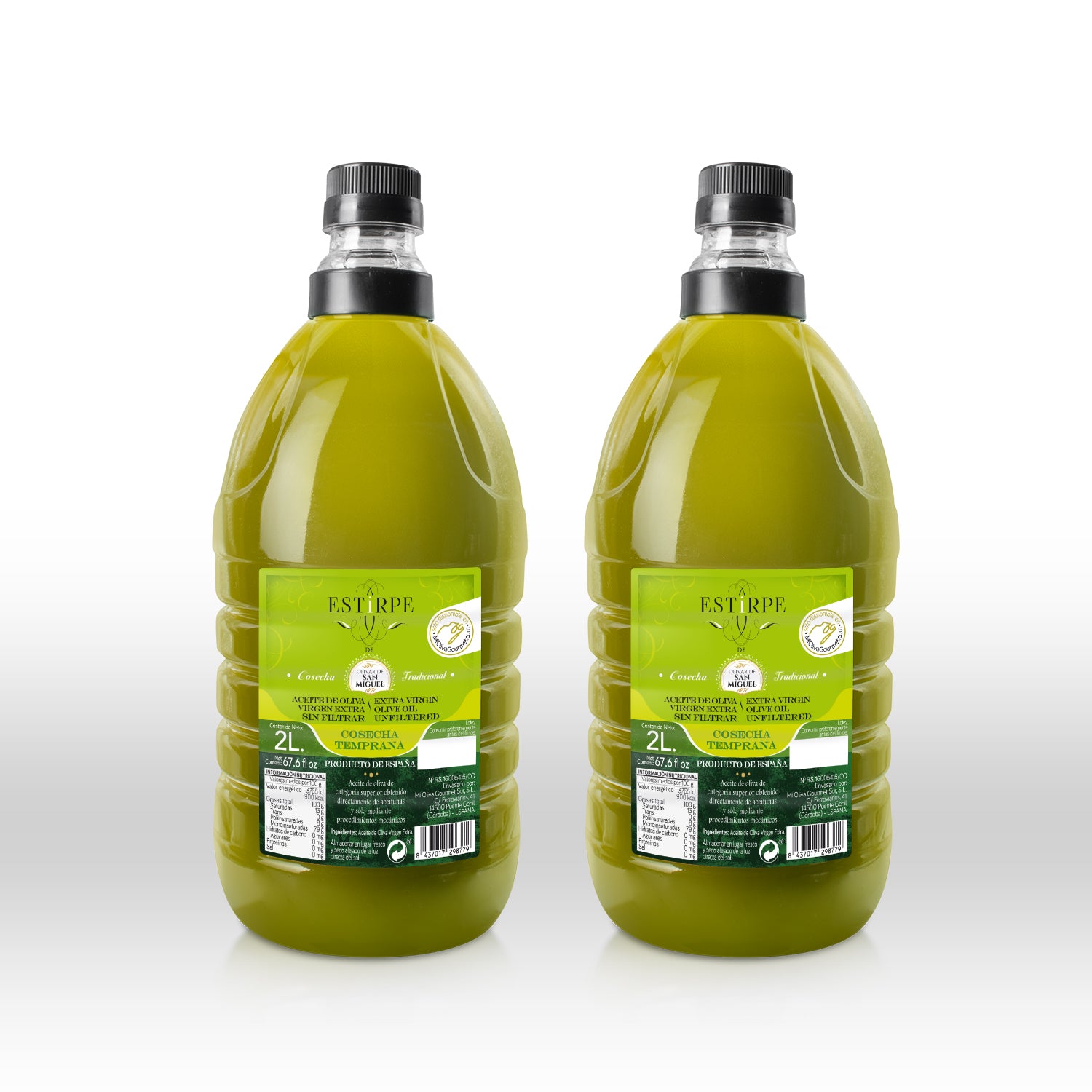
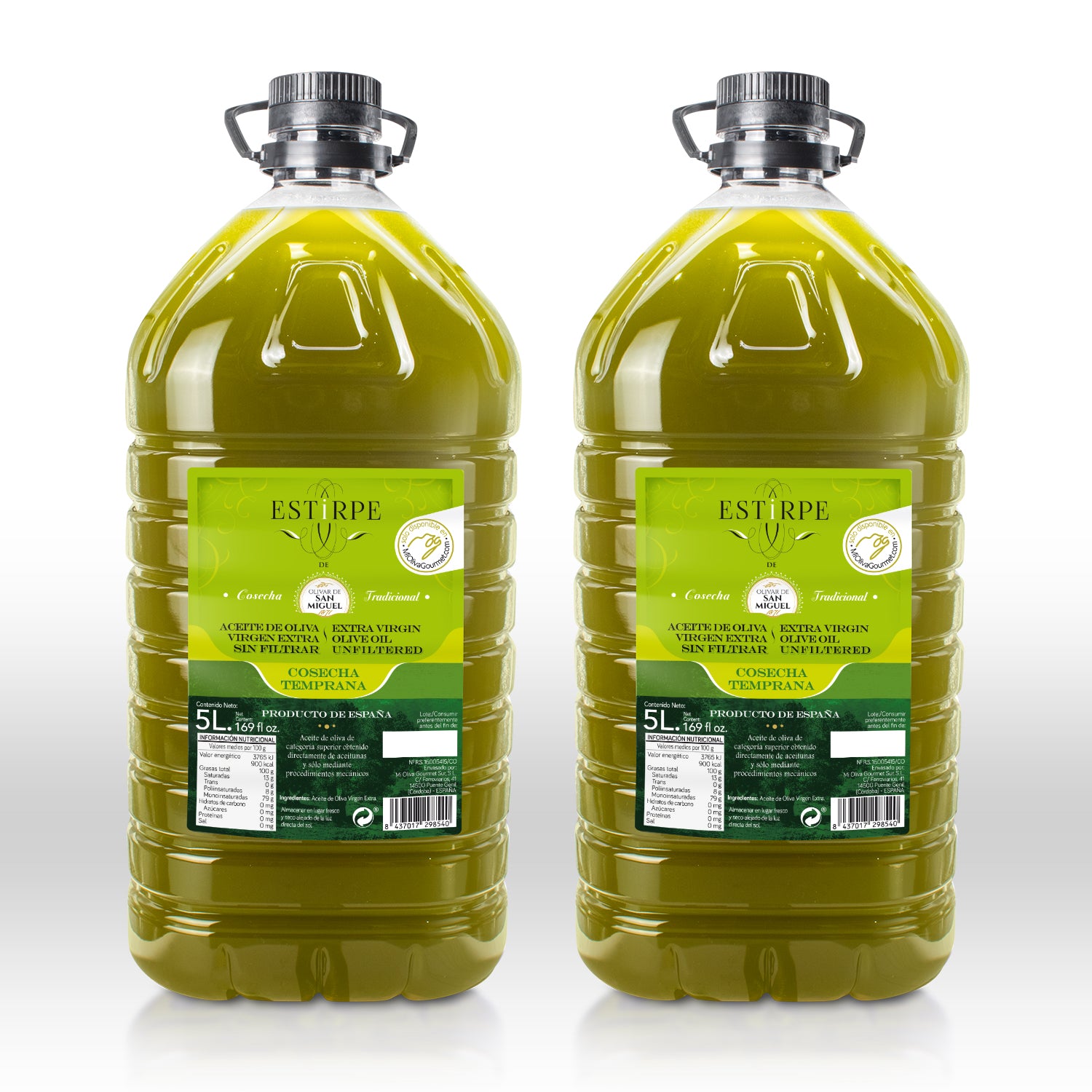
If all goes to plan, we'll start milling it around mid-November. We bottle it straight from the mill and ship it in strict order of reservation, so the first slices of toast with the new oil will belong to those who reserved it first.

👉 Click here and reserve your Early Harvest 2026/27
What people who have it for breakfast every morning tell us
|
★★★★★ “My breakfasts above all have changed since I tried it, and my toast is one of the happiest moments of my day. On days when I'm not at home and have to eat breakfast somewhere else, that's when I really notice the difference.” Jesús Andrés Muñoz · Verified buyer · Estirpe Early Harvest |
|
★★★★★ “A treat for the palate that the whole family agrees on: from the grandson who won't have any other toast now, to the grandfather who smiles wistfully, remembering the flavors of days gone by.” Eduardo Casaus · Verified buyer · Estirpe Early Harvest |
|
★★★★★ “Incredible aroma and flavor. To appreciate it 100%, nothing beats a slice of toast and a little oil.” Guido Ruffini · Verified buyer · Estirpe Early Harvest |
Frequently asked questions
Why does freshly pressed oil look greener and cloudier?
Because it comes from early harvest olives, which contain more chlorophyll, and because unfiltered oil keeps some of the olive's pulp and water in suspension. Over the weeks it settles, clears a little and leaves some sediment at the bottom of the bottle: that's normal.
Is unfiltered oil better for toast?
It's a matter of taste, but unfiltered oil has more body and a more intense flavor, and when used raw you really notice it.
Why does the oil on my toast catch the back of my throat?
Because of oleocanthal, a natural compound in Extra Virgin Olive Oil. You feel its peppery sting in the throat, not on the tongue, and it's more intense in freshly pressed oils made from early harvest olives.
Which oil is best for breakfast?
One you enjoy on its own, raw. If you like it from a teaspoon, you'll love it on toast.




Leave a comment
This site is protected by hCaptcha and the hCaptcha Privacy Policy and Terms of Service apply.