
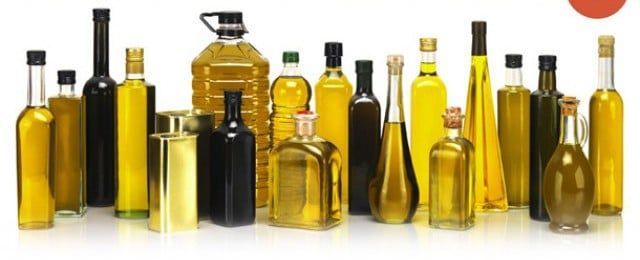
What Sets Extra Virgin Olive Oil Apart from the Rest? (II)
In the first part of this article we explored the differences between natural and refined olive oil, as well as the various blends produced during manufacturing. In this article, we'll look at the differences between Extra Virgin Olive Oil, Virgin Olive Oil, and plain Olive Oil.
As a reminder from the first article, this classification applies only to olive oil that has not been refined — that is, oil that has not been treated with heat or chemicals.
 There is an international body established specifically to set the standards that distinguish all oils derived from olives. That body is the INTERNATIONAL OLIVE COUNCIL, or IOC. This institution is "the only intergovernmental organization in the world bringing together the main players in the olive oil and table olive sector." Its authority and criteria are internationally recognized.
The IOC publishes and maintains a document known as the "TRADE STANDARD APPLYING TO OLIVE OILS AND OLIVE-POMACE OILS" — a comprehensive reference that we've summarized here for you, focusing on what matters most.
The key element is the definition of Virgin Olive Oil:
There is an international body established specifically to set the standards that distinguish all oils derived from olives. That body is the INTERNATIONAL OLIVE COUNCIL, or IOC. This institution is "the only intergovernmental organization in the world bringing together the main players in the olive oil and table olive sector." Its authority and criteria are internationally recognized.
The IOC publishes and maintains a document known as the "TRADE STANDARD APPLYING TO OLIVE OILS AND OLIVE-POMACE OILS" — a comprehensive reference that we've summarized here for you, focusing on what matters most.
The key element is the definition of Virgin Olive Oil:

 We can't go through every oil on the market tasting it and sending samples to a lab — but what we can do is bring you the very best. Every oil we offer is 5 STARS: because a laboratory says so, because expert tasters say so, and above all because you say so, through your reviews. If any oil falls short on any one of those three counts, it never makes it onto our website ;)
So thank you, once again, for trusting us. We hope this article — which ended up running a little longer than planned — has been useful and helped you find your way through the sometimes confusing world of olive oil ;). Don't hesitate to leave a comment!
We can't go through every oil on the market tasting it and sending samples to a lab — but what we can do is bring you the very best. Every oil we offer is 5 STARS: because a laboratory says so, because expert tasters say so, and above all because you say so, through your reviews. If any oil falls short on any one of those three counts, it never makes it onto our website ;)
So thank you, once again, for trusting us. We hope this article — which ended up running a little longer than planned — has been useful and helped you find your way through the sometimes confusing world of olive oil ;). Don't hesitate to leave a comment!
The International Olive Council
There is an international body established specifically to set the standards that distinguish all oils derived from olives. That body is the INTERNATIONAL OLIVE COUNCIL, or IOC. This institution is "the only intergovernmental organization in the world bringing together the main players in the olive oil and table olive sector." Its authority and criteria are internationally recognized.
The IOC publishes and maintains a document known as the "TRADE STANDARD APPLYING TO OLIVE OILS AND OLIVE-POMACE OILS" — a comprehensive reference that we've summarized here for you, focusing on what matters most.
The key element is the definition of Virgin Olive Oil:
Virgin olive oils are oils obtained from the fruit of the olive tree solely by mechanical or other physical means under conditions, particularly thermal conditions, that do not lead to alterations in the oil, and which have not undergone any treatment other than washing, decanting, centrifugation and filtration.In other words, any oil blended with other types of oil can never, by definition, be called a virgin olive oil — it cannot even be called Olive Oil. It should be labelled as Refined Oil, with whatever qualifier the seller chooses to add: "derived from olive oils," "obtained solely from olive juice," and so on.
Virgin Olive Oil and Extra Virgin Olive Oil
Now for the heart of the matter: How do I tell an Extra Virgin Olive Oil apart from a Virgin Olive Oil? The honest answer is: WE CAN'T. The distinction is based on oil quality, and the defining characteristic is acidity — its oleic acid content. The classification breaks down as follows:- Extra Virgin Olive Oil: less than 0.8 grams of oleic acid per 100g.
- Virgin Olive Oil: between 0.8g and 2g of oleic acid per 100g.
- Olive Oil (plain): between 2g and 3.3g per 100g.
Be careful what you buy...
An important clarification is worth making here: oils with an oleic acid content above 3.3g/100g are not considered fit for human consumption and must be refined before use. They're not necessarily harmful, but they're not recommended. What's remarkable is that some oils exceeding 3.3g are still sold as Olive Oil — simply because they were produced through manual and mechanical processes, but using poor-quality olives. In a detailed report published by OCU (Spain's leading consumer organization), researchers tested 40 olive oils and found that 12 of them were a lower grade than stated on the label. In other words, nearly 1 in every 3 olive oils on supermarket shelves is not what it claims to be. Disappointing, but true.
We can't go through every oil on the market tasting it and sending samples to a lab — but what we can do is bring you the very best. Every oil we offer is 5 STARS: because a laboratory says so, because expert tasters say so, and above all because you say so, through your reviews. If any oil falls short on any one of those three counts, it never makes it onto our website ;)
So thank you, once again, for trusting us. We hope this article — which ended up running a little longer than planned — has been useful and helped you find your way through the sometimes confusing world of olive oil ;). Don't hesitate to leave a comment!




1 comment
Muchas gracias por las aclaraciones.
Juan José
Leave a comment
This site is protected by hCaptcha and the hCaptcha Privacy Policy and Terms of Service apply.