
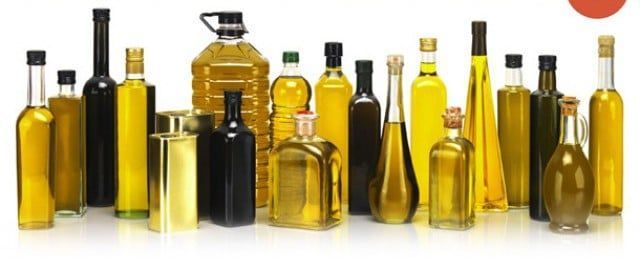
What Sets Extra Virgin Olive Oil Apart from the Rest? (II)
In the first part of this article, we looked at the differences between natural and refined Olive Oil, as well as the various blends created during production. In this article, we'll explore the differences between Extra Virgin Olive Oil, Virgin Olive Oil and plain Olive Oil.
Remember, as we saw in the first article, this classification only applies to Olive Oil that hasn't been refined, in other words, oil that hasn't been treated with heat or chemicals.
 There is an international body that was created to set the criteria that distinguish every oil made from olives. That body is the INTERNATIONAL OLIVE COUNCIL, or IOC. In its own words, it is “the only intergovernmental body in the world that brings together the countries that produce or consume olive oil and table olives.” Its authority and standards are therefore recognized worldwide.
The IOC (not to be confused with the Olympic folks, despite the shared acronym…) publishes and maintains a document called the “TRADE STANDARD APPLYING TO OLIVE OILS AND OLIVE-POMACE OILS”, which, put simply, is the rulebook for trading olive oils and olive-pomace oils. It's a lengthy document, so we've summarized the essentials for you.
The most important part is the definition of Virgin Olive Oil:

 We can't go through every oil on the market, tasting each one and sending a sample to the lab, but what we can do is bring you the very best. All our oils are 5 STARS, because a laboratory says so, expert tasters say so and, above all, you say so with your reviews. If an oil fails any of these three tests, it doesn't make it onto our website ;)
So thank you once again for trusting us. We hope you enjoyed this article, which turned out longer than I expected, and that it has helped clear things up a little in the confusing world of Olive Oil ;). Feel free to leave a comment!
The International Olive Council
There is an international body that was created to set the criteria that distinguish every oil made from olives. That body is the INTERNATIONAL OLIVE COUNCIL, or IOC. In its own words, it is “the only intergovernmental body in the world that brings together the countries that produce or consume olive oil and table olives.” Its authority and standards are therefore recognized worldwide.
The IOC (not to be confused with the Olympic folks, despite the shared acronym…) publishes and maintains a document called the “TRADE STANDARD APPLYING TO OLIVE OILS AND OLIVE-POMACE OILS”, which, put simply, is the rulebook for trading olive oils and olive-pomace oils. It's a lengthy document, so we've summarized the essentials for you.
The most important part is the definition of Virgin Olive Oil:
Virgin olive oils are the oils obtained from the fruit of the olive tree solely by mechanical or other physical means under conditions, particularly thermal conditions, that do not lead to alterations in the oil, and which have not undergone any treatment other than washing, decantation, centrifugation and filtration.In other words, any oil blended with other types of oil can never be a virgin olive oil, by definition. It can't even be called Olive Oil. It should be called Refined Oil, followed by whatever tagline the seller fancies: “made from olive oils,” “obtained solely from olive juice,” and so on.
Virgin and Extra Virgin Olive Oil
And now for the heart of the matter: How can I tell an Extra Virgin Olive Oil from a Virgin Olive Oil? The answer is simple: WE CAN'T. The distinction is based on the quality of the oil, and its key indicator is acidity, or oleic acid content. This gives us the following classification:- Extra Virgin Olive Oil: less than 0.8 grams of oleic acid per 100g.
- Virgin Olive Oil: more than 0.8g but less than 2g of oleic acid per 100g.
- Olive Oil (plain): more than 2g and less than 3.3g per 100g.
Be careful what you buy...
An important clarification is in order here: oils with an oleic acid content above 3.3g/100g are not considered fit for human consumption and must be refined. They aren't harmful, but they aren't recommended either. The incredible thing is that some oils above 3.3g are sold as Olive Oil, simply because they were obtained through manual and mechanical processes, even though the olives were of poor quality. In an in-depth article published by the OCU (Spain's Organization of Consumers and Users), they describe how they tested 40 oils, and 12 of them fell into a lower category than the one stated on the label. In other words, nearly 1 in 3 oils you find at the supermarket will short-change you. Sad, but true.
We can't go through every oil on the market, tasting each one and sending a sample to the lab, but what we can do is bring you the very best. All our oils are 5 STARS, because a laboratory says so, expert tasters say so and, above all, you say so with your reviews. If an oil fails any of these three tests, it doesn't make it onto our website ;)
So thank you once again for trusting us. We hope you enjoyed this article, which turned out longer than I expected, and that it has helped clear things up a little in the confusing world of Olive Oil ;). Feel free to leave a comment!




1 comment
Muchas gracias por las aclaraciones.
Juan José
Leave a comment
This site is protected by hCaptcha and the hCaptcha Privacy Policy and Terms of Service apply.