
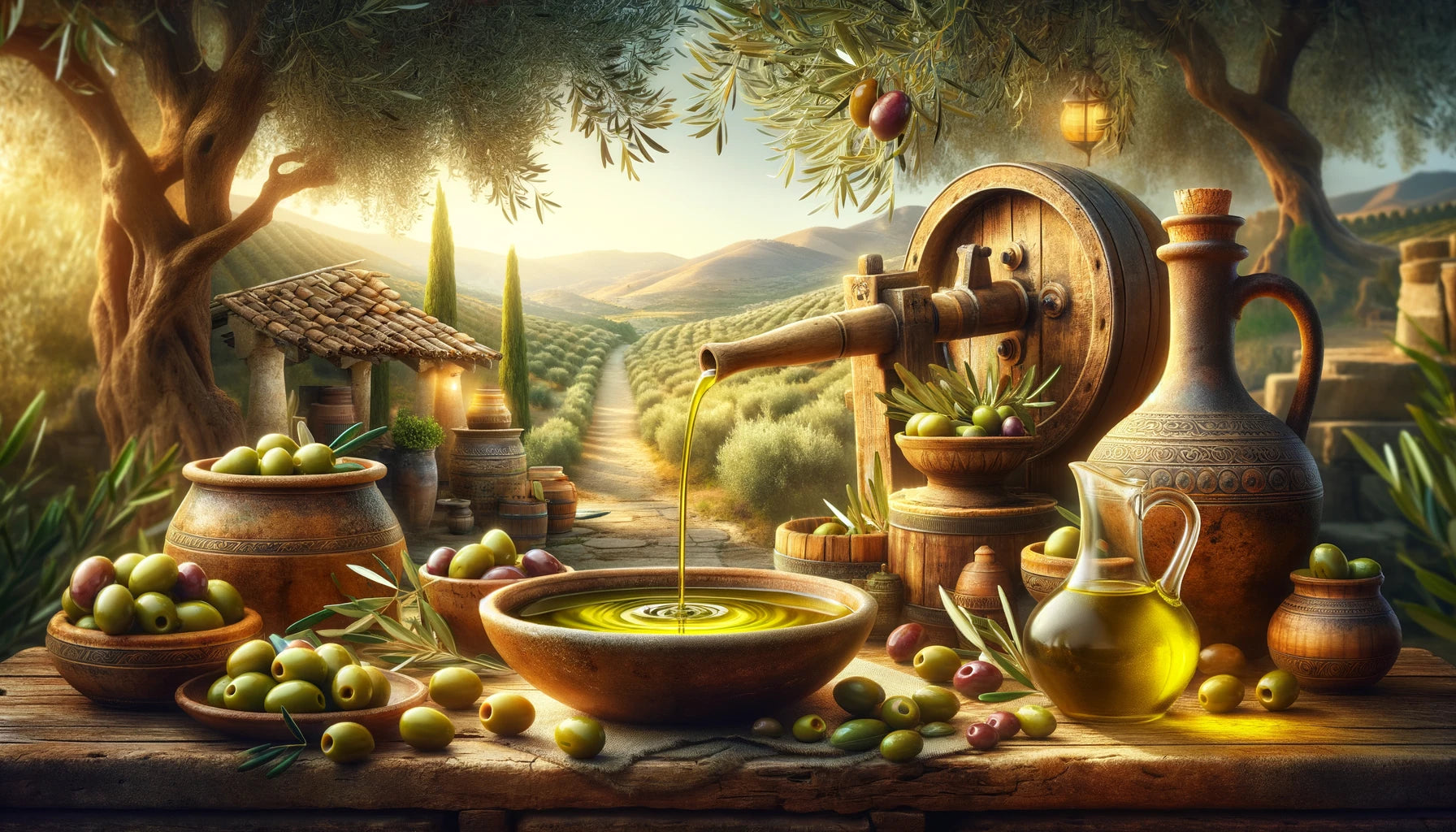
The Origins of Olive Oil: From Ancient Civilizations to Rome
Welcome to a journey through time and flavor! Extra virgin olive oil, celebrated today for its remarkable properties and its distinctive flavor, has a history as rich as its texture. The story of olive oil's origins reaches back to the earliest human civilizations. This golden liquid has traveled a long road, leaving its mark on culture and gastronomy alike.
Where It All Began: Thousands of Years Ago
Picture the Mediterranean basin some 6,000 years ago. Here, among the hills and valleys of regions we now call Greece, Turkey, and Syria, the first olive trees were being cultivated. Archaeologists have found evidence that as early as 4000 BC, these ancient civilizations were using the olive's fruit not only as food, but also to extract a precious oil through rudimentary pressing. The earliest presses were simple yet effective — large stones used to crush the olives and release their oil.
The Egyptians and Liquid Gold
The Egyptians were among the first to recognize the value of olive oil. They used it not only in their cooking, but also in religious ceremonies, medicine, and — of course — in mummification rituals. Olive oil was so precious it was considered a worthy gift for the pharaohs. Olive oil amphorae discovered in Egyptian tombs speak to its importance in both life and death.
Greece: More Than a Food
Olive oil reached a new level of prestige in ancient Greece. The Greeks used it not only as food, but as an integral part of daily life. It was applied to the skin before and after exercise, as they believed it enhanced strength and flexibility. At the Olympic Games, athletes anointed themselves with olive oil, and winners were crowned with olive wreaths and awarded amphorae filled with this prized liquid.
But olive oil in Greece was not reserved for athletes alone. It was used medicinally to treat wounds and skin conditions. Hippocrates, the father of medicine, described more than 60 therapeutic uses for olive oil, including:
- Dry Skin Care: He recommended olive oil to moisturize and soften dry skin.
-
Improving Digestion: Taking olive oil to support the digestive process and relieve constipation.
- Hair Care: He used olive oil to strengthen and improve hair health.
- Baby Skin Care: Hippocrates recommended olive oil to protect and care for the delicate skin of infants.
Olive oil in Greece was also a symbol of wealth and status, offered to the gods in sacrifices and religious rituals.
A fascinating example of its use in Greece is the oil lamp, used to light homes and temples. These lamps — often made of ceramic or metal — were fueled by olive oil and provided a steady, long-lasting light. This use of olive oil spread throughout the Mediterranean and was adopted by many other cultures.
Rome: Expansion and Refinement
In Rome, olive oil became an essential element of diet and everyday life. The Romans refined cultivation and pressing techniques, and began exporting olive oil across the vast empire. Roman villas often had their own olive groves and mills, and olive oil was a mark of wealth and status.
In Rome, olive oil was not only used in the kitchen, valued for its extraordinary beneficial properties. Roman bathhouses offered olive oil massages, promoting its use in personal hygiene. The oil was also burned as fuel in lamps, bringing light to homes and temples.
The Romans developed advanced irrigation and cultivation systems that significantly increased olive production. They introduced more efficient oil presses and storage methods that improved both the quality and shelf life of olive oil. The writings of Pliny the Elder detail its production and use, highlighting its importance in the Roman economy and culture.
Olive Oil in Hispania
Hispania — present-day Spain — played a crucial role in supplying Rome with olive oil. During the Roman period, the region of Baetica (corresponding to modern Andalusia) became one of the leading producers of olive oil. Olive groves spread across vast areas, and oil was produced in large mills, some of which can still be visited today — among them the mills of "El Villar" and "Los Tejares" in Almedinilla, both, fittingly, in Córdoba — offering a fascinating window into the past.

The olive oil produced in Hispania was so highly prized that it was exported to every corner of the Roman Empire. Amphorae found in Rome and elsewhere across the empire bear inscriptions indicating their Hispanic origin, demonstrating the region's central role in olive oil production and trade. The amphorae used to transport the oil were recycled in Rome and incorporated into Monte Testaccio, an artificial hill made up of fragments of these vessels.
Production techniques in Hispania were advanced for their time. The Romans built oil presses in large facilities, many of them located near rivers to ease transportation. The city of Baelo Claudia, near Tarifa, is another example of a Roman settlement where olive oil was a primary industry — its ruins include the remains of presses and oil storage tanks.
Conclusion
Extra virgin olive oil is not merely an ingredient — it is an integral part of our history and culture. From the earliest civilizations to the height of the Roman Empire, it has been a symbol of health, wealth, and well-being. When we enjoy a generous pour of olive oil, we are not only savoring its flavor — we are connecting with thousands of years of tradition and craft.
So the next time you drizzle a little of this liquid gold over your salad or dip a piece of crusty bread into it, remember that you are taking part in a story that began millennia ago — and lives on in every drop. Cheers and good eating!












Leave a comment
This site is protected by hCaptcha and the hCaptcha Privacy Policy and Terms of Service apply.