
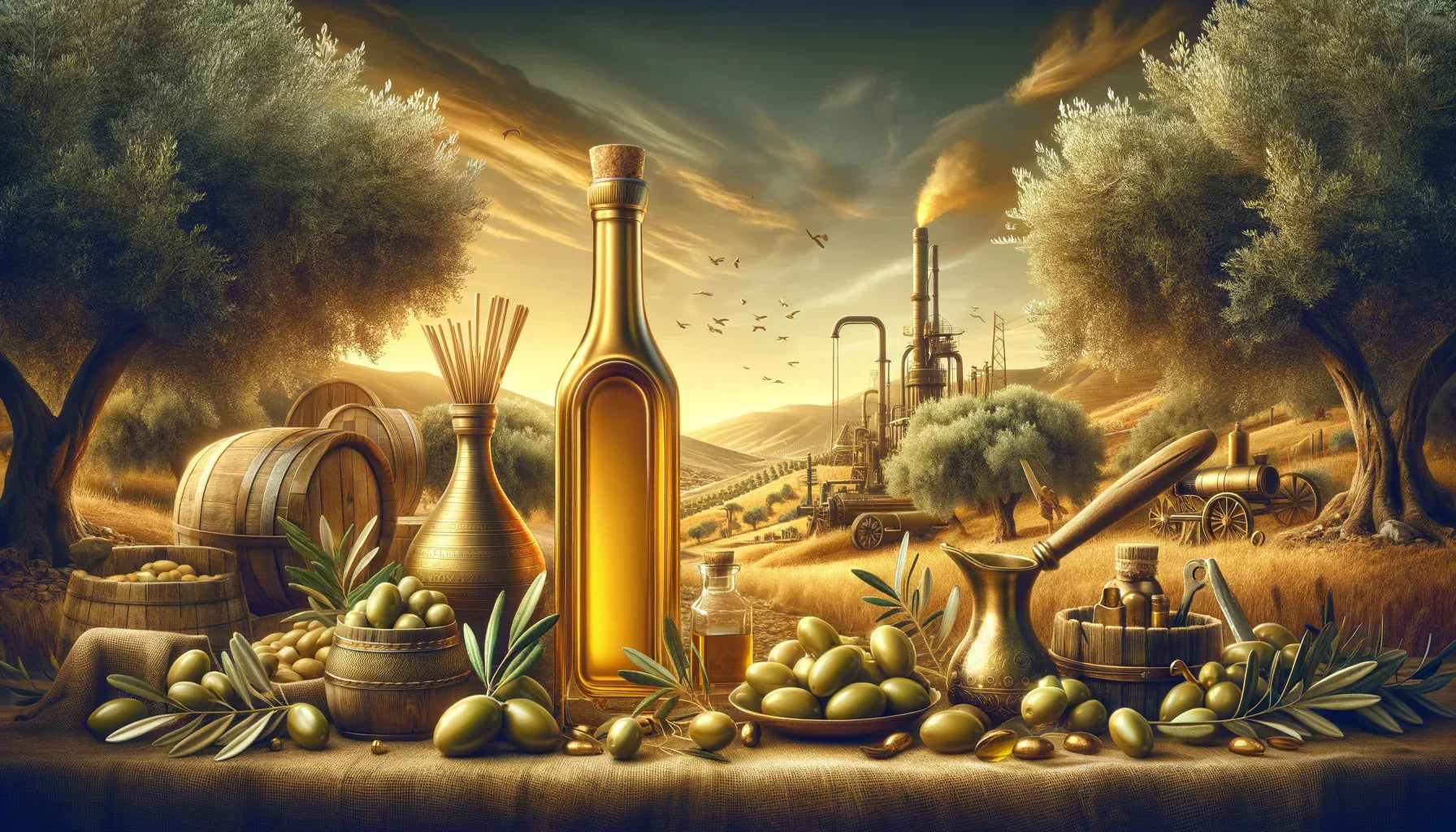
Olive Oil History: From the Middle Ages to the Early Modern Period
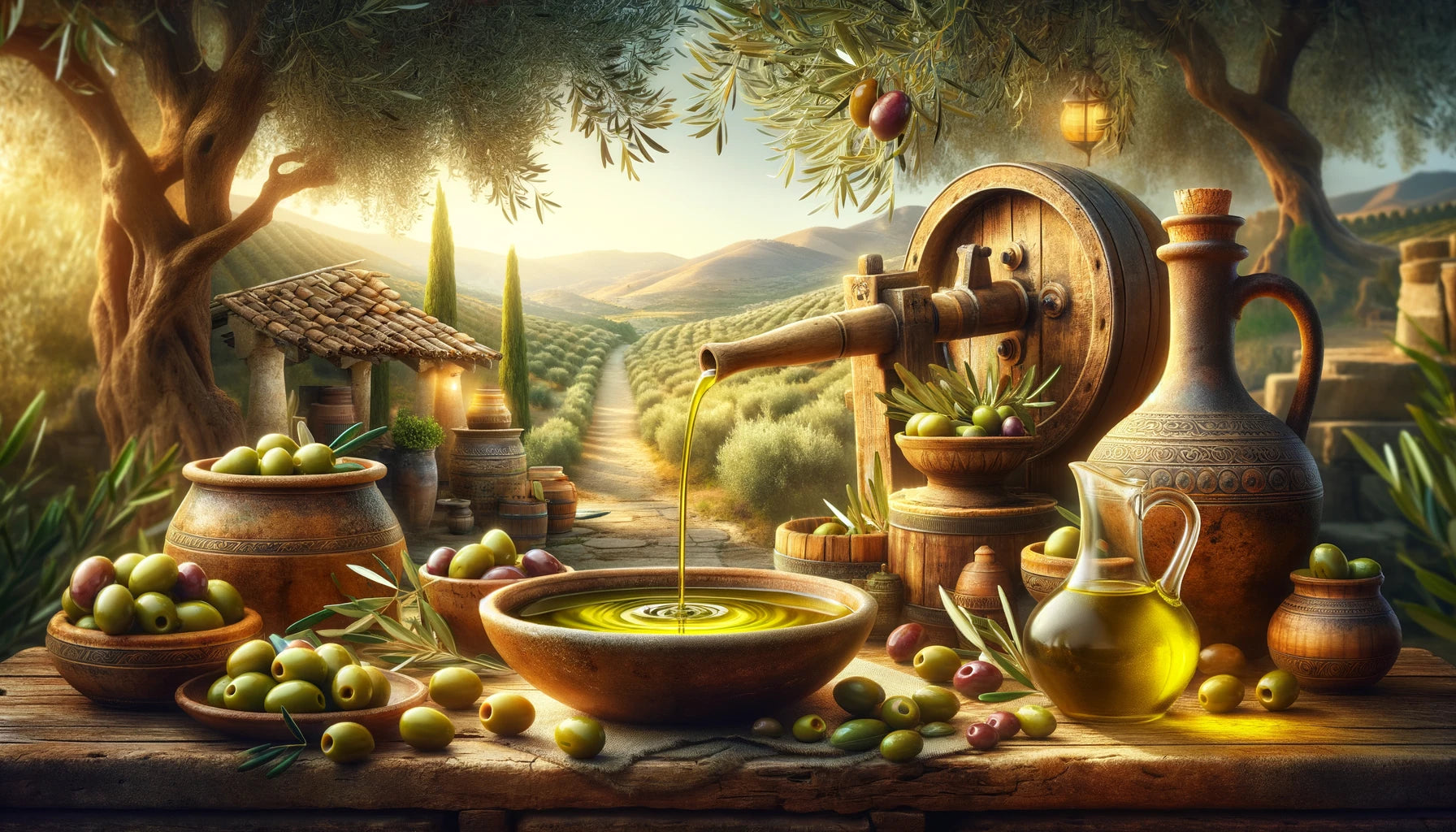
Welcome to a journey through time and flavour! Extra virgin olive oil, celebrated today for its remarkable properties and distinctive taste, has a history as rich as its texture. The history and origins of olive oil stretch back to the earliest civilisations. This golden liquid has travelled a long road, leaving its mark on culture and gastronomy.
In this second article on the History of Olive Oil, we pick up where we left off — following its story from the Middle Ages through to the Early Modern period. Let's dive in!
The Middle Ages: Olive Oil on the Iberian Peninsula
After the fall of the Roman Empire, olive oil production in Hispania did not come to a halt. With the arrival of the Arabs on the Iberian Peninsula in the 8th century, olive cultivation and oil production were revitalised. The Arabs not only preserved Roman techniques but also introduced significant advances in agriculture and irrigation.

Medieval Curiosities:
- The Arabs introduced irrigation systems such as the noria waterwheel, which greatly improved agricultural output.
- Olive oil was used in medicine, cosmetics, and as fuel for lamps.
- Andalusian agricultural treatises, such as the "Kitab al-Filaha" by Ibn al-Awwam, describe in detail the techniques for cultivating and producing olive oil, along with its many uses.
Key Figures and Details:
Ibn al-Awwam, a 12th-century Andalusian agronomist, wrote one of the most important treatises on agriculture: "Kitab al-Filaha". In it, he documented the use of olive oil to treat skin conditions and as a digestive remedy. The work served not only as a practical guide for farmers of the era but also as a compendium of knowledge on the medicinal properties of olive oil.
The Renaissance: A Rebirth for Olive Oil
The Renaissance brought a flowering of art, science, and agriculture across Europe. In Italy, Spain, and Greece, olive cultivation and oil production flourished once again.
Renaissance Highlights:
- The olive oil trade expanded considerably, with exports reaching other European countries and the New World.
- Regions such as Andalusia, Catalonia, and Valencia became major production centres.
- More advanced cultivation and extraction techniques were recorded, cementing olive oil as an essential pillar of the Mediterranean diet.
Curiosities and Key Figures:
Leonardo da Vinci, celebrated for his inventions and art, also wrote about the properties of olive oil and its uses in food preservation and as a lubricant for his machines. Leonardo da Vinci and olive oil
Bartolomeo Scappi, a Renaissance Italian chef, featured numerous olive oil recipes in his celebrated cookbook "Opera", highlighting its use for marinating meats and dressing salads. Bartolomeo Scappi's Opera
The Early Modern Period: Expansion and Global Trade
During the 16th and 17th centuries, European expansion into the New World carried olive oil to the Americas. Spanish colonisers introduced olive cultivation to Mexico, Peru, Chile, and Argentina.

Early Modern Curiosities:
- At first, colonisers struggled due to differences in climate and soil.
- Over time, they succeeded in establishing thriving olive groves in the New World.
- Olive oil produced in Europe was exported in growing quantities, consolidating its presence in international markets.
Key Figures and Details:
Hernán Cortés, the Spanish conquistador, brought olive trees to the New World in an attempt to replicate Spanish cultivation techniques in Mexico. Hernán Cortés and the olive tree
The Aztec codices, documents from the colonial period, record the introduction of the olive tree and the incorporation of its oil into the new colonial diet. Aztec codices
The Industrialisation of Olive Oil
Towards the end of the 18th century and into the 19th, industrialisation began to transform olive oil production.
Key Aspects of Industrialisation:
- Hydraulic presses gradually replaced traditional stone presses, boosting efficiency.
- Advances in storage and transport — such as metal tins and glass bottles — allowed olive oil to reach more distant markets without any loss of quality.
- In Spain, large olive estates quickly adopted the new technologies, improving both output and quality.
Curiosities and Key Figures:
Manuel Godoy, Prime Minister of Spain under Charles IV, championed agricultural modernisation, including the adoption of hydraulic presses for oil production. Manuel Godoy
Gabriel Alonso de Herrera, in his "Obra de Agricultura" of the 16th century, influenced the agricultural techniques that followed, including those related to olive oil production.
Olive Oil in Cooking and Culture
Throughout these centuries, olive oil remained an essential ingredient in Mediterranean cooking and retained its importance in medicine and cosmetics.
Traditional Uses:
- Olive oil became the foundation of countless traditional recipes that we still enjoy today.
- Various medical treatises documented its health benefits.
- It continued to be prized in ointments and beauty products.
Curiosities and Key Figures:
Teresa of Ávila, the Spanish mystic and saint, used olive oil in her convents not only for cooking but also as part of the natural remedies she recommended.
Lorenzo de' Medici, known as "The Magnificent", hosted lavish banquets at which olive oil featured as a prized ingredient in gourmet dishes.
Conclusion
Across the centuries, the History of Olive Oil reveals it to be far more than a simple ingredient. Its journey from ancient stone presses to modern hydraulic machinery is a testament to its enduring importance and versatility. Olive oil has long been a symbol of wealth and wellbeing, a natural remedy, and a culinary treasure.
Today, when we savour a fine extra virgin olive oil, we connect with thousands of years of history and tradition. Every drop of this liquid gold is a tribute to the civilisations that perfected its cultivation and production. The next time you reach for olive oil, think of the legacy you are continuing and the authentic flavours you are enjoying.
Savour and celebrate the history of olive oil in every dish!








Leave a comment
This site is protected by hCaptcha and the hCaptcha Privacy Policy and Terms of Service apply.