

Veraison (envero in Spanish) is when the olive changes color on the tree. It goes from deep green to a mottled, “turning” purple, and finally to black. It's the visible sign that the fruit is ripening, and it decides how the oil will taste: the greener the olive when it's picked, the more intense, peppery and bitter the oil.
A few days ago, Migue sent us a voice message from the olive grove. It started like this:
“We're at a crucial moment in the olive's development. Right now they're in a period we call envero.”
That word, envero (veraison), explains why the first oil of the year tastes the way it does. It also explains why we can't bring it forward by even a single day.
In this article
- What is olive veraison?
- What are the stages of veraison?
- Why does veraison change the taste of the oil?
- When are the olives for our Early Harvest picked?
- Do all olives go through veraison at the same time?
- How does drought affect olives during veraison?
- When will the Early Harvest 2026/27 be ready?
- Frequently asked questions
What is olive veraison?
Veraison is when the olive changes color on the tree. It goes from deep green to a mottled, “turning” purple, and finally to black. It's the visible sign that the fruit is ripening. In most olive groves in southern Spain it happens in autumn, and growers watch it closely to decide when to harvest.
Migue describes it like this: “the olive, which was a bright greenish color, is turning a bit mottled, a bit purple, and over time it will go on to become a deep black.”
What are the stages of veraison?
Agronomists measure ripeness on a scale from 0 to 7, based on the color of the skin and the flesh. Veraison covers classes 2 and 3: first, when the first purple patches appear, and then when more than half of the skin has turned purple.
| Class | What the olive looks like |
|---|---|
| 0 | Deep green skin |
| 1 | Yellowish-green skin |
| 2 | Green with reddish patches on less than half of the fruit: start of veraison |
| 3 | Reddish or purple on more than half of the fruit: end of veraison |
| 4 | Black skin, white flesh |
| 5 | Black skin, purple flesh less than halfway through |
| 6 | Black skin, purple flesh not quite reaching the pit |
| 7 | Black skin, purple flesh all the way to the pit |
To calculate it, 2 kg of olives are picked from all four sides of the tree. Then 100 olives are set aside and classified one by one. The average is the “maturity index.” (Source: infOlivo, maturity index, José Fernando Prieto Cid, agricultural engineer.)
Why does veraison change the taste of the oil?
As the olive ripens, its polyphenol content drops, and polyphenols are what give the oil its peppery kick and bitterness. The greener the olive, the more intense, peppery and bitter the oil. The riper the olive, the smoother and flatter the oil.
The Aristoil study from the University of Córdoba explains this. It analyzed more than 2,500 Spanish oils and found that phenolic compounds “contribute to the organoleptic profile of olive oil, since they are linked to the attributes of pungency and bitterness.” It also found that “as a general rule, the phenolic content of EVOO tends to decrease as the season progresses.” (Source: Feliciano Priego Capote, University of Córdoba, in Interempresas.)
You may notice a little tickle at the back of your throat when you taste a good, freshly pressed oil. That isn't a flaw. It's the signature of an olive picked at the right time.
When are the olives for our Early Harvest picked?
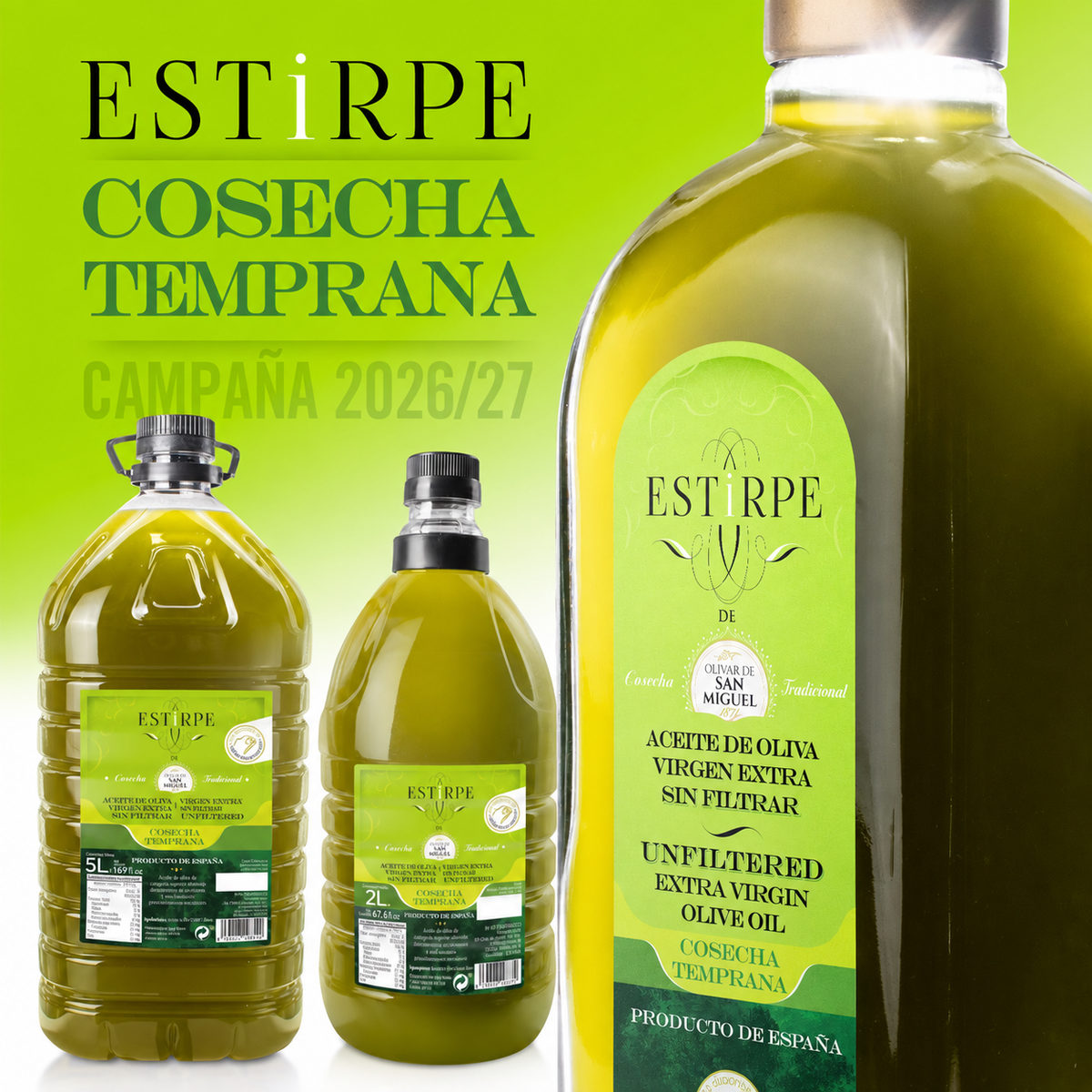
Right at the start of veraison, when some of the olives are still green and others are just starting to turn purple. We don't wait for them to ripen fully, even though riper olives would give us more oil per kilo.
In Migue's words: “we pick the olives when some are still green, some are purple and some have fully ripened and turned darker. But above all, we try to make sure they're in the first two stages, green and purple.”
To give you an idea, for the most common varieties the ideal picking point is usually a maturity index of around 3.5 (source: infOlivo). By then, a good share of the olives have already turned black. We harvest our Early Harvest before that point on purpose. We're not after volume. We want the green color, the fruitiness and the peppery bite that only early olives can give.
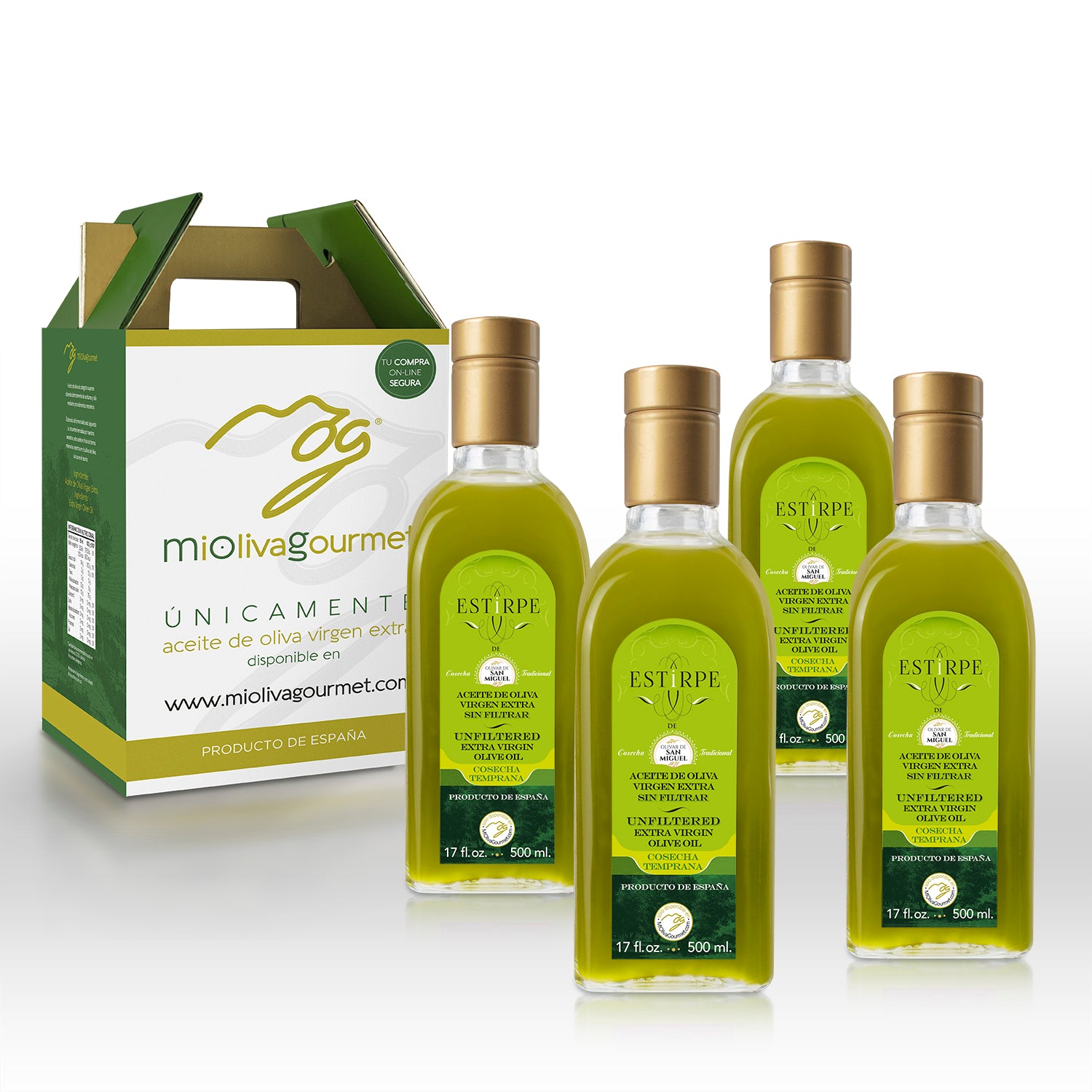
If you'd like to know more about this oil, here's what early harvest olive oil is and why it sells out so fast, and where the name “Green Gold” comes from.
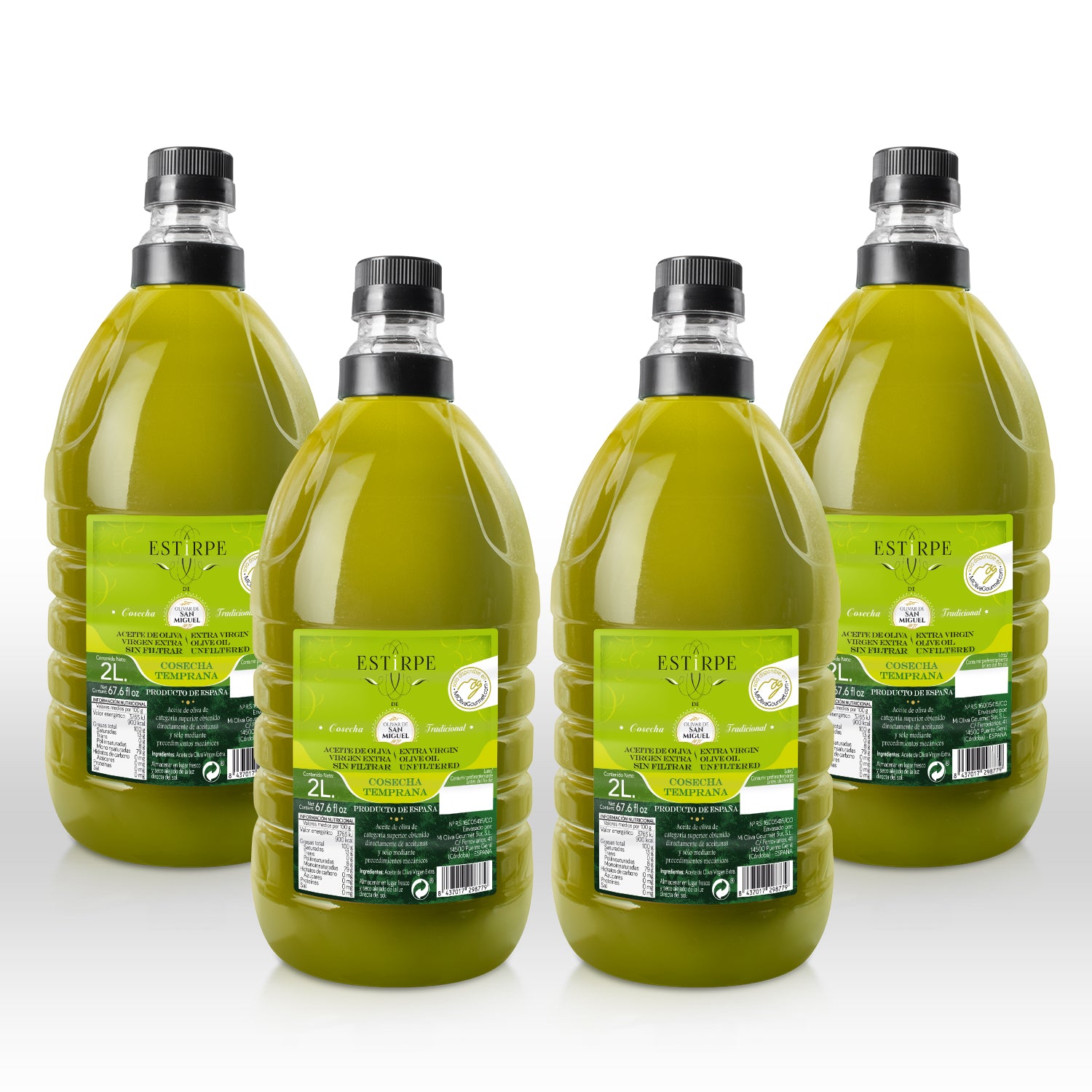
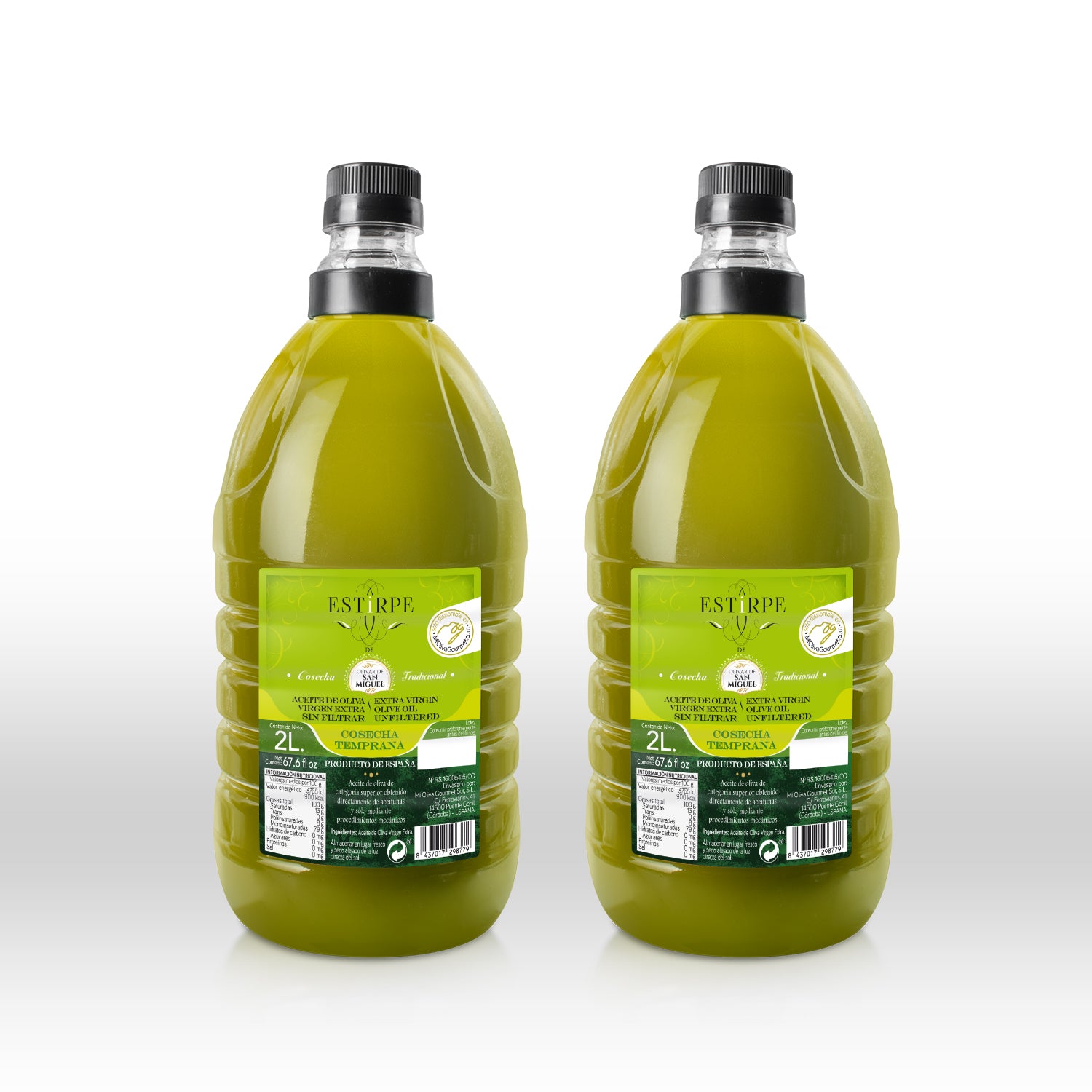
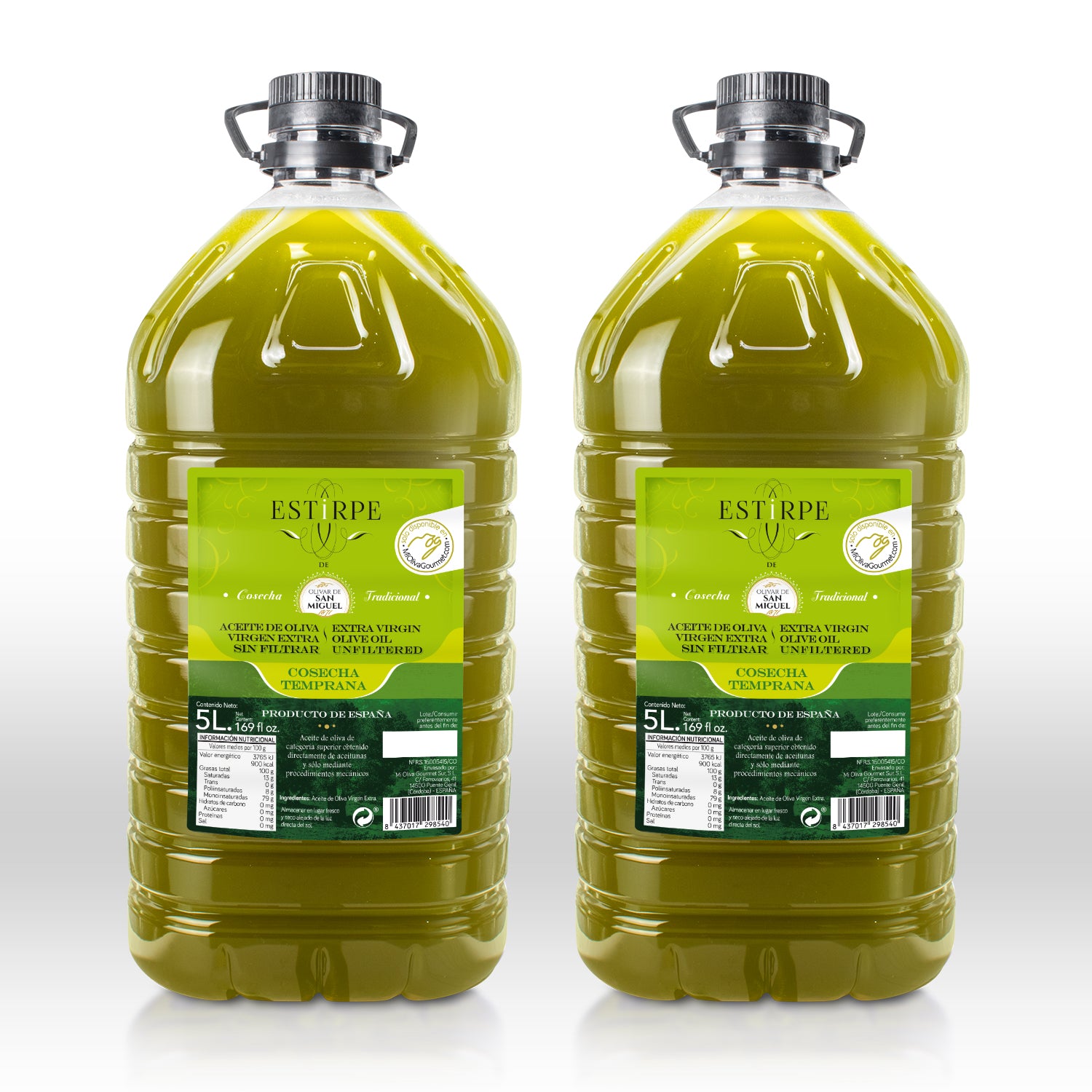
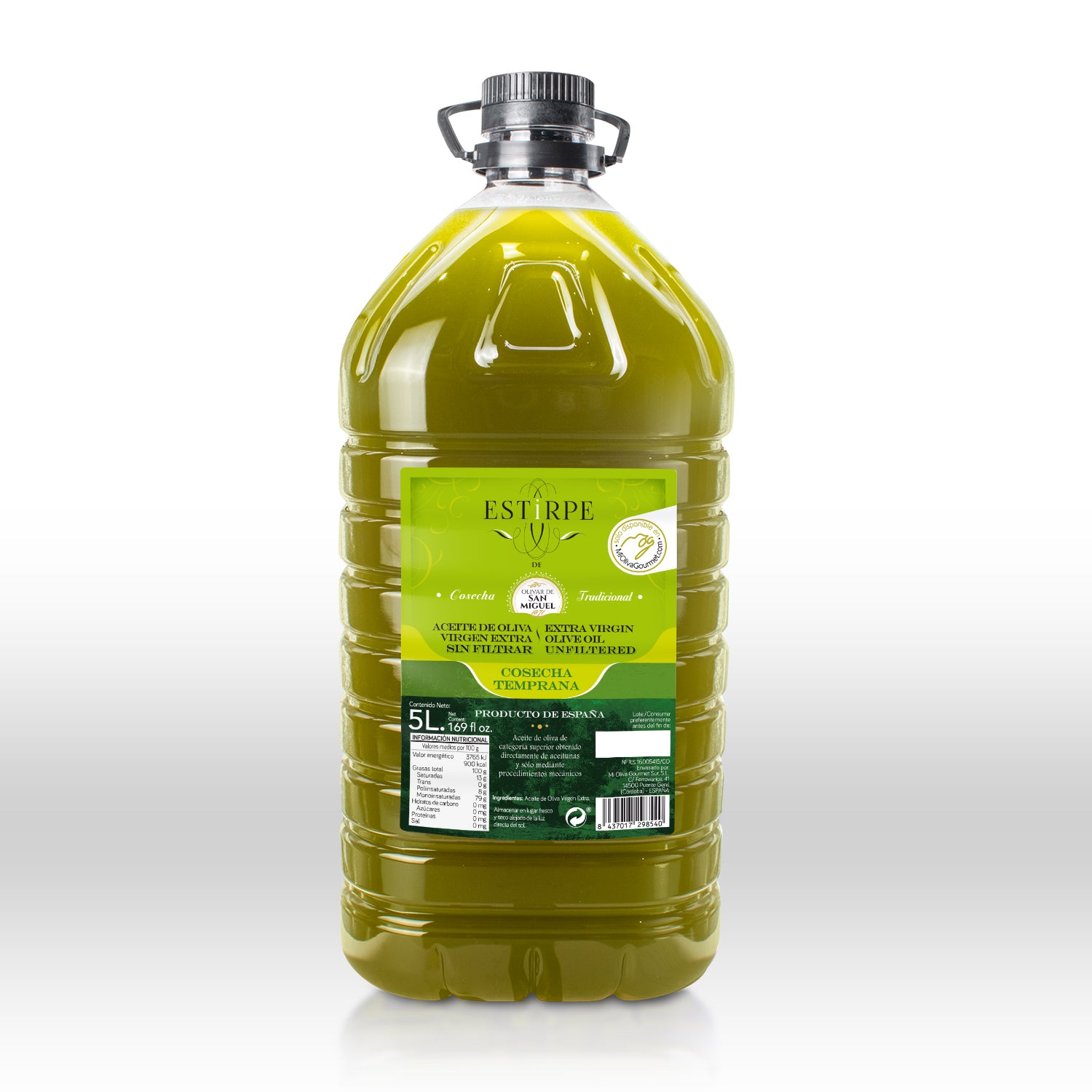
Tap here to reserve the first oil of the year
Do all olives go through veraison at the same time?
No. Each variety ripens at its own pace, which is why we don't harvest the whole grove on the same day. Some varieties change color earlier than others.
Migue: “depending on the type or variety of olive, some groves go through envero earlier and others later. Some fruits, like Arbequina or Picual for example, develop earlier.”
Our Early Harvest is mainly Hojiblanca, with a touch of Arbequina. That's why we keep a close eye on every plot over these weeks, because they don't all reach the right point on the same day. If you're curious about how each variety tastes, try the three-second test to tell Arbequina, Hojiblanca and Picual apart.
How does drought affect olives during veraison?
We've had very little rain this year since April. The tree protects itself by drawing water from the olives, which is why they can shrivel. Migue calls this water stress.
Interestingly, that stress has an upside for flavor. According to the Aristoil study, “water stress, together with producing oils from mid-mountain olive groves, are two factors with a notable impact on phenolic concentration.” In other words, a dry year usually produces more intense oils. (Same source as above.) To learn more, here's our article on how drought affects the quality and flavor of olive oil.
When will the Early Harvest 2026/27 be ready?
If all goes to plan, we'll start milling it in early to mid-November, once the olives reach the point Migue is looking for. We can't give an exact date. It depends on many factors, especially how much rain falls in September and October. We bottle it as soon as it leaves the mill, and orders ship in the order reservations were made.
👉 Click here to reserve your Early Harvest 2026/27
What customers who've tried it tell us
|
★★★★★ “Yes, Julio, the oil is wonderful. The best. It reminds me of the oil from my childhood, green and dense, and the flavor is intense. I'm so glad I finally found you, after searching for a long time for an oil I really liked.” Esther Hervella · Verified buyer · Estirpe Early Harvest |
|
★★★★★ “Really high-quality oil, and I've tried a lot of them. Bitterness and pepperiness in harmony. It's fresh and rich in polyphenols, with a powerful aroma and a green color. Ideal for enjoying raw.” F.J.C.P. · Verified buyer · Estirpe Early Harvest |
Frequently asked questions
Is veraison the same as ripening?
It's the visible part of ripening, when the skin changes color. Ripening continues on the inside afterward, as the flesh turns purple too.
Does a purple olive make worse oil?
It's not worse, just different. It makes a smoother, less peppery oil. Our Early Harvest aims for the opposite profile: greener, fruitier and more peppery.
Why is early harvest oil peppery?
Because of polyphenols. Green olives have more of them, and their levels drop as the season goes on.
How long does veraison last?
It depends on the variety and the year. Some olives change color earlier than others, and different plots in the same grove can be weeks apart.
Julio César de la Vega Fernández, co-founder of Mi Oliva Gourmet alongside Ricardo and Miguel Morales Chacón (Migue), fourth-generation olive growers in Puente Genil, Córdoba.




Leave a comment
This site is protected by hCaptcha and the hCaptcha Privacy Policy and Terms of Service apply.