
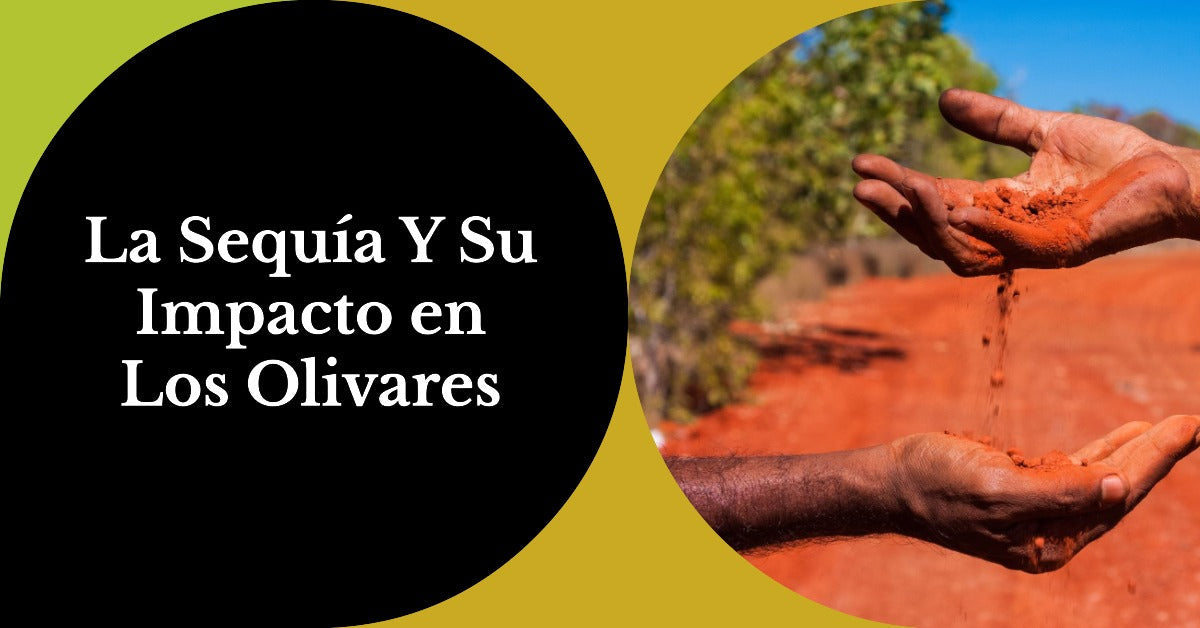
Drought and its impact on olive groves: how does it affect the quality and flavor of extra virgin olive oil?
Introduction
Drought is a climatic phenomenon that raises serious concerns across many areas of agriculture, and olive oil production is no exception. In this article, we look at how drought affects olive groves and, in particular, how it influences the quality and flavour of extra virgin olive oils. We also explore some of the strategies traditionally used to combat the effects of drought on olive cultivation.
1. The olive tree and its relationship with water
The olive tree (Olea europaea) is a tree native to the Mediterranean region, known for its ability to withstand harsh climatic conditions such as drought and high temperatures. However, this does not mean that olive trees have no need for water to grow and produce fruit.
The water needs of the olive tree
The amount of water required for the healthy development of an olive tree varies depending on several factors, including growth stage, soil type, and climate. Generally speaking, a mature olive tree requires between 400 and 1,000 mm of water per year.
To give you a sense of the current situation, in the six months between October 2022 and March 2023, just 329 mm of rainfall was recorded across Andalusia — placing the region in a critical state of drought.
Compounding this, Andalusia's reservoirs stood at just 25.7% of total capacity in 2023 — a drop of 539 hm³ compared to 2022.
How does the olive tree cope with drought?
The olive tree has developed a range of adaptation mechanisms to survive drought conditions, including the ability to close its stomata to reduce water loss through transpiration, and the capacity to draw water from deep soil reserves.
In addition, the olive tree's root system is extensive and deep-reaching, allowing it to access water sources well below the surface.
2. The impact of drought on olive groves
Despite the olive tree's natural resilience, drought can have significant negative effects on olive groves, both in terms of yield and quality.
Effects on production
A lack of water in olive groves can lead to a reduction in olive yield and, consequently, in olive oil production.
Drought can also affect flowering and fruit set, resulting in fewer olives per tree.
Effects on olive oil quality
Drought can alter the chemical composition of olive oil, which in turn affects the quality and flavour of the final product. Some of the most notable effects of drought on olive oil quality include:
- Increased polyunsaturated fatty acid content: During drought, the concentration of polyunsaturated fatty acids — such as linoleic acid — can rise in the olive oil. This can affect the oil's oxidative stability, shortening its shelf life.
- Higher phenolic content: Drought can lead to a greater concentration of phenolic compounds in olive oil. While these compounds are beneficial for health due to their antioxidant properties, an excess of phenols can influence the oil's flavour and aroma, producing more intense bitter and peppery notes.
- Changes in sensory profile: Drought can disrupt the balance of aromatic and flavour compounds in olive oil, resulting in shifts in its sensory profile. These changes may include a greater intensity of bitter and peppery flavours, alongside a reduction in sweetness and fruitiness.
3. Strategies to mitigate the impact of drought on olive groves
Since drought can affect both the yield and quality of olive oil, growers have put in place strategies to help limit its impact on their groves. These include:
3.1. Selecting drought-resistant varieties
Choosing olive varieties with greater drought tolerance can be an effective strategy for managing water scarcity.
Some varieties, such as Picual, Hojiblanca, and Cornicabra, are well known for their drought resistance and are widely planted across Andalusia, particularly in areas most prone to this phenomenon.
3.2. Efficient irrigation
Making efficient use of irrigation water is essential when dealing with drought in olive groves. Drip irrigation is a technique that delivers water precisely and evenly to the olive tree's root zone, reducing waste and improving irrigation efficiency.
Monitoring soil moisture levels and using sensors to track humidity also allows growers to adjust irrigation to the actual needs of the trees, avoiding water stress.
That said, when drought is particularly severe — as it has been in recent years — irrigation restrictions are commonplace, drastically limiting water use in order to protect supplies for human consumption.
3.3. Soil management
Proper soil management is another key strategy for reducing the impact of drought on olive groves. Incorporating organic matter into the soil — such as compost or manure — helps improve water retention and maintain moisture in the olive tree's root zone.
The use of cover crops and reduced tillage also contribute to conserving soil moisture and protecting against erosion.
Conclusion
Drought is a climatic phenomenon that can significantly affect both the yield and quality of olive oil. Despite the olive tree's natural resilience, it is essential to implement strategies that limit drought's impact on olive groves.
Selecting drought-resistant varieties, irrigating efficiently, and managing the soil carefully are some of the practices that can help growers face drought conditions and continue producing extra virgin olive oils of exceptional quality and flavour.
Even so, when drought is as severe as it was in 2022 and continued to be in 2023, its greatest impact on olive growers is economic: production was cut by half, with serious consequences for growers and a sharp rise in prices for those of us who love truly authentic extra virgin olive oil — oil made by real growers with a name and a story, like Mi Oliva Gourmet.
I hope you found this useful. Leave your comment or question below!




Leave a comment
This site is protected by hCaptcha and the hCaptcha Privacy Policy and Terms of Service apply.