
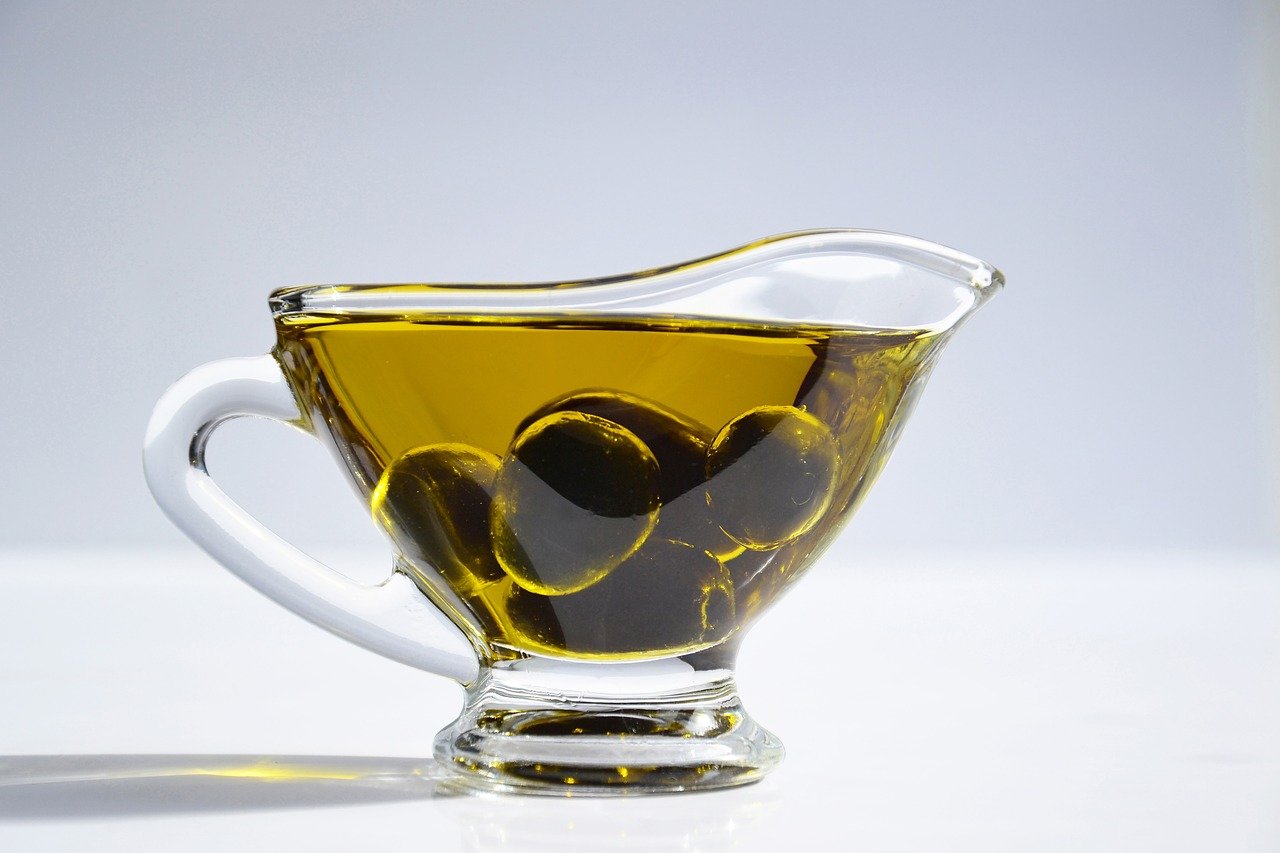
Density of Extra Virgin Olive Oil
The density of Extra Virgin Olive Oil is one of the key indicators that helps us assess its level of purity. And it's something worth learning to read. But why? Many products on the market contain low-quality oil — or sometimes no real olive oil at all. By paying attention to density, we can learn to gauge its value.
Much like wine, the different types of oil we can find each have very specific characteristics that help us tell them apart. You've probably noticed that, even though sunflower oil and olive oil can both be grouped under the broad category of vegetable oils, the two can be distinguished in a fairly straightforward way. In fact, one of the most telling differences between them is density.
But before we can learn to assess the density of oils, we first need to understand what the concept actually means.
What exactly is the density of Extra Virgin Olive Oil?
As a child, you probably mixed different substances together as a kind of experiment. Chances are you tried combining water and oil — and were surprised to find that, despite both being liquids, they simply wouldn't blend.
That experiment is a great way to visualise what a difference in density actually looks like. Water is lighter and less viscous than oil, and this difference in body is what prevents them from fully combining.
To be more precise: density is a unit of measurement that tells us how much mass is contained within a given body or volume.
Density is probably the easiest characteristic to detect when making an initial quality assessment before you buy olive oil. When faced with a bottle of extra virgin olive oil and wondering about its purity, the first step is to assess the consistency of its body.
Continuing with that analogy, we could say that the more viscous an oil is, the higher its pure oil content. In other words, the more water present in the bottle — and therefore the less actual oil in the mixture — the less pure the product, and the lower its quality.
What is the right density for a high-quality olive oil?
To establish an optimal benchmark for high-quality oil, the UN set the ideal weight of olive oil at 0.916 kilograms per litre. Temperature is also a variable that needs to be factored in when assessing quality.
The relationship between density and ambient temperature is particularly relevant for accurate measurement — because, as you might expect, temperature has a significant effect on the result.
Have you ever noticed that olive oil tends to look more solid at low temperatures? Yet when exposed to high heat during cooking, it becomes lighter and more fluid. At elevated temperatures, the density of olive oil can drop as low as 0.80 kg/litre.
It is precisely its density that makes olive oil a healthier option for cooking. Unlike many vegetable fats, extra virgin olive oil has a chemical composition that makes it more resistant to temperatures above 180°C.
Its molecular structure is more stable, which means it breaks down far more slowly. As a result, it is absorbed into food to a much lesser degree — which ultimately means fewer calories and easier digestion.
Temperature and density in olive oil
| Temperature (ºC) | Density (kg/litre) |
|---|---|
| 6 | 0.9230 |
| 7 | 0.9224 |
| 8 | 0.9217 |
| 9 | 0.9210 |
| 10 | 0.9204 |
| 11 | 0.9197 |
| 12 | 0.9190 |
| 13 | 0.9184 |
| 14 | 0.9177 |
| 15 | 0.9170 |
| 16 | 0.9164 |
| 17 | 0.9157 |
| 18 | 0.9150 |
| 19 | 0.9144 |
| 20 | 0.9137 |
| 21 | 0.9130 |
| 22 | 0.9124 |
| 23 | 0.9117 |
| 24 | 0.9110 |
| 25 | 0.9104 |
| 26 | 0.9097 |
| 27 | 0.9090 |
| 28 | 0.9084 |
| 29 | 0.9077 |
Because temperature is an environmental factor capable of altering the density of substances, it must always be taken into account when carrying out a measurement.
For an accurate quality assessment, the UN established a reference temperature of between 16 and 17°C. Any measurement taken within that range will be precise and reliable.
What exactly determines the higher or lower density of an extra virgin olive oil?
There are several factors that can affect an oil's consistency. One of the most important is the nature of the oil itself — its origin. How is it classified?
Take a look at the wide range of vegetable oils available and you'll notice that sunflower oil, for example, is considerably denser than palm oil. That difference comes down to their origins, but it can also be influenced by other factors — such as the blend used or the production process itself.
Density across different oil types
| Oil type | Relative density |
|---|---|
| Sunflower oil | 0.918 - 0.923 |
| Soybean oil | 0.919 - 0.925 |
| Olive oil | 0.913 - 0.916 |
| Palm oil | 0.908 - 0.921 |
| Coconut oil | 0.908 - 0.921 |
| Corn oil | 0.917 - 0.925 |
| Rapeseed oil | 0.910 - 0.920 |
| Cottonseed oil | 0.918 - 0.926 |
Knowing the density of extra virgin olive oil makes it easier to separate the water, oil and other components — helping to purify the final product. Through a mechanical process based on centrifugation, it is possible to obtain extra virgin olive oil of the highest quality, with all the benefits that brings.
How to preserve the properties of extra virgin olive oil and maintain its correct density
High temperatures are damaging to extra virgin olive oil — so if it is not being used for high-heat cooking, it's best kept away from heat sources.
It should be stored in a dry, cool place with low humidity. Light can also have a corrosive effect on the oil, so it's advisable to keep it in a dark spot, or at least somewhere with minimal light exposure.
Density comparison: vegetable oils vs. olive oil
| Oil type | Relative density | Difference vs. olive oil |
|---|---|---|
| Sunflower oil | 0.918 - 0.923 | 0.005 - 0.007 |
| Soybean oil | 0.919 - 0.925 | 0.006 - 0.009 |
| Palm oil | 0.908 - 0.921 | 0.005 |
| Coconut oil | 0.908 - 0.921 | 0.005 |
| Corn oil | 0.917 - 0.925 | 0.004 - 0.009 |
| Rapeseed oil | 0.910 - 0.920 | 0.004 - 0.007 |
| Cottonseed oil | 0.918 - 0.926 | 0.005 - 0.010 |
We hope this article has helped you understand olive oil density and how temperature affects it.
If you appreciate high-quality extra virgin olive oil, we offer a wide range of exceptional EVOOs.
Get in touch for more information. See you in the next article.
Leave us a comment!
Write any questions or thoughts you have — we'd love to read them and get back to you 😊





Leave a comment
This site is protected by hCaptcha and the hCaptcha Privacy Policy and Terms of Service apply.