There's one thing almost nobody pays attention to when they put olive oil on their face: the same routine, with two different oils, doesn't leave your skin the same. And it has nothing to do with brand or price.
I'll walk you through it below, along with the five recipes I make at home and a thirty-second test that tells you, no gadgets needed, whether the oil in your kitchen is good for this or only for frying.
In this article
- Why is EVOO good for skin and hair?
- Will any olive oil do?
- How can you check at home whether yours is up to it?
- What precautions should you take before you start?
- The 5 homemade recipes, step by step
- How much does each recipe really cost?
- Which myths are false, and which aren't?
- How should you store these mixtures?
- Frequently asked questions
Why is EVOO good for skin and hair?
Because its composition is remarkably close to that of the skin's own barrier. Extra Virgin Olive Oil provides oleic acid (an emollient), squalene—a molecule human skin also produces—, vitamin E and polyphenols, its natural antioxidants. It's unrefined olive juice: nothing in it was added in a lab.
The four components that matter:
- Oleic acid: an emollient that nourishes without leaving a heavy film.
- Squalene: naturally present in human sebum, which explains why skin tolerates it so well.
- Vitamin E (tocopherols): a fat-soluble antioxidant, abundant in virgin oils.
- Polyphenols: the olive's own antioxidants. And this is where it gets interesting, because these are exactly what an oil can have… or not have at all.

Will any olive oil do?
No, and the difference isn't a subtle one. Polyphenols and vitamin E are destroyed by refining, and they break down over time with light and heat. A refined oil, or an extra virgin that's three seasons old, may still have the fat—the oleic acid is still there—but have lost almost everything else. What you're left with on your skin is a lubricant, not a living oil.
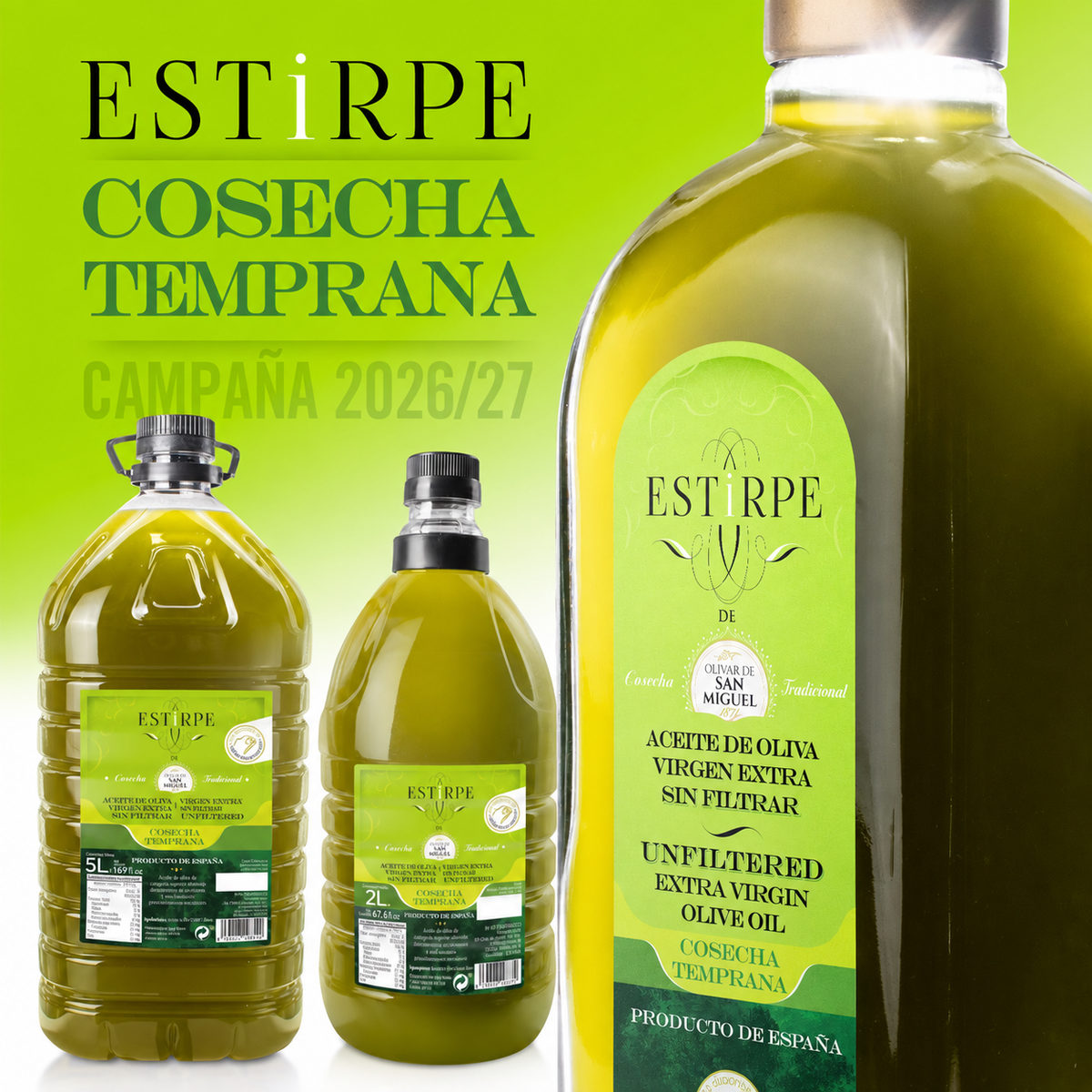
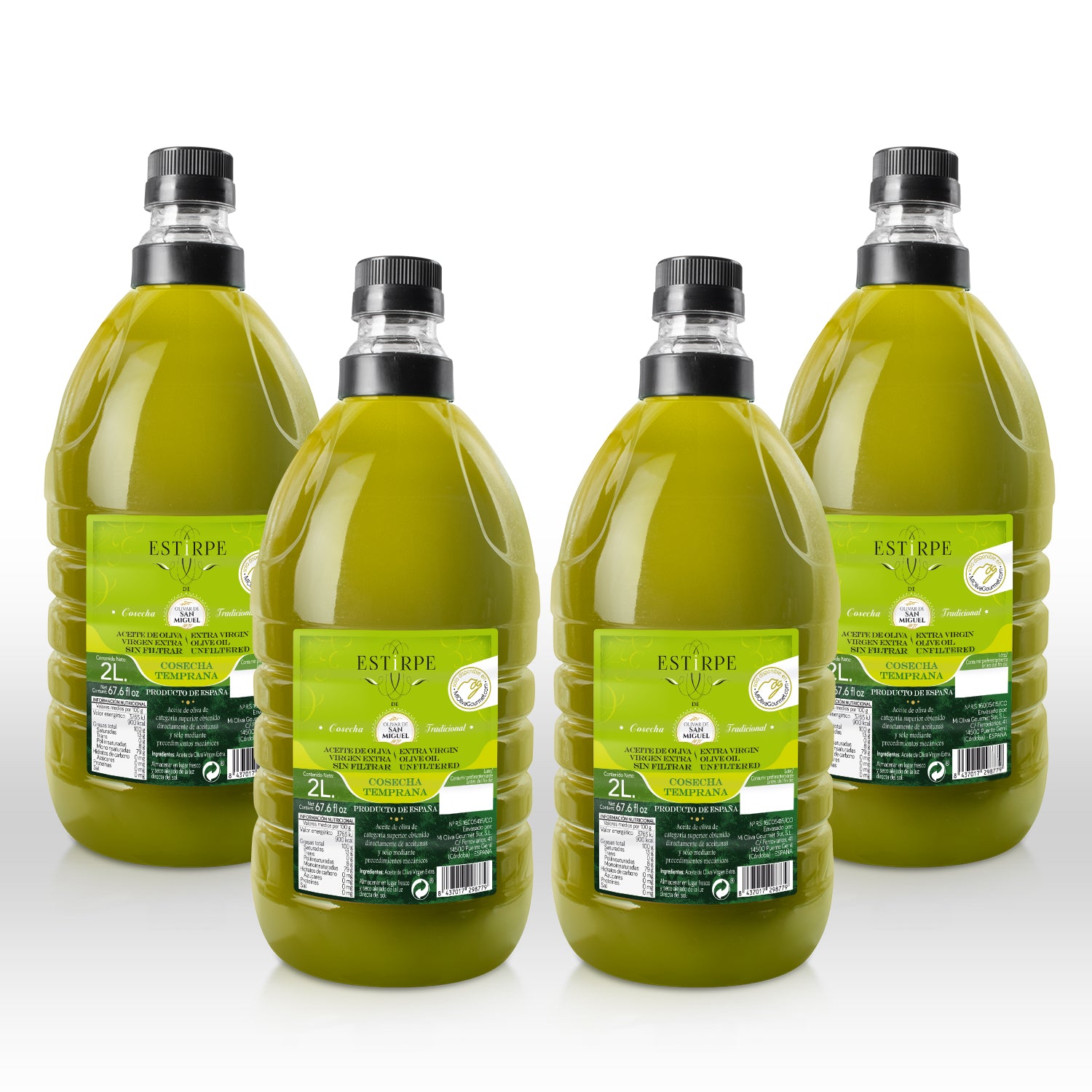
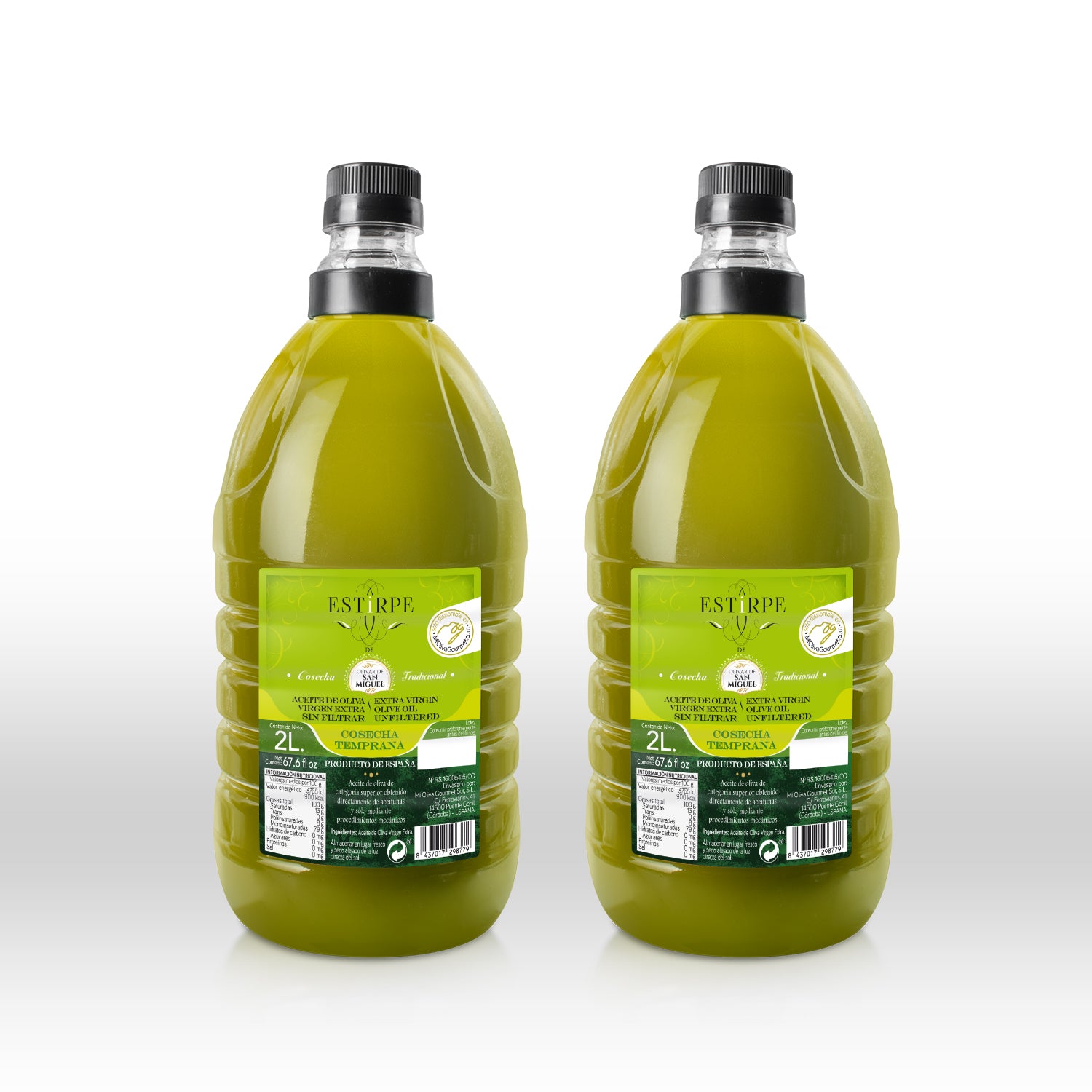
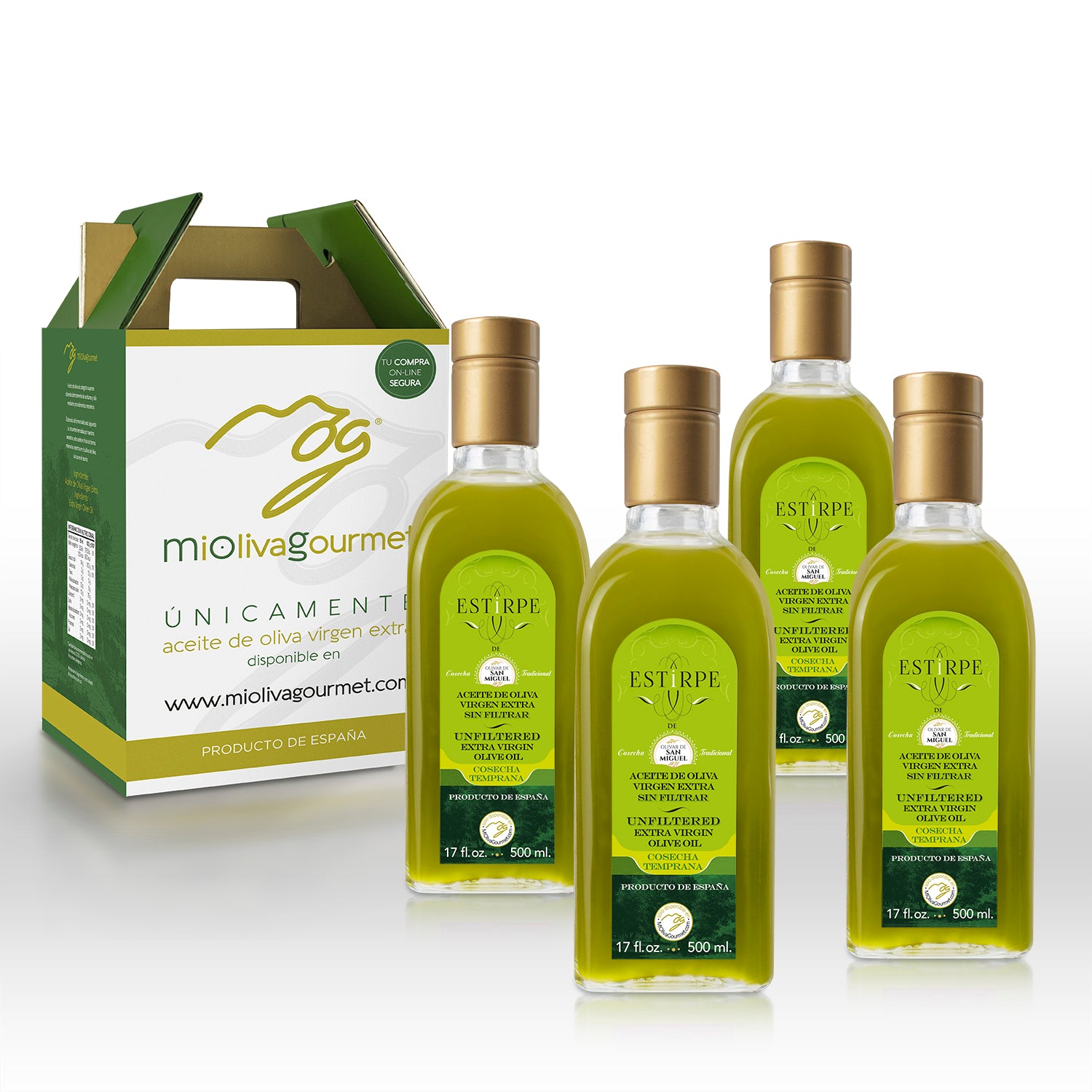
It's the same reason we're always going on about the bottling date. Polyphenols aren't a marketing label: they're a measurable content that drops month after month from the moment the oil leaves the mill. Our Estirpe Unfiltered exceeds 250 PPM with 0.20° acidity, and we bottle it to order precisely so it doesn't spend a year in a warehouse losing what makes it valuable.
If you want the details on what they are and why they degrade, we cover it here: polyphenols in EVOO.
See the oil I use for these recipes
How can you check at home whether yours is up to it?
Three signs, thirty seconds, no gadgets. Smell the oil, hold it up to the light and find the date on the label. If all three answers are good, it's fit for your toast and your skin alike. If it fails on aroma, keep it for cooking and don't put it on your face.

- Aroma: it should remind you of freshly cut grass, green tomato or almond. If it smells flat, musty or rancid, it's oxidized.
- Color and appearance: anything from pale gold to deep green is normal. What you're looking for is clarity—except in an unfiltered oil, where the sediment that settles at the bottom is the olive itself and a good sign.
- Date: harvest or bottling, the more recent the better. Under twelve months and you're fine.
“The color alone tells you it’s going to be a good oil. Once opened, the flavor, texture and quality are impressive.”
★★★★★ Alejandro Robles · Zaragoza · Verified buyer
What precautions should you take before you start?
These five recipes are for topical use, but that doesn't mean they suit everyone. Always do a patch test on your forearm 24 hours before applying anything to your face. And if you have a diagnosed skin condition or are undergoing dermatological treatment, check with your specialist first: we're talking about cosmetic care here, not treating anything.
- Clean, thoroughly dry utensils and containers.
- Stick to the shelf life I give for each recipe. Mixtures with water, aloe or yogurt spoil quickly.
- Essential oils always go in by the drop and diluted, never neat on the skin.
- If you notice itching, redness or stinging, rinse off with lukewarm water and don't repeat.
The 5 homemade recipes, step by step
All five take under ten minutes with things you already have at home. They're ordered from the simplest to the one that calls for a little patience, and in every one the oil is the main ingredient: use the best you have.
1. Quick two-phase makeup remover

Ingredients: 20 ml rose hydrosol · 20 ml freshly bottled unfiltered EVOO · 2 drops vitamin E.
How to make it: combine in a small bottle, shake well before each use—here you do need to, because there are two phases to emulsify—, soak a reusable pad and sweep gently over the skin. Rinse afterwards with lukewarm water. Keeps for 7 days in the fridge.
2. Honey and EVOO lip scrub

Ingredients: 1 teaspoon raw honey · 1 teaspoon EVOO · ½ teaspoon coconut sugar.
How to make it: mix, massage onto damp lips for 30 seconds and rinse. Twice a week at most: over-exfoliating is worse than not exfoliating at all.
3. Moisturizing hair mask

Ingredients: 3 tablespoons plain yogurt · 1 tablespoon EVOO · 1 egg yolk.
How to make it: apply from mid-lengths to ends, leave on for 20 minutes and rinse with lukewarm water and a gentle shampoo. Every 10 days. If you warm the oil slightly before mixing, it spreads more evenly.
4. After-sun body serum with aloe

Ingredients: 30 ml pure aloe vera gel · 10 ml EVOO · 3 drops lavender essential oil.
How to make it: whisk until it comes together and store in the fridge for up to 5 days. Apply after showering, while your skin is still slightly damp. In August, it's the one I go through fastest.
5. Nail and cuticle balm

Ingredients: 10 g beeswax · 20 ml EVOO · 3 drops lemon essential oil.
How to make it: melt the wax in a bain-marie, remove from the heat, stir in the oil and the drops, pour into a metal tin and let it set. A dab on your cuticles every night.
How much does each recipe really cost?
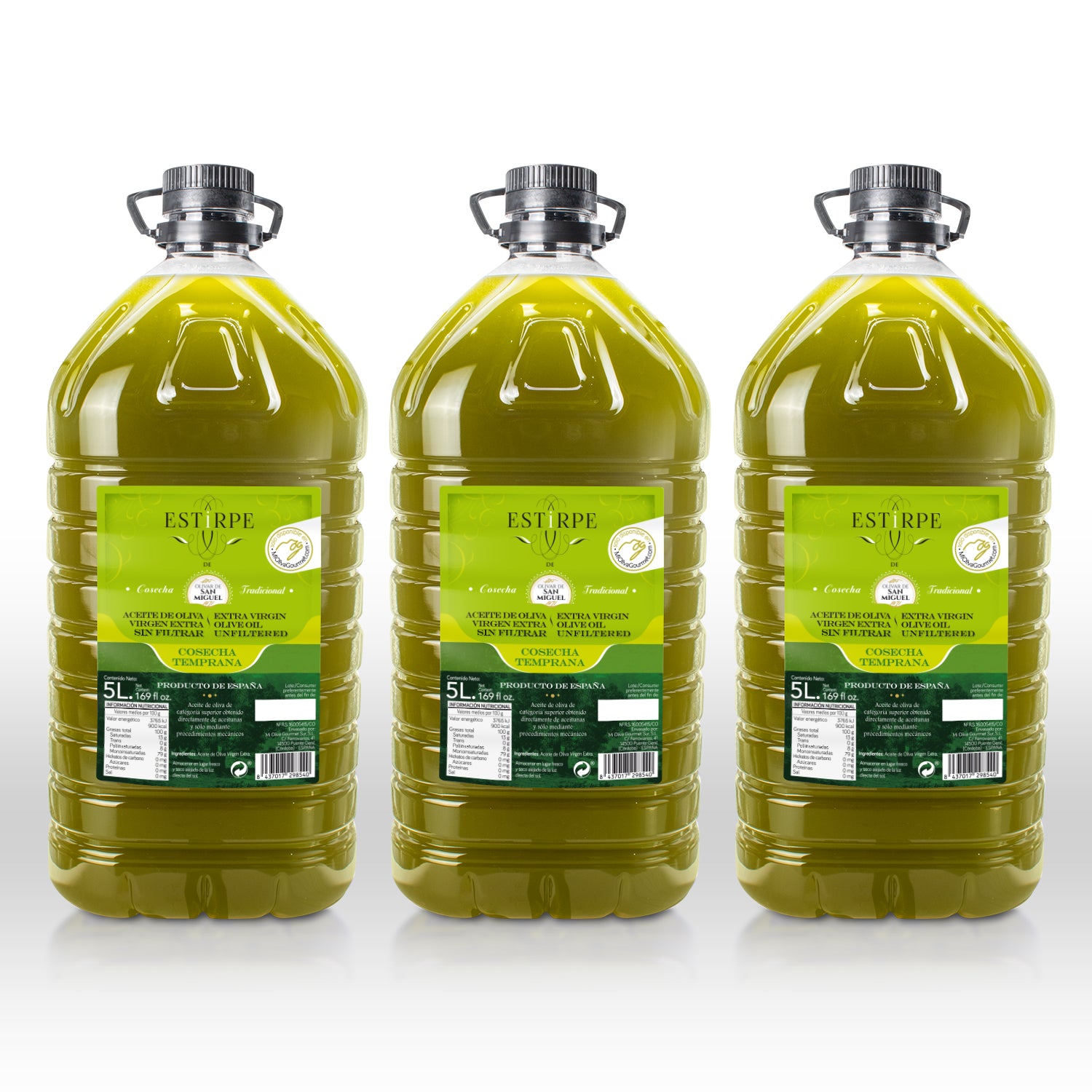
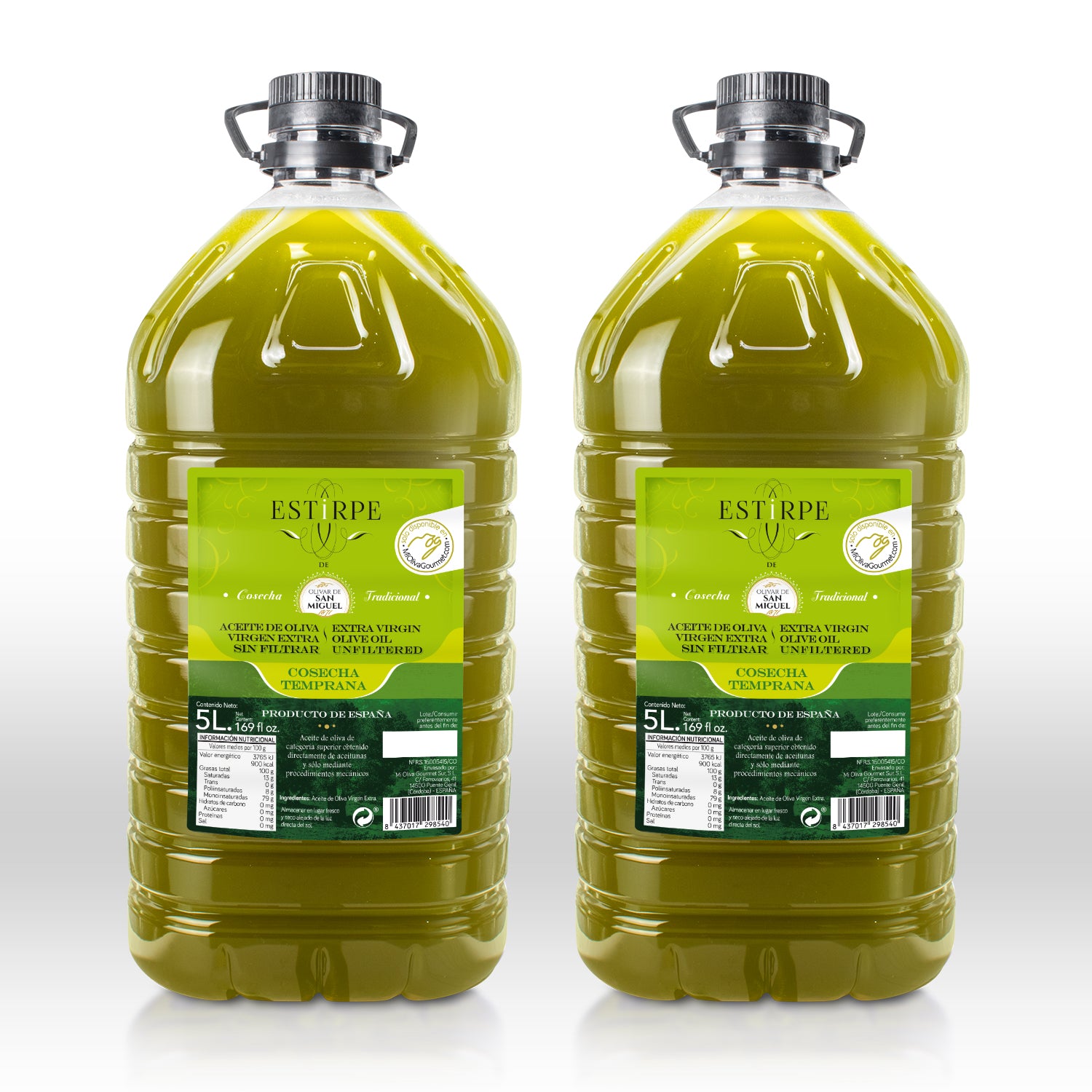
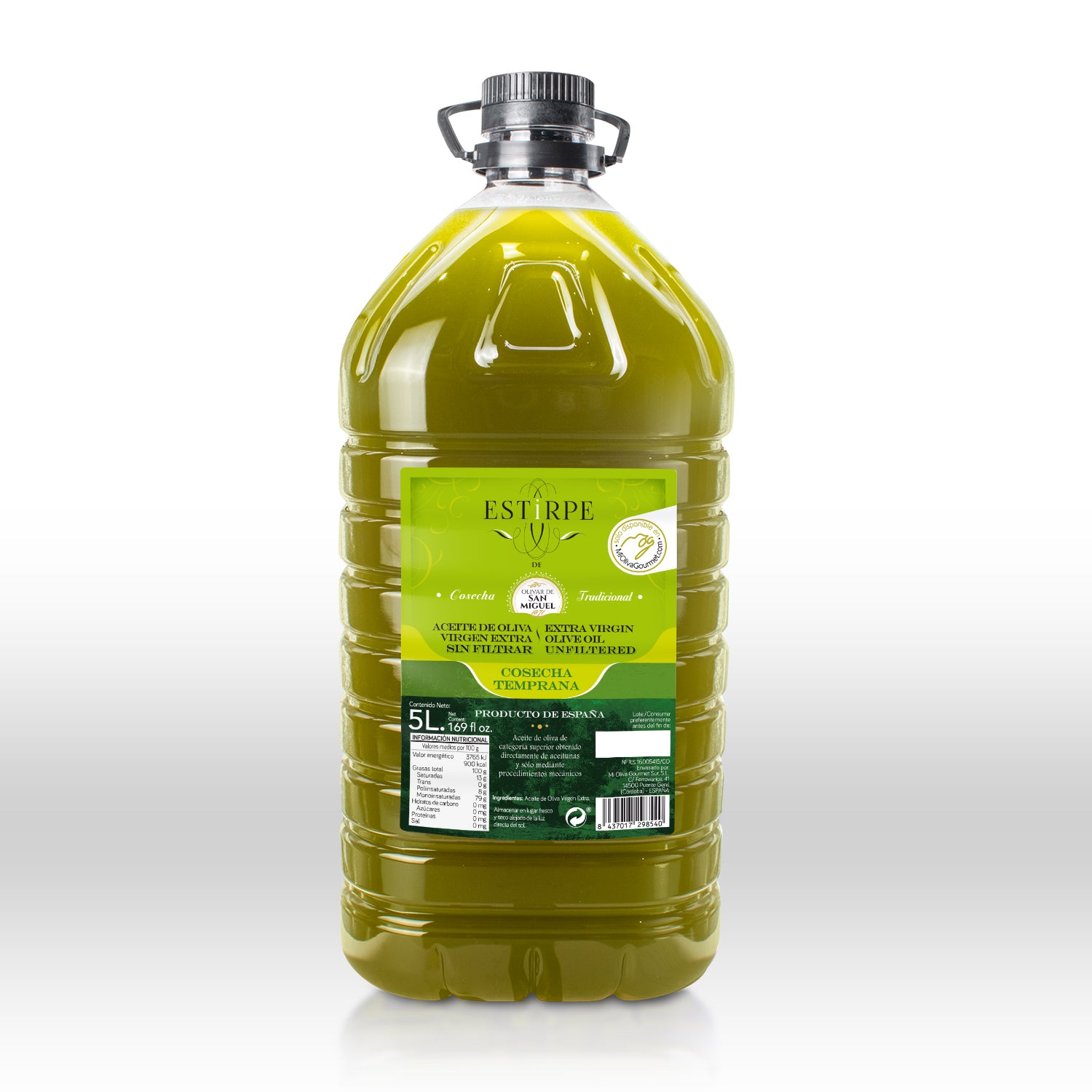
Far less than you'd think, because each recipe uses between 10 and 20 ml. A 5-liter jerrycan of Estirpe Unfiltered costs €58.95, which works out at about €11.79 per liter. The most “expensive” of the five, the makeup remover, uses 20 ml: roughly 24 cents' worth of oil. The rest of the liter goes to your kitchen.
| Any old supermarket oil | Fresh unfiltered EVOO |
|---|---|
| ❌ Bottling date unknown or from previous seasons | ✅ Bottled to order, harvest identified |
| ❌ Polyphenols not declared | ✅ Over 250 PPM, measured |
| ❌ Flat or nonexistent aroma | ✅ Grass, green tomato, almond |
| ❌ Works as a lubricant | ✅ Gives you what you wanted from the oil |
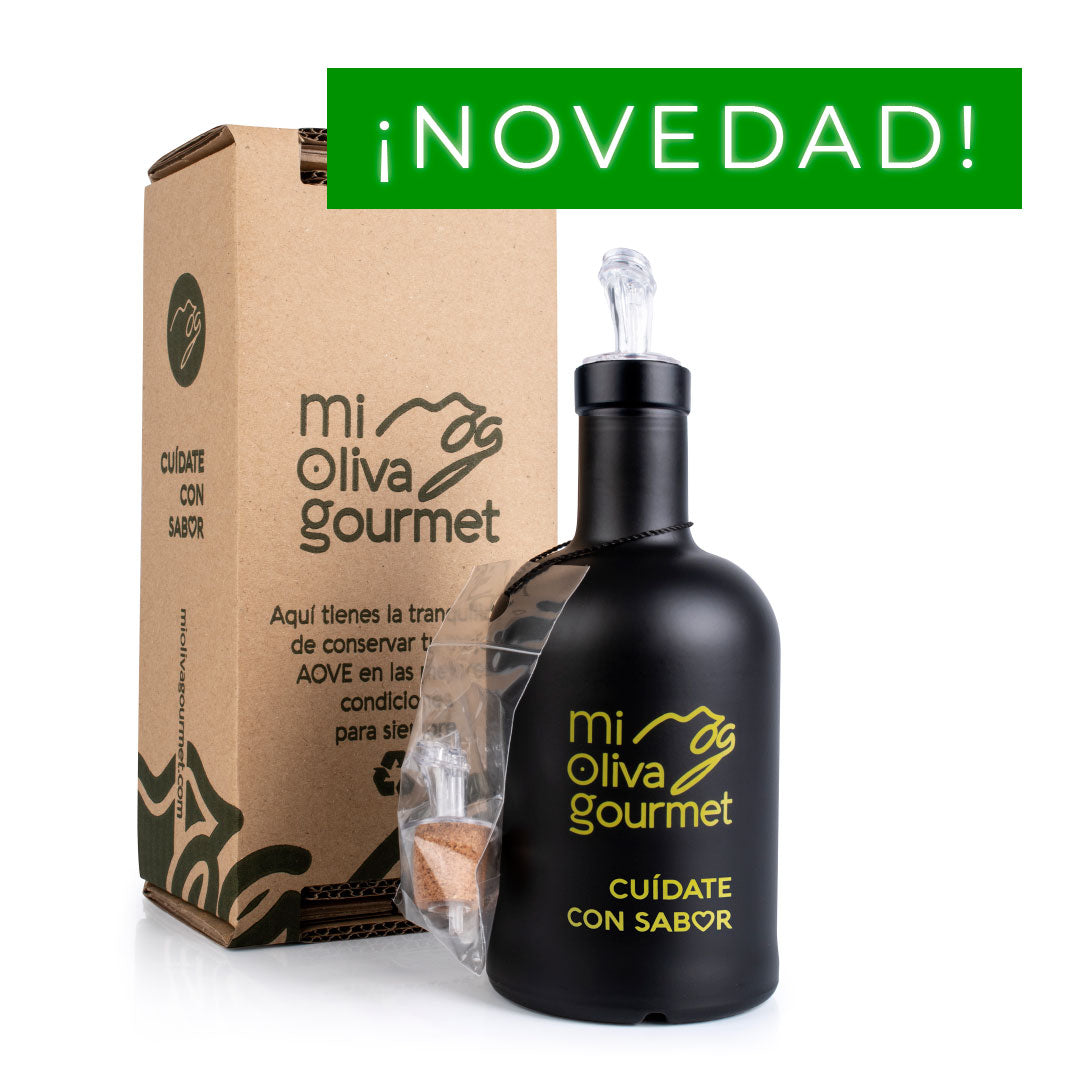
Your drip-free oil cruet, free with your first order
Discount code:
ACEITERA-GRATIS
Apply the code
Which myths are false, and which aren't?
Four of the ones that land in my inbox most often. One is a half-truth, another belongs in the kitchen rather than on your skin, and the last two are the ones that cost people the most money.

| What people say | What we know |
|---|---|
| “Oil clogs your pores.” | It depends on your skin, not the oil. On oily or acne-prone skin it may not agree with you; on dry skin it usually works beautifully. That's why the 24-hour test isn't optional, and why it's worth removing it thoroughly afterwards. |
| “You can't heat it.” | For cosmetic use you never need more heat than a gentle bain-marie or oil warmed between your hands. The debate about high temperatures belongs in the kitchen, and it doesn't apply here. |
| “You should stir the sediment to make the most of it.” | Quite the opposite. That sediment settles on its own, and down at the bottom is where it should stay. If you shake it, you put organic matter back into suspension and speed up the degradation of the oil in your jerrycan. |
| “All extra virgin oils are the same.” | The most expensive one to believe. Variety, freshness, filtering and storage completely change what's left inside the bottle. It's exactly the point we made above. |
How should you store these mixtures?
The short rule: anything with water, aloe, yogurt or egg goes in the fridge and lasts days, not weeks. Anything that's just oil and wax keeps for months at room temperature. Always write the date you made it on the jar—it's the step everyone skips and the one that saves you nasty surprises.
- Amber glass or metal containers, tightly closed and away from light.
- With water, aloe, yogurt or egg: fridge, and discard within the time given for each recipe.
- Just oil and wax (the balm): months in a cool, dark place.
- If the smell changes, swap it for a fresh batch. It costs 24 cents.
What people who already have it at home say
“I bought it for the first time and the whole family was amazed by its quality, freshness and flavor. I've since recommended it to a friend and they've bought it too.”
★★★★★ Teresa Yevenes Aramburu · Seville · Verified buyer
“My whole family and I have enjoyed Estirpe and Arraigo, two gems that immerse you in a sublime experience for the senses. Each has its own personality and I love alternating between them.”
★★★★★ José Manuel Martínez Cascales · Barcelona · Verified buyer
Honest beauty you can also eat
Caring for your skin and hair doesn't call for a chemistry dictionary. It calls for an oil that's still alive: fresh, unfiltered, properly stored. The same one that goes on your toast in the morning.
And that's the real reason I'm writing this. You can make all five recipes with whatever's in your pantry and you'll notice something. But if the oil has spent a year and a half on a supermarket shelf, you'll just be putting fat on your skin. If it's from this season and still has its polyphenols, you'll be putting olive on your skin.
Start with the oil, not the recipe
Frequently asked questions
Can I use extra virgin olive oil directly on my face?
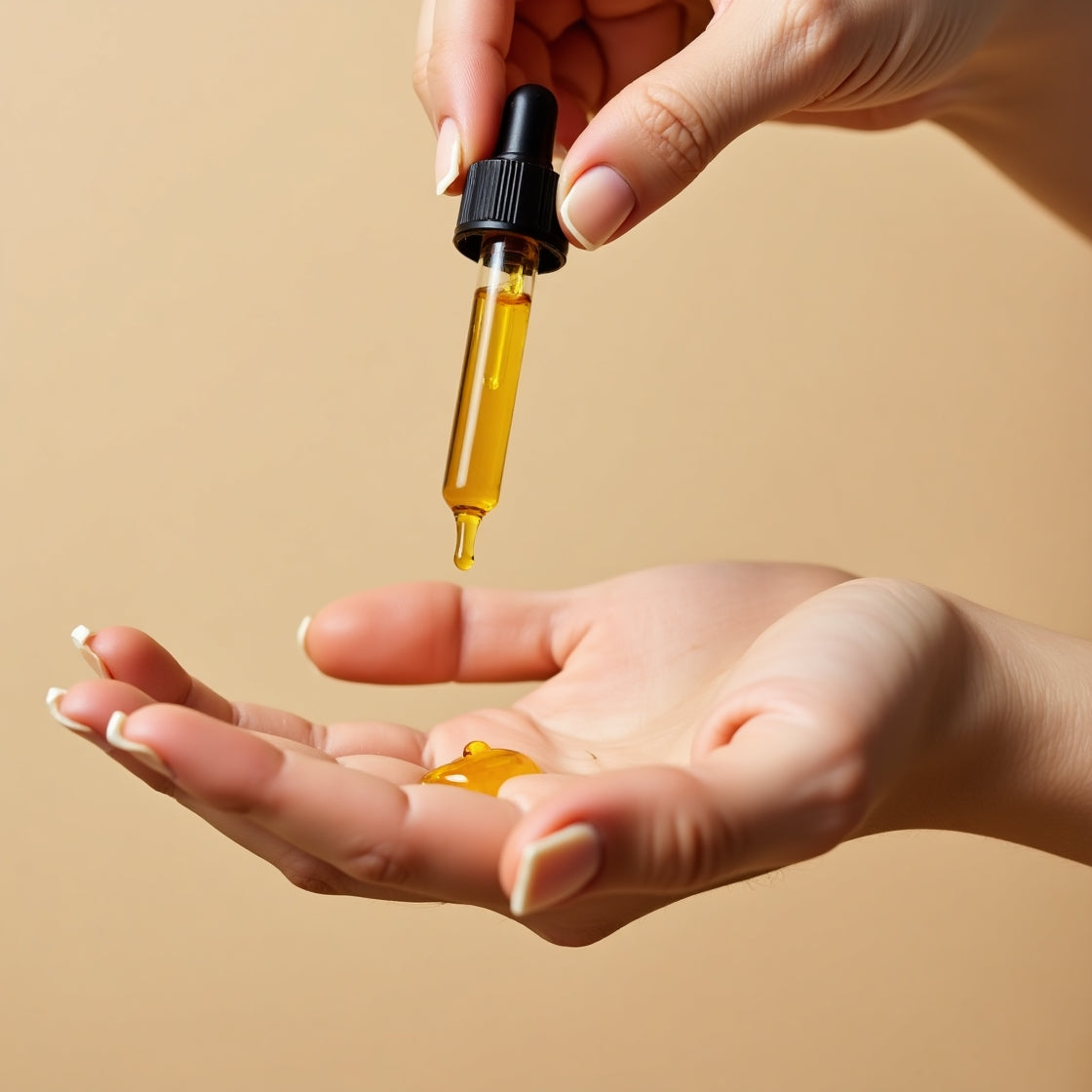
Yes, a few drops on clean, slightly damp skin. Do the 24-hour forearm test first. If your skin is oily or acne-prone, start with small areas and see how it responds over a few days before using it more widely.
Does it matter which olive oil I use for homemade cosmetics?
Yes. Refining strips out polyphenols and much of the vitamin E, and those compounds also break down over time and with exposure to light. A fresh, well-stored extra virgin retains what an old or refined oil has already lost. The fat is the same; everything else isn't.
How long do homemade mixtures last?
Those containing water, hydrosol, aloe, yogurt or egg last 5 to 7 days in the fridge. The wax and oil balm keeps for months in a cool, dark place. Always write the date you made it on the container.
Is an unfiltered oil still good if it has sediment?
Yes. The sediment in an unfiltered oil is olive pulp that settles naturally, not dirt, and it's a sign the oil hasn't been through processes that take anything away from it. Don't shake it: let it rest at the bottom and pour the clear oil from the top. Stirring it puts that matter back into suspension and speeds up degradation. Use it within the year.
Do polyphenols have officially recognized benefits?
Yes, though it's worth being precise: the claim authorized in the European Union refers to consumption, not to use on the skin. Oils providing at least 5 mg of hydroxytyrosol and its derivatives per 20 g can claim that they contribute to the protection of blood lipids from oxidative damage. For cosmetic use, we're talking about composition and tradition, not an approved health claim.
Which Mi Oliva Gourmet oil do you recommend for this?
Estirpe Unfiltered: 0.20° acidity, over 250 PPM of polyphenols and bottled to order, which for this use is what matters most. It's the one in the makeup remover recipe and the one I keep at home.
Julio César de la Vega Fernández, co-founder of Mi Oliva Gourmet alongside Ricardo and Miguel Morales Chacón (Migue), fourth-generation olive growers in Puente Genil, Córdoba.
PS: if you try any of the five, tell me about it in the comments. I read every one, and the aloe after-sun is the one that brings me the most questions every August.
PS2: want to understand what makes an unfiltered oil different before you decide? I explain it here: why we bottle the way we do.