
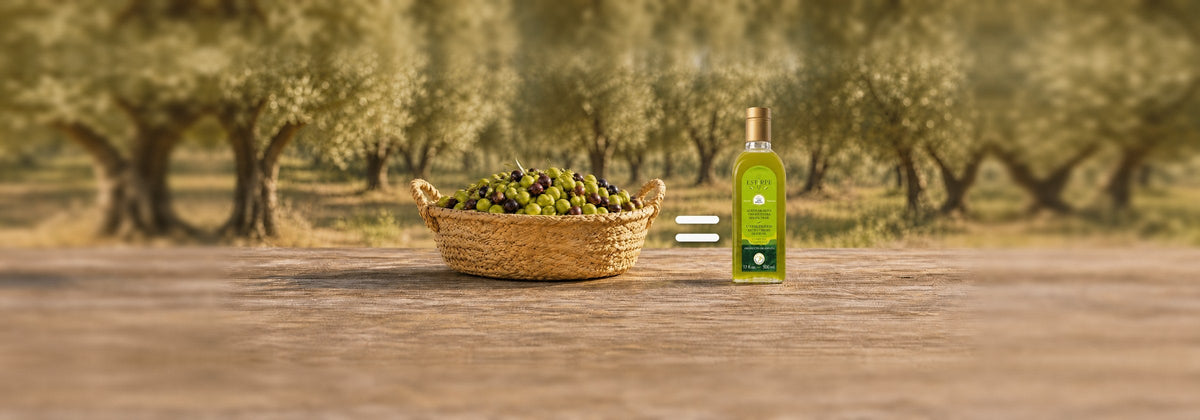
One liter of olive oil takes about 5 kilos of ripe olives or between 8 and 9 kilos of early harvest olives. A single half-liter bottle of Early Harvest holds more than 4 kilos of olives.
Next week Migue starts picking the olives for our Early Harvest. Before getting started, he sent us a voice message from the olive grove, and one line has stuck with me ever since:
“Even though the yield is very low, to get an oil of the very highest quality like the early harvest, […] around 10–11%, well, we pick the olives.”
Ten percent. That means for every 100 kilos of olives that go into the mill, about 10 kilos of oil come out. I did the math for a single half-liter bottle, and the number surprised me.
In this article
- How many kilos of olives does it take to make one liter of oil?
- What is olive oil yield?
- Why do early harvest olives give so little oil?
- How many olives go into each Early Harvest format?
- So why doesn’t Migue wait until December?
- When is it being picked this year?
- Frequently asked questions
How many kilos of olives does it take to make one liter of oil?
It depends on when the olives are picked: about 5 kilos if they’re ripe, and almost 9 kilos if they’re early harvest. Same olive, same tree; the only thing that changes is the moment of picking.
In the 2024/25 season, the average yield in Spain was 18.15%: 7.8 million tonnes of olives were milled to produce 1.4 million tonnes of oil. (Source: AICA, Spanish Ministry of Agriculture, reported by AgroCLM.) At that yield, and bearing in mind that one liter of oil weighs 0.916 kilos (we explain it here), one liter takes about 5 kilos of olives.
Our Early Harvest sits at the 10–11% Migue mentions. That’s where the math looks like this: between 8.3 and 9.2 kilos of olives for every liter. Nearly double.
| Ripe olives (Spanish average) | Early Harvest | |
|---|---|---|
| Yield | 18% | 10–11% |
| Oil per 100 kg of olives | ~18 kg | ~10.5 kg |
| Olives for 1 liter | ~5 kg | ~8.7 kg |
What is olive oil yield?
It’s the percentage of the olives’ weight that ends up as oil. If a 100-kilo batch gives 18 kilos of oil, its yield is 18%. The rest is water, pulp and pit, which leave the mill as pomace.
It’s the figure every grower watches when taking olives to the mill, because it tells them how much oil their harvest will produce. And it changes a lot from one week to the next.
Why do early harvest olives give so little oil?
Because green olives still hold a lot of water and very little fat. The oil builds up inside the fruit as it ripens. Pick it early, while it’s still green and just starting to turn color, and there’s less oil inside.
That’s why growers are clear about it and say it plainly: “the fat yield of early harvest olive oils is lower than that of oils made after the traditional harvest, when the olives have reached a more advanced stage of ripeness.” (Source: Asaja Sevilla, in ABC Agrónoma.)
Migue explained it in the interview we did with him in the olive grove: “if you pick it at that stage, the yield is very low. The yield is 8 or 10%, whereas if you pick it ripe it can already be at 20 or 22%.”
This year there’s also been a shortage of water since April: with so little rain, the olives have been slow to ripen. Migue mentions it in the same voice message: “it’s still showing signs of immaturity […] mainly due to the lack of water.” If you want to know exactly when they’re picked, here’s what veraison is and why it shapes the flavor of the oil.
How many olives go into each Early Harvest format?
At a 10.5% yield, which is roughly what Migue expects, and compared with what you’d need using ripe olives:
| Format | Early harvest olives | If they were ripe olives |
|---|---|---|
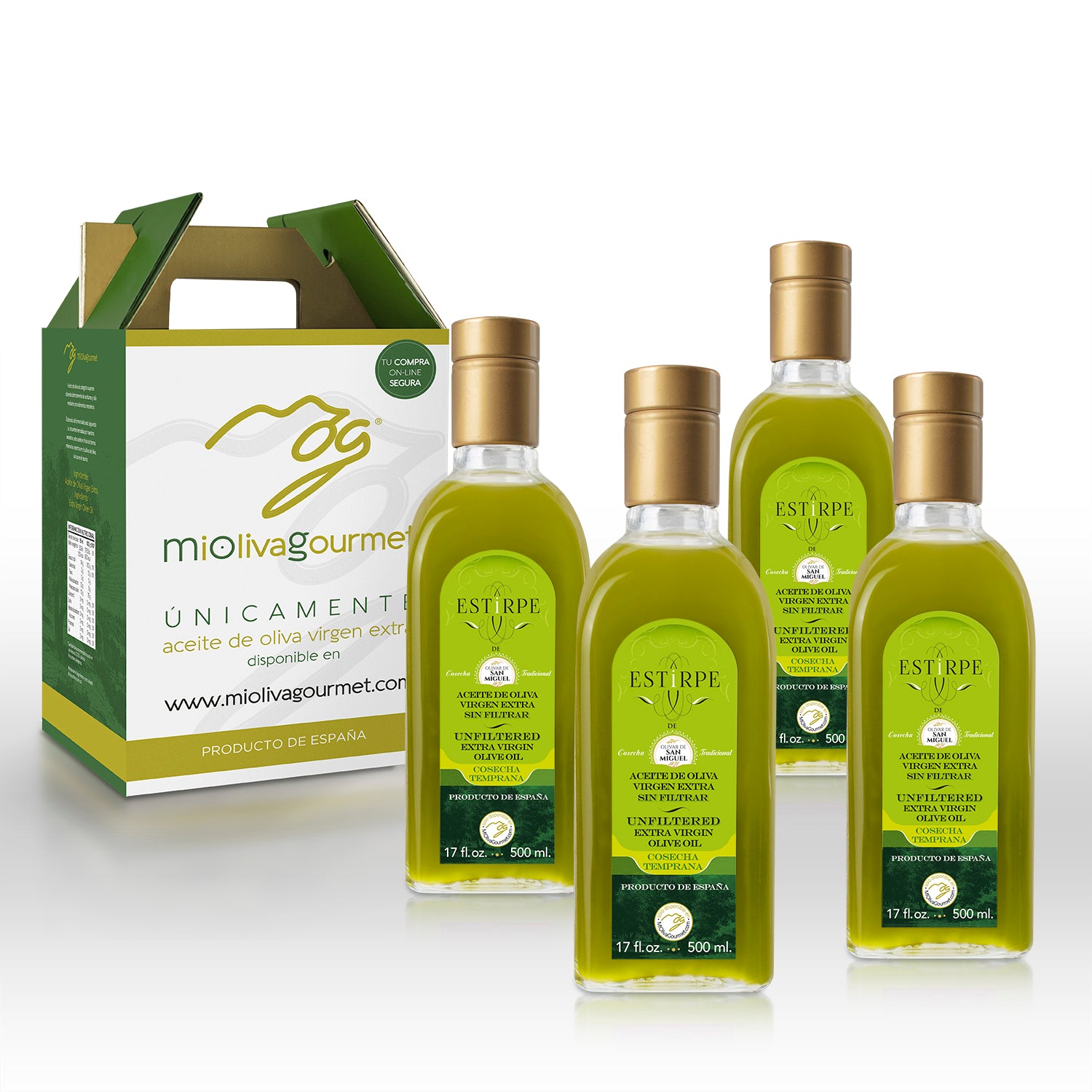
| One 500 ml bottle | 4.4 kg | 2.5 kg |
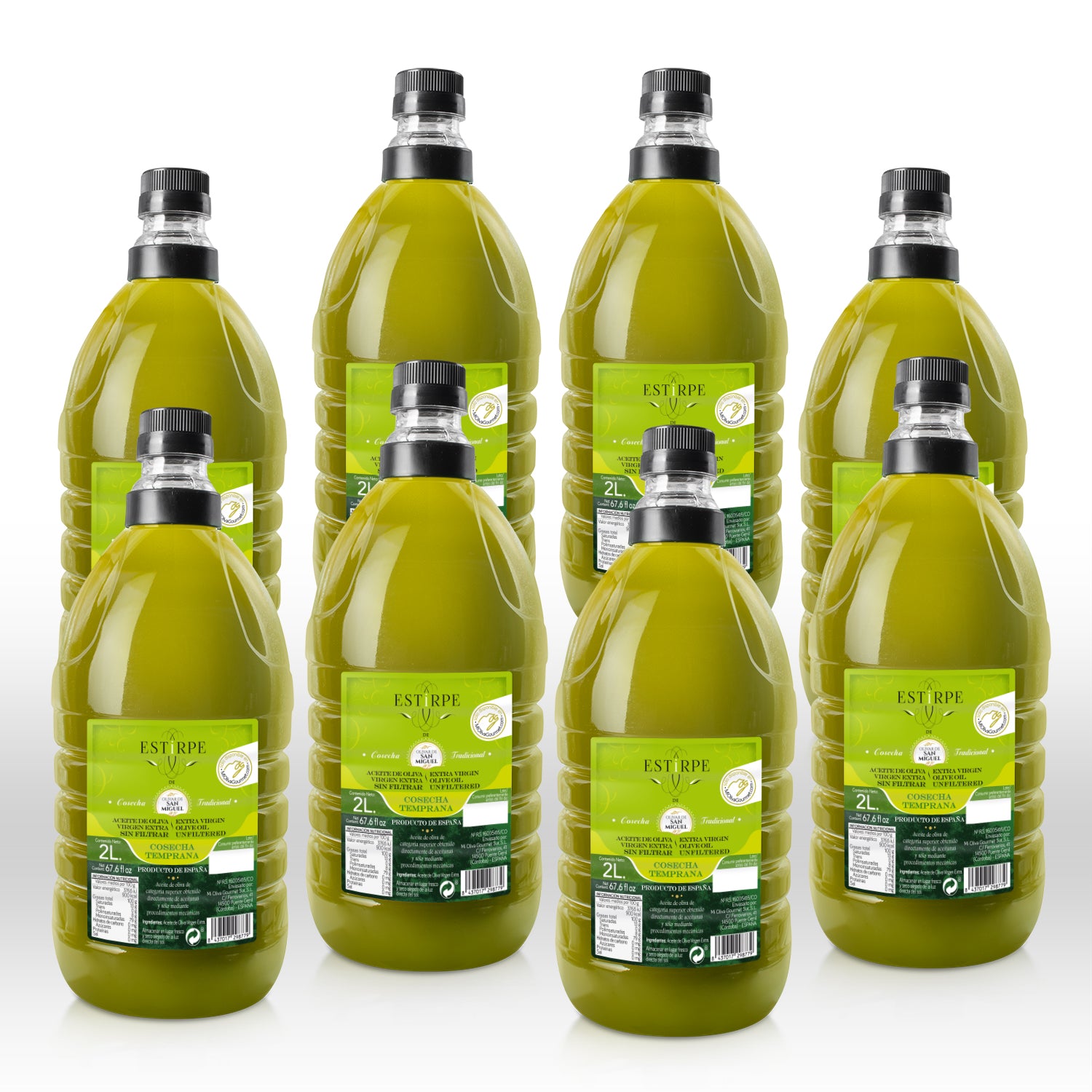
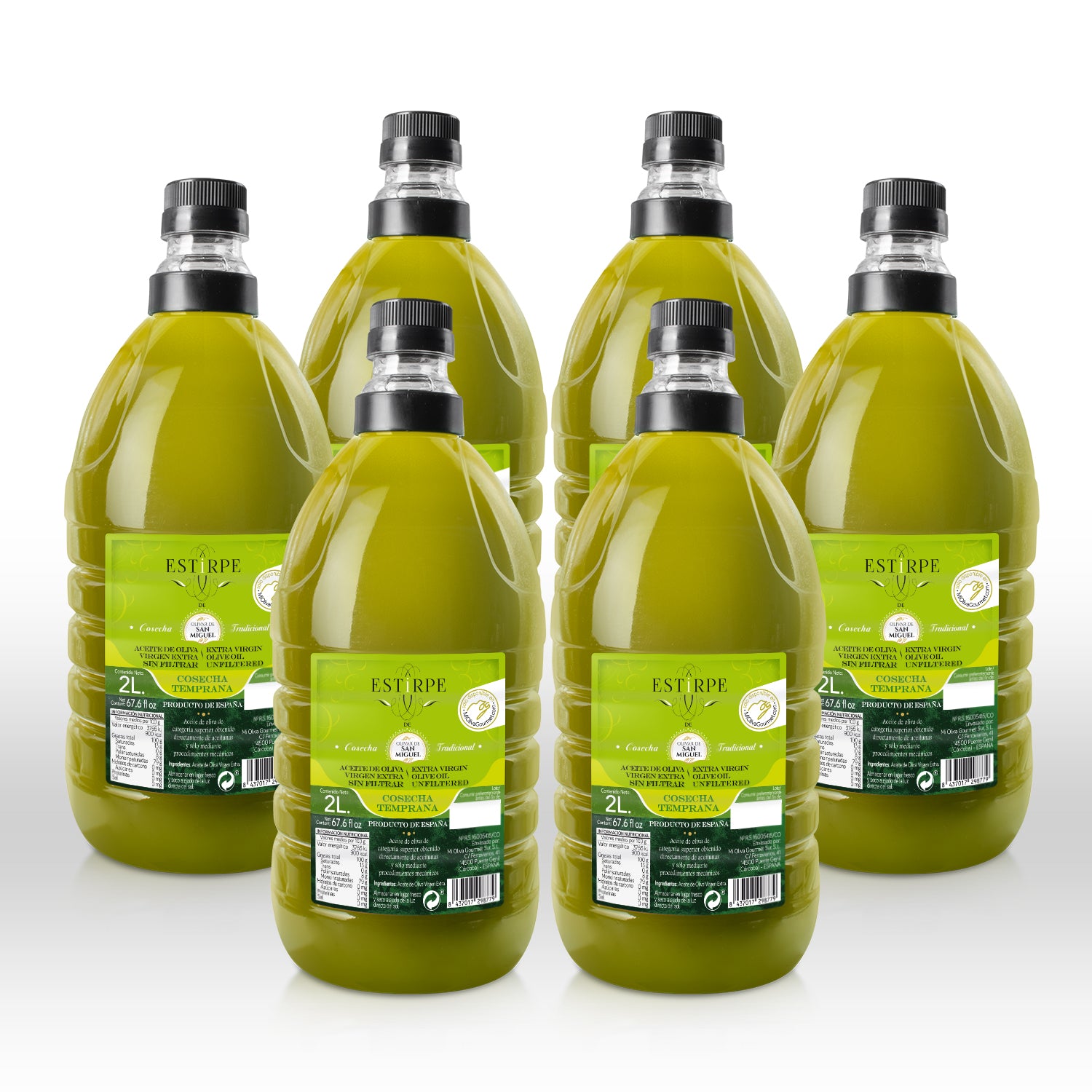
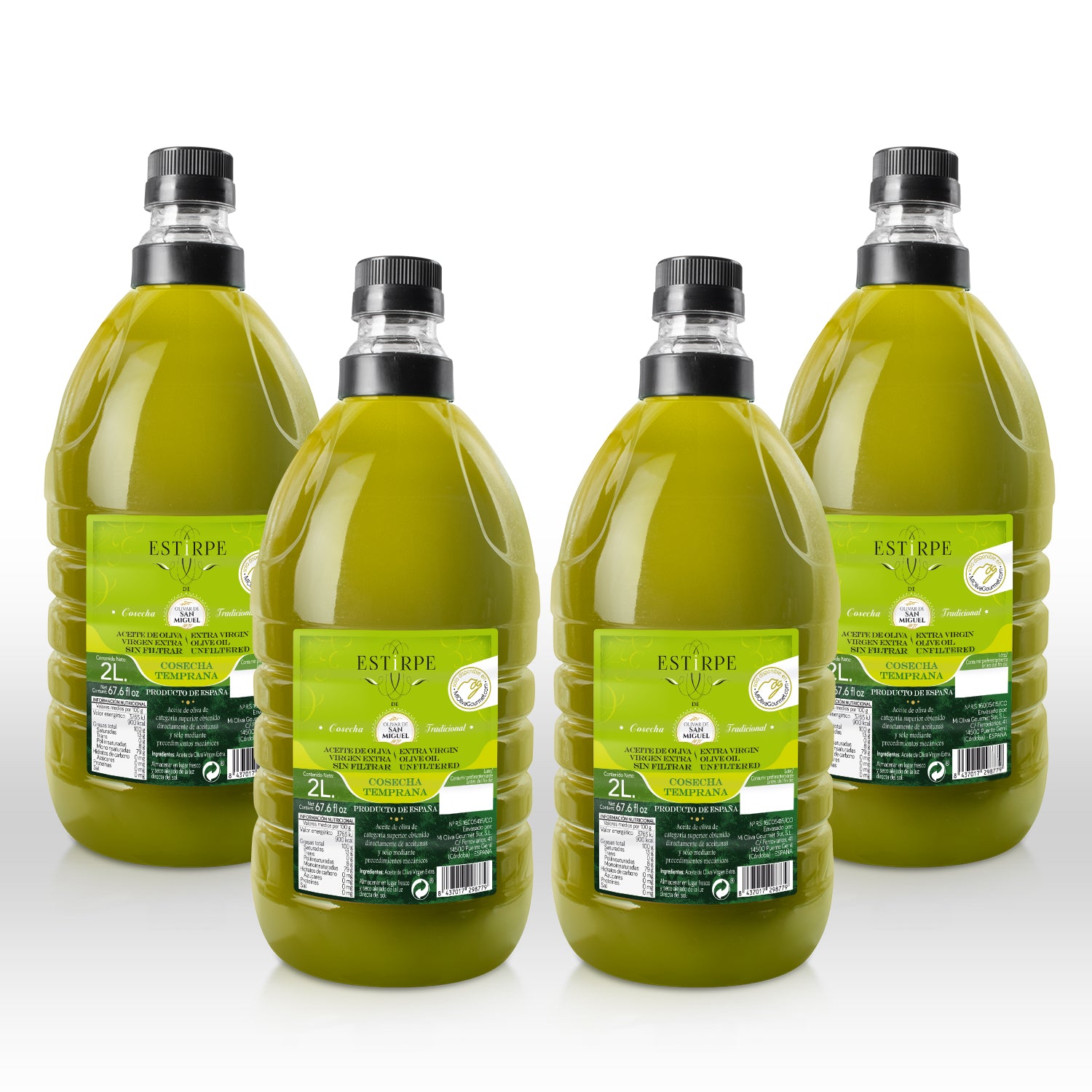
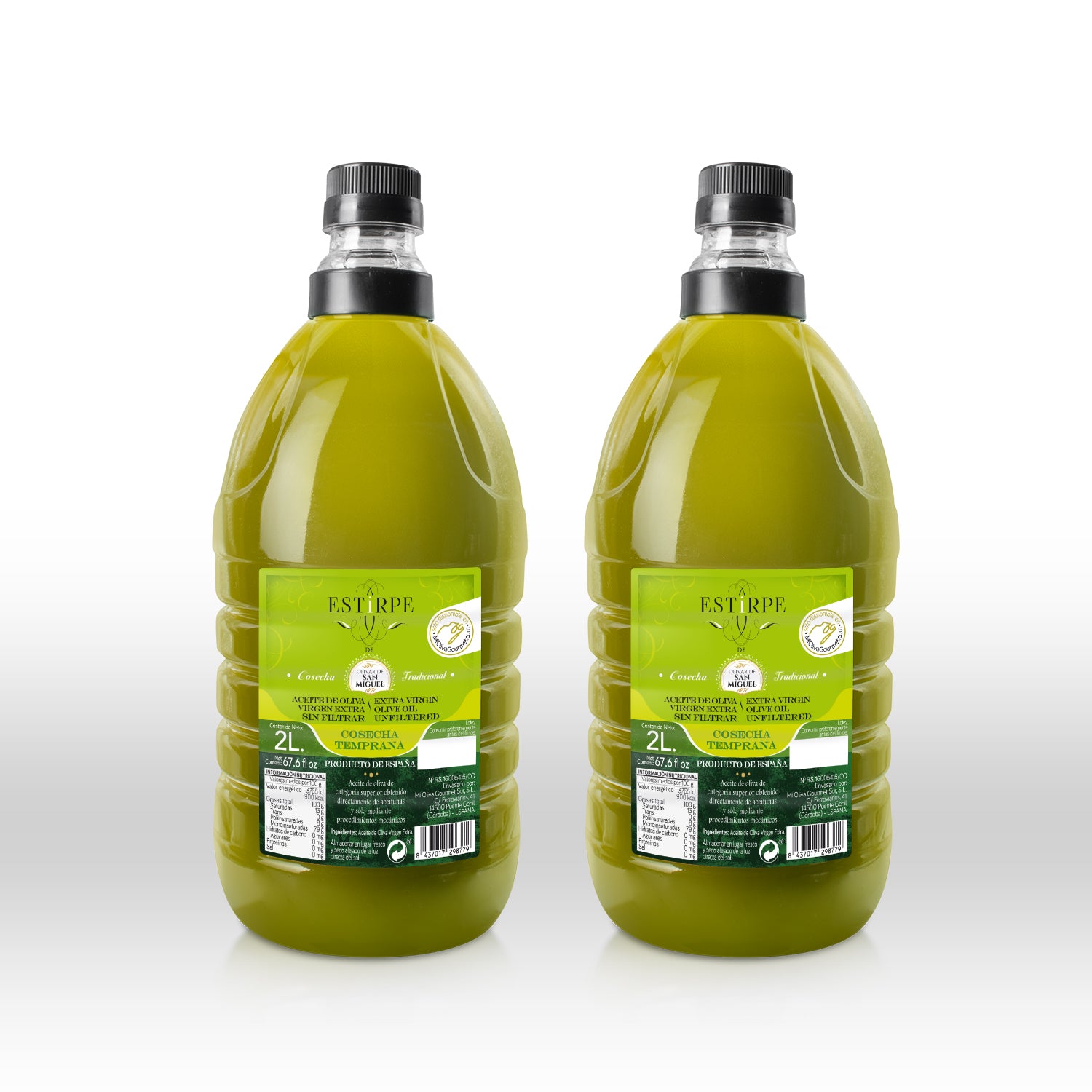
| One 2-liter jerrycan | 17.4 kg | 10.1 kg |
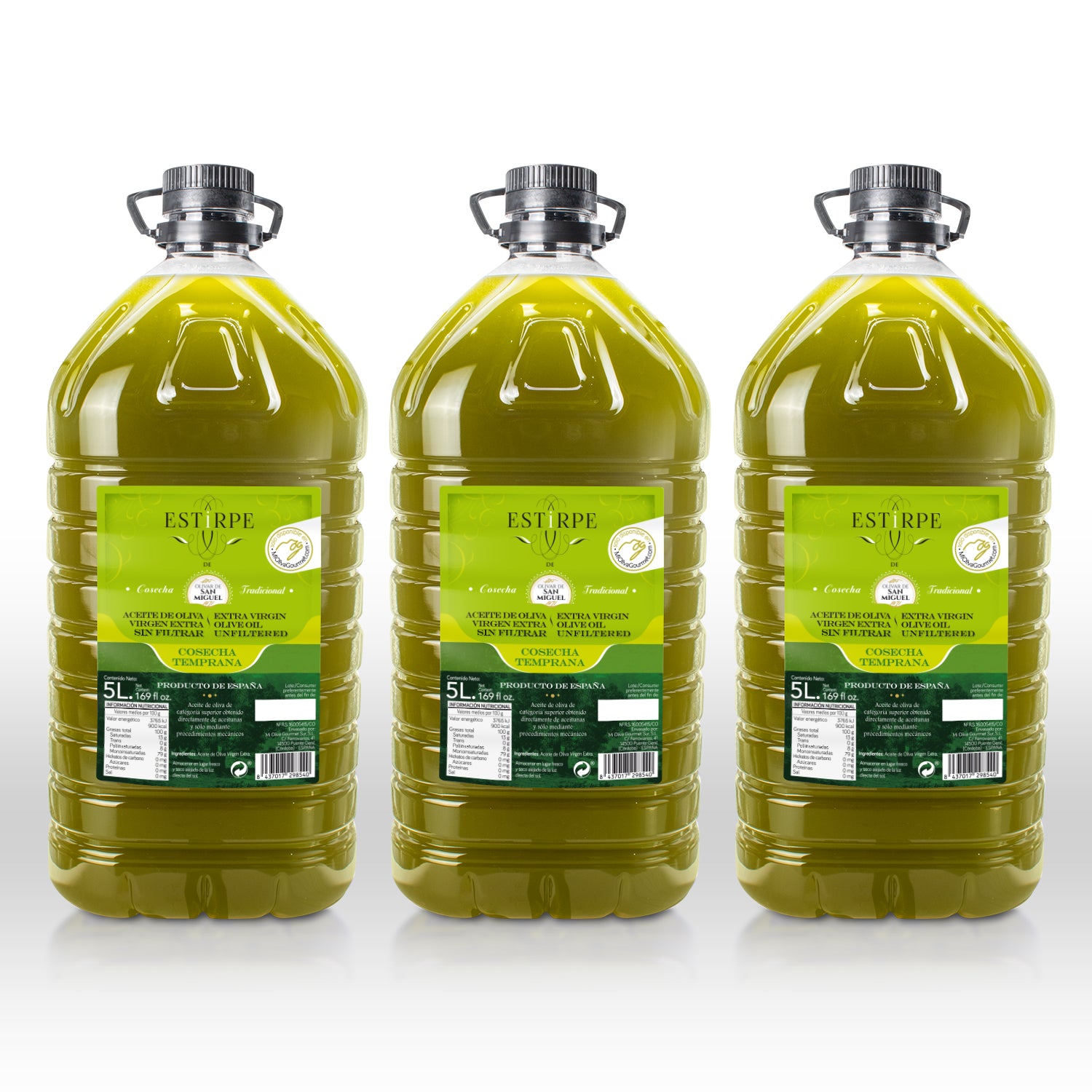
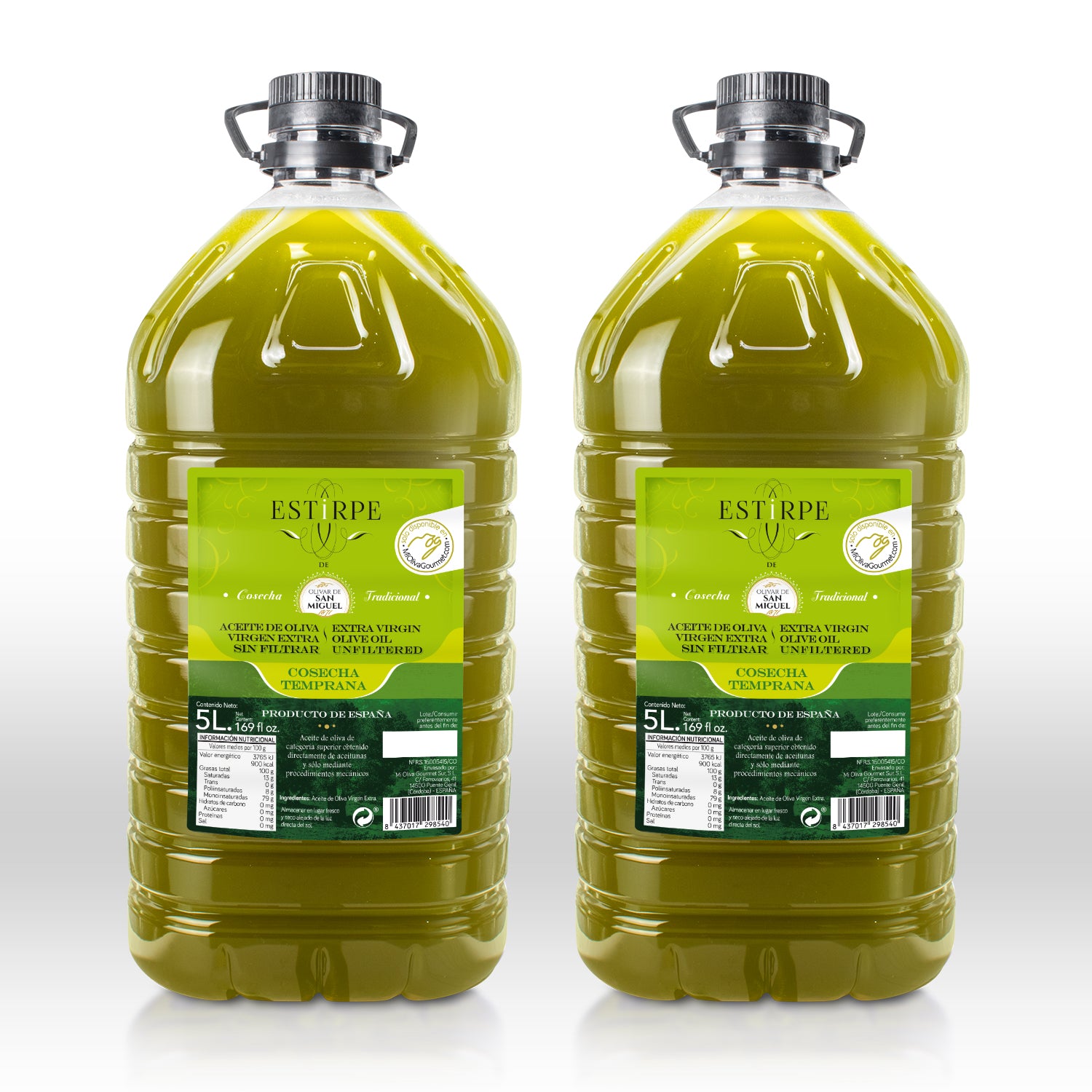
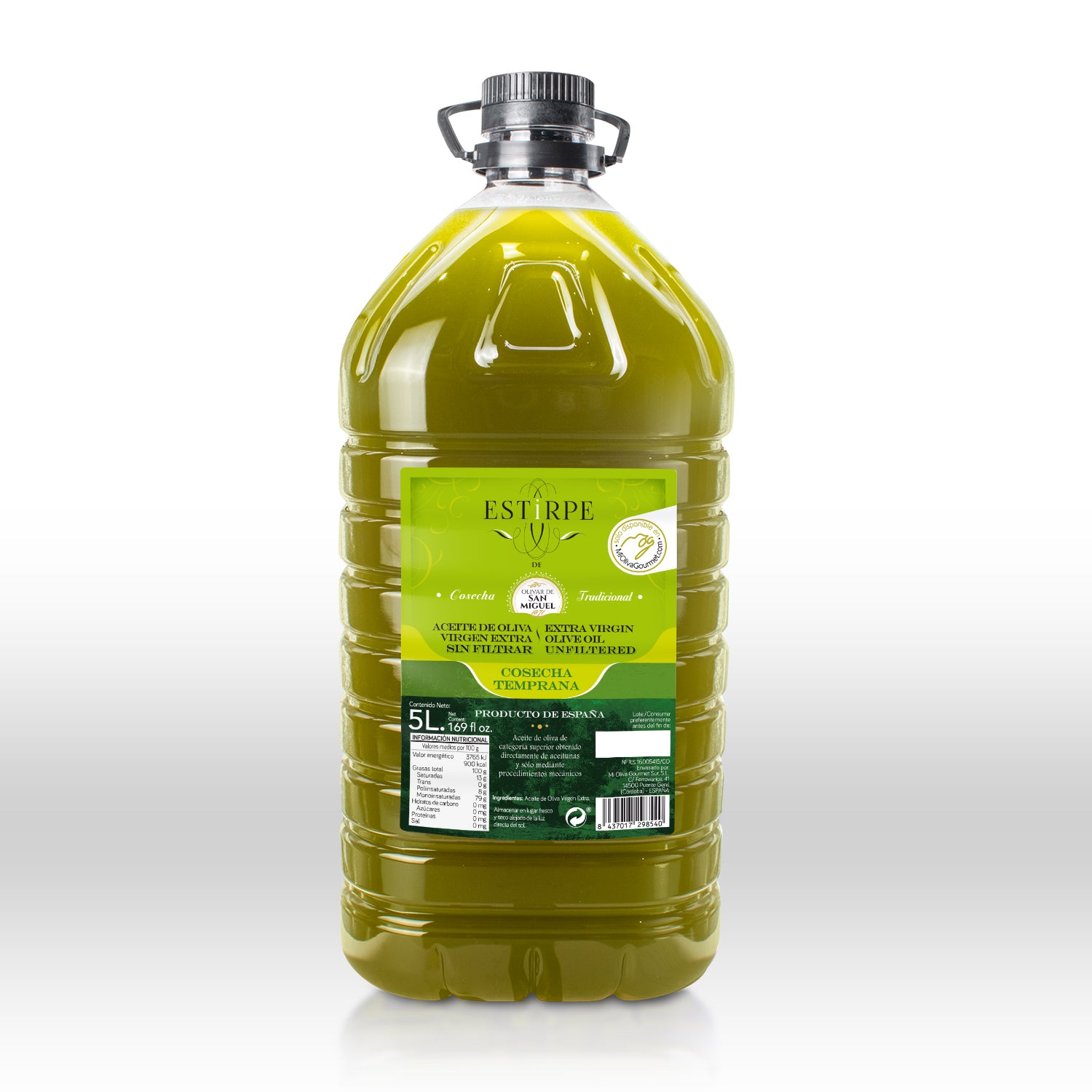
| One 5-liter jerrycan | 43.6 kg | 25.2 kg |
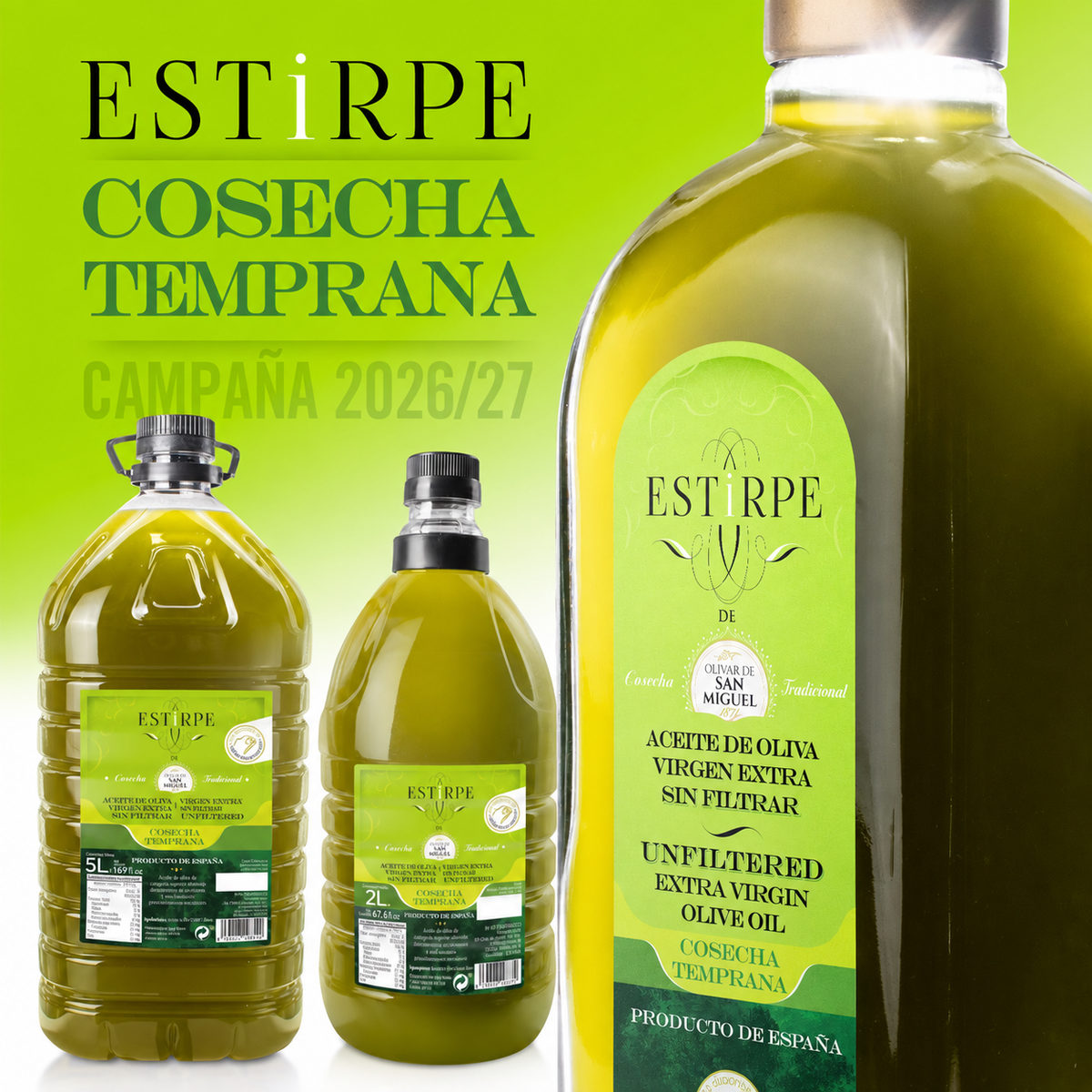
To give you an idea, every half-liter bottle holds more than four kilos of olives, picked straight from the tree by hand with handheld shakers. And a 5-liter jerrycan, more than 40 kilos: almost the weight of two bags of cement.
Tap here and reserve the first oil of the year
So why doesn’t Migue wait until December?
Because what you gain in liters, you lose in flavor. Ripe olives would give almost twice as much oil, but the flavor, the aromas and the health properties would be nothing alike. Green olives give that color, that fruitiness and that peppery kick at the back of the throat that only the first oil of the year has.
In Migue’s words: “to get an oil of the very highest quality like the Early Harvest, well, despite having that low yield […] we pick the olives.”
That sacrifice is also why there’s so little of it: the same olive grove, picked in November, gives half the oil. We go into it in more detail in what early harvest olive oil is and why it sells out so fast.
When is it being picked this year?
Next week. That’s when the olives reach the point Migue is looking for: around half still green, a quarter starting to turn color and the rest already darker. As soon as it’s milled, it’s bottled and shipped in strict order of reservation. That’s also why it sells out within days every year. Everyone else will have to wait another year to reserve it.
👉 Click here and reserve your Early Harvest 2026/27
What people who’ve already tried it tell us
|
★★★★★ “One of the best I’ve ever tasted, though admittedly rarely at this price, which I suppose is justified by the outstanding quality it has shown me.” Antonio Luis Ferreiro Cainzos · Verified buyer · Estirpe Early Harvest |
|
★★★★★ “The wait of several months is well worth it to enjoy the result of the season once again. An exquisite Oil, with a capital O.” María García · Verified buyer · Estirpe Early Harvest |
Frequently asked questions
How many kilos of olives does it take to make one liter of oil?
About 5 kilos with ripe olives (18% yield) and between 8 and 9 kilos with early harvest olives (10–11% yield).
How many liters of oil do 100 kilos of olives produce?
About 20 liters with ripe olives and about 11–12 liters with early harvest olives. Remember that one liter of oil weighs 0.916 kilos, which is why the liters come out slightly higher than the kilos.
Which olive variety produces the most oil?
It depends on the variety, the year and when the olives are picked. This year, the shortage of water since April has also delayed ripening. What matters most is the timing of the harvest: the same olive gives almost twice as much oil in December as at the start of the season.
Does yield affect the quality of the oil?
There’s no fixed rule, but in practice the highest-quality oil tends to come from early olives, which are the ones with the lowest yield: greener, fruitier and more peppery.




Leave a comment
This site is protected by hCaptcha and the hCaptcha Privacy Policy and Terms of Service apply.